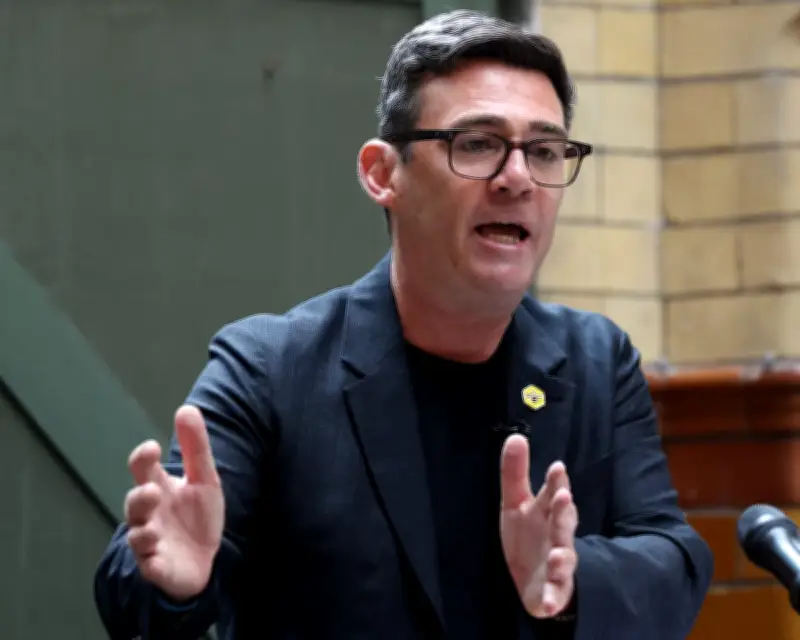
As Labour MPs filed out of Portcullis House on the last day before parliament rose – and Andy Burnham ascends – one compared Burnham's absolute control to North Korea's Kim dynasty, struggling for a metaphor that did not sound insulting. It is a congenial dictatorship, but never in British politics has such power been concentrated in so few hands. No cabinet minister or rival leadership candidate has any leverage to cajole or threaten Burnham into giving them a role. All they can do is wait.
The 'Black Box' of Power
Burnham's plans are sealed inside what MPs call “the black box.” Inside are Burnham, his close confidante Louise Haigh, and his new chief of staff and former cabinet colleague James Purnell. Even some of Burnham’s closest staffers and parliamentary friends are out of the loop. This vacuum of information is sending most of Westminster into a state of near hysterical paranoia.
Wes Streeting, who thought he could be prime minister weeks ago, openly joked at a recent summer drinks reception about a sponsorship banner advertising retirement planning. There is no guarantee whether key figures of the soft-left, such as Angela Rayner, Ed Miliband, and Lucy Powell, will get the roles they covet.
Strategy Deployed Before
Burnham and Haigh have used this strategy once before – when the stakes were last at their highest – as Burnham sought a seat for a byelection. At that time, the rumour mill about who would step down was wild – Andrew Gwynne, Jim McMahon, even Powell. But when it came to the crunch, as Streeting looked ready to trigger a contest, WhatsApp groups went silent. Some of Burnham’s closest friends admitted they had been cut out. When Josh Simons stood down in Makerfield, it came as a surprise even though it had been a possibility for some time.
That does not mean those now briefing probable cabinet appointments are wrong. Among serious operators close to Burnham, a consensus has formed that the incoming prime minister intends to give the chancellorship to Shabana Mahmood, not Ed Miliband. They can sense responses to their lobbying efforts to keep the energy secretary out of No 11. But those inside the black box say they have not communicated a final decision to anyone.
Downsides of Secrecy
There is a major downside to this secrecy. When no one is speaking for you officially, anyone can say they are speaking for you unofficially. This vacuum of information has not always been helpful to Burnham. He is said to have been extremely irritated by the cabinet briefings and by those who claim to know his plans. But with no staff and no ministers, but many enthusiasts desperate for patronage, everyone is an “ally” suggesting policy directions or appointments they have no real knowledge of or influence over.
For a man who showed a huge appetite for risk when he decided to fight the Makerfield byelection – a seat where Reform had swept the board at the local elections – his strategy since arriving in Westminster has been, whisper it, Ming vase-esque. He has done one speech with no questions from the press, one radio interview, and one friendly podcast. There is no manifesto and no public strategy. He will arrive in No 10 on Monday with a policy proposition and a cabinet that exists almost entirely in his own mind. He will never again be as powerful as he is in that moment. But his supporters have to hope that somewhere in that black box is the plan they have been waiting for.