
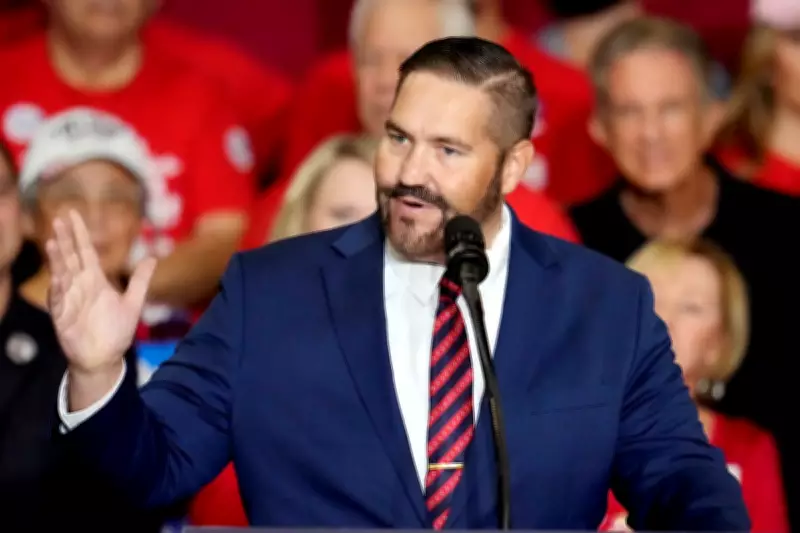
Arizona Judge Sides with Republican Election Official in Key Voting Authority Dispute
A judge in Arizona has issued a significant ruling that grants increased authority to the top election official in the state's most populous county, following a prolonged legal battle with the local board responsible for overseeing elections. This decision could have broad implications for election administration in one of the nation's most prominent battleground states, which is set to host several high-profile races this fall.
Judge's Ruling Favors Recorder Justin Heap in Maricopa County
Maricopa County Superior Court Judge Scott Blaney largely sided with Justin Heap, the Republican recorder in Maricopa County, in a ruling filed on Thursday and appearing on the public docket on Friday. Heap had sued the predominantly Republican county board of supervisors last summer, alleging that the board had illegally seized control of certain aspects of election administration. Specifically, Heap claimed the board transferred funding, IT staff, and key functions—such as managing ballot drop boxes and establishing early voting sites—away from his office through an agreement negotiated with his predecessor.
Judge Blaney ruled that the board of supervisors "acted unlawfully and exceeded its statutory authority by seizing the recorder's personnel, systems and equipment and refusing to return them" to the recorder. The judge emphasized that the board's assertion of plenary authority over election administration through its general supervisory powers is inconsistent with Arizona law.
Division of Election Responsibilities Clarified
In his ruling, Judge Blaney clarified the division of election responsibilities between the recorder's office and the board of supervisors. The recorder's office is now responsible for overseeing in-person early voting, among other duties, while the board retains responsibility for operations such as selecting election day voting locations, supplying polling places, and hiring poll workers. This delineation aims to resolve the ongoing dispute over election oversight in Maricopa County, which includes Phoenix and has been a focal point for election conspiracy theories since Donald Trump lost the state to Joe Biden in 2020.
Reactions and Potential Appeal
Kate Brophy McGee, the board chair and a Republican, stated that the board would consider an appeal. In a statement, McGee expressed disagreement with portions of the ruling and indicated that all options, including an expeditious appeal, would be explored. She affirmed that the board has provided Recorder Heap with the necessary resources and staffing to fulfill his statutory duties and will continue to do so, emphasizing that voters always come first.
Justin Heap, a former Republican state lawmaker, was elected in 2024 after unseating incumbent Stephen Richer in the GOP primary and defeating a Democratic candidate in the general election. While Heap has stopped short of repeating false claims that the 2020 and 2022 elections were stolen, he has asserted that voters lack trust in the state's voting system and claimed it is poorly run. False claims of fraud since the 2020 presidential election have led to threats of violence against Richer and others in the Maricopa County elections office.
Background and Legal Support
Upon taking office, Heap terminated a previous agreement between Richer and the board that had revised how election operations were divided between the two offices. Heap filed his lawsuit with the backing of America First Legal, a conservative public interest group founded by Stephen Miller, who now serves as a deputy chief of staff in the White House. Richer has criticized Heap for contributing to an atmosphere of distrust and vitriol directed toward the elections office, alleging that Heap catered to the "really ugly stuff" that office staff had to endure and allied with individuals who fueled the controversy.
This ruling underscores the ongoing tensions and legal battles surrounding election administration in key battleground states, with potential ramifications for future voting processes and public trust in the electoral system.




