
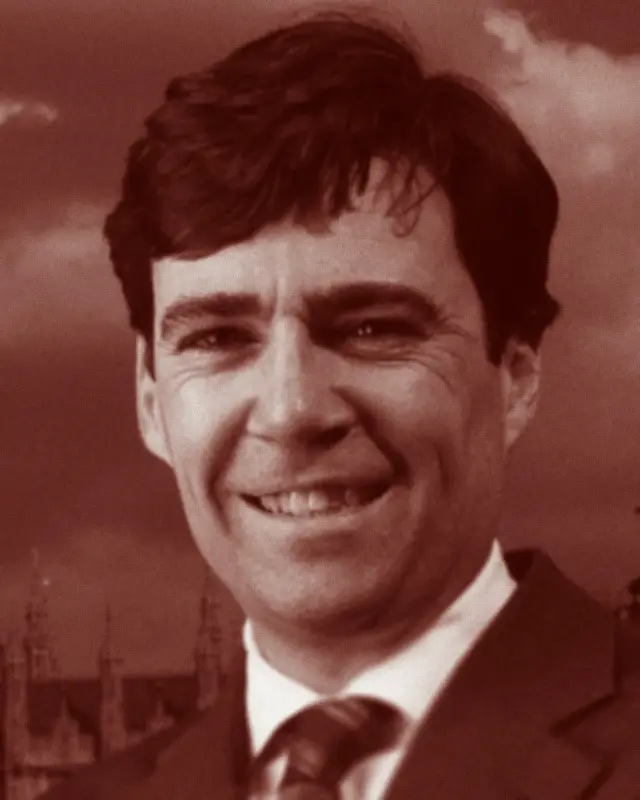
Andy Burnham's first electoral victory came at age 17 during a school hustings in 1987, representing Labour against a Conservative candidate. His former English teacher, Steve Harrington, recalled that Burnham's supporters unplugged the opponent's microphone, though Burnham was unaware of the prank and likely would have won anyway in the heavily Labour area of Newton-le-Willows, Merseyside.
From School Hustings to National Leadership
Now, as the UK's next prime minister after an uncontested selection by the Labour Party, Burnham faces the challenge of delivering change without a clear electoral mandate. Critics have labeled him "Captain Flip-flop," but those close to him argue he has shown remarkable consistency in his "communitarian" belief that individual rights depend on well-functioning communities with local control.
Burnham, 56, is a Cambridge graduate and poetry lover who writes his own speeches and gathers policy ideas while shopping at Asda and Costcutter. His mother, Eileen, a retired GP receptionist, remains a key political sounding board. Friends describe him as warm and affable, but also note a steely determination. In 2020, he declined to support Keir Starmer's leadership bid despite Starmer having backed Burnham's own 2015 campaign, a decision that strained their relationship.
Early Life and Education
Born in Aintree, Merseyside, and raised in Culchest, Cheshire, Burnham described his childhood as "wonderful in every way." His father, Roy, was a telephone engineer. Family friend Ian Riley recalled the Burnham home as "immaculately kept" and "never flashy." Riley, a maths teacher, pushed Burnham to aim higher after he barely made it into the O-level set, and Burnham went on to achieve an A in maths.
Harrington, who taught Burnham English at A-level, influenced his decision to abandon plans to study Spanish at university. Instead, Burnham pursued English at Fitzwilliam College, Cambridge, after being captivated by Tony Harrison's working-class poetry. Burnham has spoken of suffering from "impostor syndrome" at Cambridge, but it was there he met his Dutch-born wife, Marie-France van Heel, known as M-F. He graduated with a 2:1 and wrote to the Guardian in 1991 to protest Philip Larkin's omission from a list of great poets.
Early Political Career
After work experience at the Middleton Guardian, Burnham moved to London in 1992 for a job at Baltic Publishing. There, he met Eleanor Mills, stepdaughter of Labour MP Tessa Jowell, who encouraged him to apply for a parliamentary assistant role. Burnham helped Jowell with Tony Blair's leadership campaign and the 1997 election before working as a parliamentary officer for the NHS Confederation and as an administrator on a football taskforce. He became a special adviser to culture secretary Chris Smith and was elected MP for Leigh in 2001.
In Parliament, Burnham shared office G38 with fellow former special adviser James Purnell, who would later become his chief of staff in Downing Street. A source described the office as a place where "there would always be a football being kicked around." David Blunkett, then home secretary, took Burnham on as parliamentary private secretary, calling it "a great learning curve." Blunkett has remained a mentor and recently advised Burnham to take time before setting out his full agenda.
Ministerial Roles and Challenges
Burnham was made a minister in Blunkett's department and then in health. He went undercover in the NHS and wrote a report, which annoyed some in the department. In 2007, he joined the "Blairites for Brown" group as Tony Blair prepared to step down, earning his first cabinet job as chief secretary to the Treasury. As the 2008 financial crisis emerged, he faced tough negotiations with spending departments, including a "brutal" tag-team from Ed Balls and Yvette Cooper.
Promoted to culture secretary, Burnham visited Anfield in 2009 for the 20th anniversary of the Hillsborough disaster, where his speech was interrupted by calls for justice. He later said, "My journey away from Westminster began at Anfield that day." The expenses scandal of 2009 also took a toll; Burnham had lobbied for approval of £16,644 in expenses for a flat, writing a note claiming he "might be in line for a divorce." The money was paid, but the period was "horrible," compounded by his sister-in-law's death from breast cancer and his wife's preventive double-mastectomy after discovering the BRCA1 gene mutation.
Leadership Ambitions and Setbacks
After Labour's 2010 election loss, Burnham considered running for leader but faced pressure to step aside for David Miliband. He felt he "had something particular to say" and entered the contest, which was dominated by the fratricidal battle between David and Ed Miliband. Burnham's campaign was marred by errors, including a misspelled bus sticker and an unfortunate positioning that made a slogan read "end the NHS." He came third. Under Ed Miliband, Burnham became shadow health secretary, but tensions arose over his outspokenness on social care, with Miliband's team briefing that he could be sacked.
After the 2015 election loss, Burnham was favorite for the leadership but "fought the wrong election – appealing to the public not the Labour membership." He refused union funds and emphasized fiscal discipline, but Jeremy Corbyn's surge from the left saw Burnham beaten heavily into second place. At a "wake" in a Marylebone pub, Labour peer Charlie Falconer told him, "Don't worry Andy. There's always a third time." Few believed it then.




