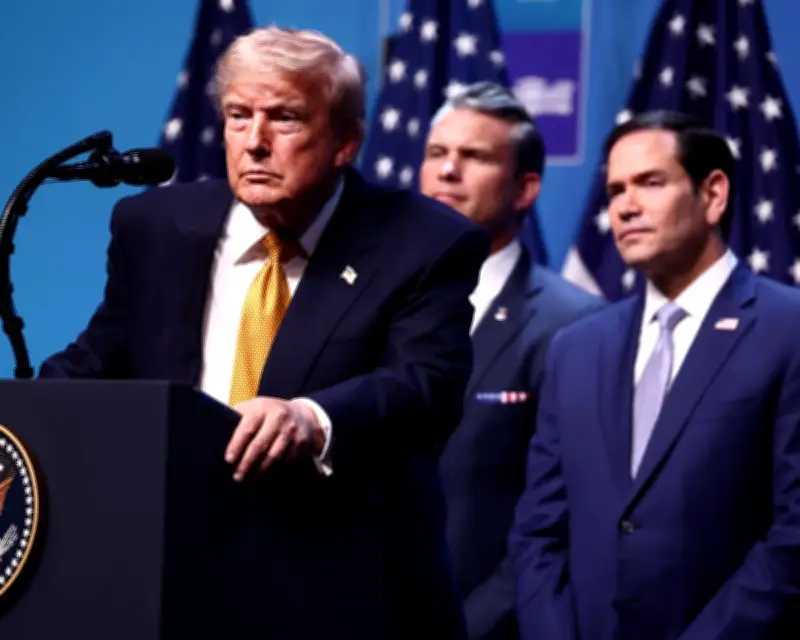
Donald Trump's recent remarks at the Nato summit in Ankara have been described as hollow, yet they underscore a genuine issue regarding the costs of US alliances, according to Christopher S Chivvis, a senior fellow at the Carnegie Endowment for International Peace. Writing in a recent analysis, Chivvis argues that Trump's domestic political opponents should breathe a sigh of relief but not rush into an uncritical embrace of US alliances.
Trump's approach losing steam
Chivvis notes that Trump's strategy of threatening to withdraw from Nato and berating allies has lost its shock value. The Ankara summit revealed the limits of Trump's influence, particularly after his failed war on Iran, which now seems destined to drag on indefinitely. Trump's attempts to dominate the meeting rang hollow, and his talking points against allies conflicted with later claims of 'tremendous love' at the summit.
A year ago, European leaders feared Trump might withdraw from the almost 80-year-old alliance. However, this threat is losing force. Withdrawal would create a domestic political firestorm and could appear weak, while Europe is growing stronger and less vulnerable to Trump's threats. Europe is now on course to acquire serious defenses against Russia, reducing reliance on US protection.

Real costs of alliances
Chivvis emphasizes that US political leaders must be more clear-eyed about what alliances cost Americans. He criticizes both Democrats and Republicans for an overcommitment to military alliances, bordering on religious enthusiasm. 'The core of an alliance is a commitment to fight a war for another country,' he writes, noting that this is a huge cost that must be reciprocated with real benefits for the American people.
He points to Biden's 'bear hug' of Israel as a glaring example, which drove the administration into the arms of Benjamin Netanyahu and the tragedy of Israel's Gaza strategy. Other examples include Biden's one-dimensional reassurance of European allies, unwillingness to show daylight with Ukraine, and unconditional support for Taiwan.
Toward a balanced relationship
Despite the damage Trump has done, destroying trust and undermining confidence in Washington, the Nato summit in Ankara is likely to be remembered as a step toward a more balanced US-European relationship. Chivvis argues that future American leaders can learn from Trump's mistakes without simply reacting against them. 'The world needs constructive American leadership, but it also needs realism about the limits of American power and the costs the American people will bear,' he concludes.
Washington should welcome a stronger Europe, as shared interests in peace and prosperity sustain the alliance, not just institutional structures. Without those interests, the structures will hollow out anyway.