
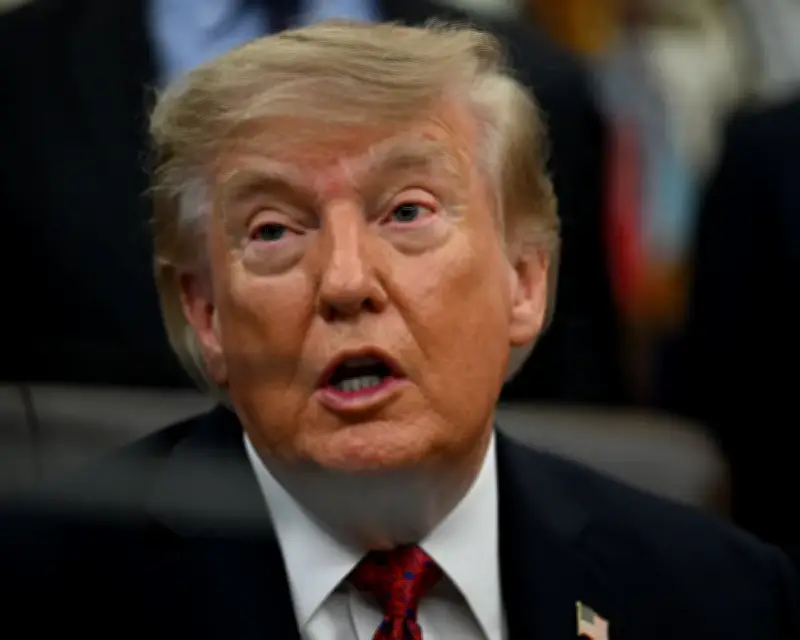
US President Donald Trump has suggested he is reconsidering American support for British sovereignty over the Falkland Islands, a move that could strain the “special relationship” between Washington and London. Asked by reporters at the White House whether he was reviewing the US position on the South Atlantic archipelago, Trump replied: “I always review every position – that’s just one of many.”
US stance and historical context
Officially, the US maintains a neutral position on sovereignty over the islands, which Britain first claimed in the late 17th century and has held almost continually since 1833. In practice, Washington recognizes British administration of the territory, which was the subject of an Argentinian invasion and subsequent military conflict with Britain in 1982.
Trump’s comments are the clearest indication yet that his administration is prepared to use the dispute as leverage to pressure the new British prime minister, Andy Burnham, to raise defence spending and increase contributions to NATO. The remarks follow an unnamed US official telling the Telegraph last week that Washington could change its position if Britain failed to meet its defence spending commitments.
Defence spending pressure and NATO commitments
That report came after UK chancellor John Healey was said to be preparing to drop Britain’s prior commitment to devote 3% of its GDP to defence spending by 2030, ahead of his first budget on 28 October. Trump has made a priority of pressing US allies to boost defence budgets and raise NATO contributions during both his presidencies, accusing other countries of “freeloading”. At a summit in The Hague last year, allies committed to spending 5% of GDP on defence and security-related expenditures by 2035.
Speculation about a potential US switch of allegiance over the islands has been circulating for months. In April, a leaked Pentagon email suggested reviewing Britain’s claim in response to its lack of support for Trump’s decision to go to war with Iran.
Impact on UK sovereignty and historical ties
A change in the US position would represent a psychological blow to Britain’s sovereignty over the Falklands. After Argentina invaded the islands in 1982, the decision by Margaret Thatcher’s government to dispatch a naval taskforce that eventually recovered the territory was bolstered by staunch diplomatic support from Ronald Reagan, who sided with Britain even though Washington was also an ally of the Argentinian ruling military junta. Some 649 Argentinian and 255 British personnel died in the fighting before Argentina’s forces surrendered in June 1982.
The episode played a central role in cementing the bond between Thatcher and Reagan, who were political allies and ideological kindred spirits. In recent times, Trump has become close to Argentina’s populist president, Javier Milei, who attended his second inauguration in January last year.
US-Argentina relations and Falklands sentiment
Last year, Trump authorized a $20bn financial lifeline to Argentina to help it navigate a financial crisis, but made the funds contingent on Milei’s party winning subsequent congressional elections. Milei’s La Libertad Avanza party duly won the election, confounding pollsters’ forecasts. Trump later authorized the imports of Argentinian beef in an effort to reduce US grocery prices.
Milei has vocally supported Argentina’s claim to the islands. In a 2013 poll, 1,513 out of 1,517 Falklands residents who cast a ballot said they wanted the territory to remain a part of the UK. Feelings over the islands surfaced after Argentina’s 2-1 victory over England in the semi-final of the World Cup in July, when celebrating Argentinian players unfurled a banner reading “Las Malvinas son Argentinas” – the Falklands are Argentinian. The Argentinian football association was subsequently fined $235,000 by Fifa for violating its rules on non-sporting demonstrations.




