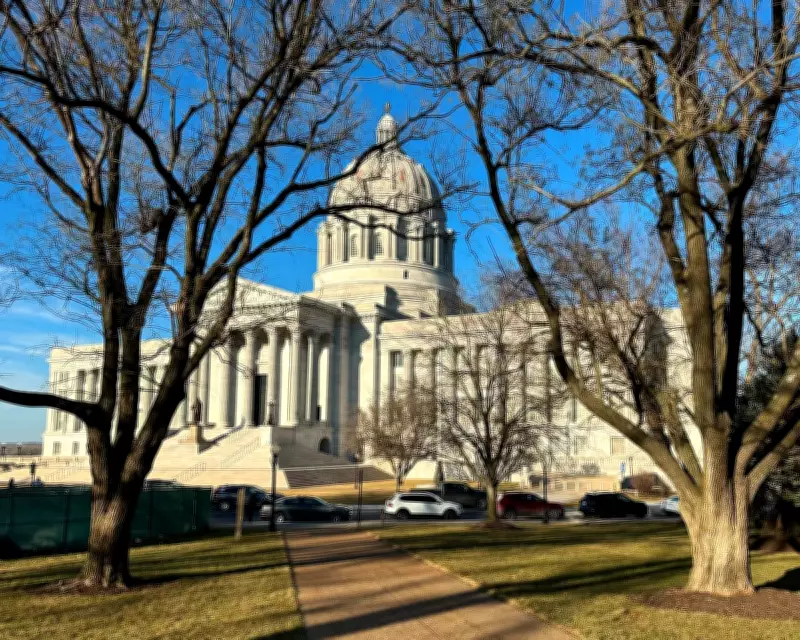
Republicans in Missouri are pushing to eliminate the state income tax, a move that experts warn could be devastating for public services and lower-income residents. The proposal, which voters will decide on in August or November, would make Missouri the first state in over a century to ask residents to abolish the tax entirely.
Lessons from the Kansas Experiment
Hannah Rejali, a 34-year-old mother of four and co-owner of a marketing agency in Kansas City, lived through the so-called "Kansas Experiment" in the 2010s. Then-Governor Sam Brownback slashed income taxes, promising an economic boost, but instead left the state with a $900 million budget shortfall. Schools suffered, with at least eight districts ending the academic year early in 2015. "You say 'Brownback' to anyone on the Kansas side, and they shudder," Rejali said. Now in Missouri, she fears a repeat: "From a public education standpoint, the income tax being removed would be pretty devastating."
Proponents' Claims vs. Reality
Advocates argue that eliminating the income tax would attract businesses and put more money in residents' pockets. The proposed constitutional amendment, likely paired with a sales tax expansion, is backed by groups like Americans for Prosperity, funded by the Koch brothers, and Rex Sinquefield, a St. Louis investor who supported the Kansas cuts. Governor Mike Kehoe, who received millions from Sinquefield, wrote that the move would "make Missouri more competitive, attract jobs and investment, and let workers keep more of what they earn."

However, critics counter that the benefits primarily help the wealthy. "The claim being made is that those high-income people will grow businesses or create jobs, and the benefits would trickle back down to everybody else," said Carl Davis, research director at the Institute on Taxation and Economic Policy. "The reality is, this has been done at the national level and in many states, repeatedly, and it doesn't work that way."
Potential Impact on Residents
If the state increases sales taxes to offset lost revenue, lower- and middle-income residents would bear the brunt. According to an Institute on Taxation analysis, people earning between $49,000 and $80,000 could pay an average of $535 more annually. Missouri state Senator Joe Nicola, a Republican opposing the amendment, noted that many elderly residents don't pay income tax, so an expanded sales tax would impose additional costs on them.
Evidence on economic benefits is mixed. A 2015 National Tax Journal report found that "marginal tax rates generally have no impact on employment and statistically significant but economically small effects on the rate of firm formation." Davis added that tax cuts for top earners often lead to stock market investments rather than job creation.
Concerns Over Education Funding
The ballot measure includes language to "protect local funding for public schools," but critics say it only prevents local tax adjustments that reduce school funding, not state-level cuts. Amy Blouin of the Missouri Budget Project called the ballot summary "very misleading." Meanwhile, North Carolina offers a cautionary tale: gradual income tax cuts since 2012 have led to decreased per-student funding and teacher salary declines, sparking protests.
Davis warned that a gradual approach could lead to a "frog in boiling water" scenario, where service quality slowly degrades without a crisis. "You are ratcheting the income tax rate down and the quality of services gradually degrades, but it's in a less noticeable or flashy way than what we saw happen in Kansas," he said.