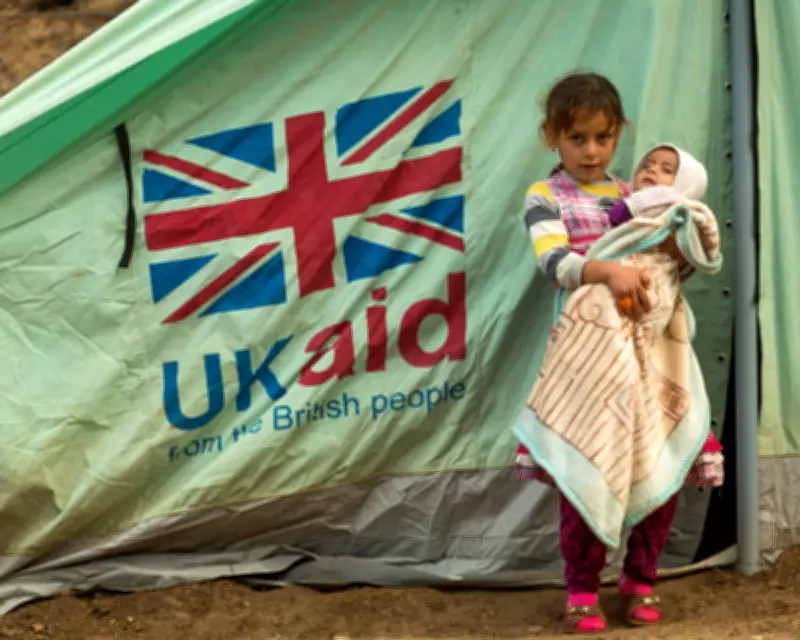
David Miliband, the former British foreign secretary and current head of the International Rescue Committee, has issued a stark warning that reductions in overseas aid by countries including the United States and the United Kingdom are poised to intensify global economic instability. This comes as the world grapples with a severe humanitarian crisis triggered by the Iran war, which Miliband argues will have far-reaching consequences for both impoverished and affluent nations alike.
The Ripple Effects of Aid Reductions on Global Stability
In an exclusive interview with the Guardian during the International Monetary Fund and World Bank meetings in Washington, Miliband emphasized that the decision by the US to "abandon" its aid program under the Trump administration represents a significant threat. He stated that such moves will worsen economic shocks that reverberate across the globe, undermining stability in an increasingly interconnected world.
"An untended humanitarian crisis is an incubator of political instability. We are in a more connected world than ever before," Miliband explained. "The Iran war demonstrates our interconnectedness, but these connections flow both ways—from poor to rich countries as well."

Humanitarian and Economic Fallout from the Iran Conflict
The ongoing conflict in the Middle East has already led to a surge in global poverty and the potential displacement of millions of people. Miliband drew parallels to the 2016 European refugee crisis, noting that conflict invariably drives mass migration, which in turn strains economies and social systems worldwide.
Compounding the issue, the closure of the Strait of Hormuz has caused energy and fertilizer prices to skyrocket, creating what Miliband describes as a "food security timebomb." This situation threatens to plunge an additional 32.5 million people into poverty, according to recent United Nations estimates, with developing countries bearing the brunt of the impact.
Western Governments Slash Aid Amid Rising Global Tensions
Despite these escalating challenges, Western nations such as the US, Germany, France, and the UK are cutting their aid budgets. This trend is driven by elevated borrowing and debt levels in advanced economies, coupled with increased pressure to boost defense spending. Recent data from the Organisation for Economic Co-operation and Development reveals that rich countries reduced aid spending by $174.3 billion in 2025, marking a nearly 25% decline from the previous year.
Miliband expressed deep regret over these cuts, particularly highlighting the UK's decision under Keir Starmer's government to slash its aid budget. He argued that supporting the world's poorest populations is not only a moral imperative but also a strategic investment for Britain.
"You could say there could hardly be a worse time to cut the aid budget," Miliband asserted. "We have very significant numbers of people in extreme poverty, and we now have more evidence than ever about what works in reducing poverty. The positive impacts of aid are stronger and clearer."
The Erosion of Global Leadership and Its Consequences
During his visit to Washington, where he also spoke at the Semafor world economy conference, Miliband criticized the US for relinquishing its longstanding role as a "global anchor" in development under the Trump administration. He acknowledged that while America has made mistakes over the past eight decades, its aid policy has generally had a net positive effect on global stability.
"It is a historic decision to abandon that position," Miliband remarked, warning that this shift could have dire implications for international cooperation and economic resilience.
Labour's Internationalism and the UK's Aid Policy
Reflecting on the UK's own aid reductions, Miliband pointed to evidence linking lower levels of British assistance to increased fatalities worldwide. He stressed that the aid budget is more than just a charitable endeavor—it is a practical investment that aligns the UK's actions with its values.
"Britain's aid budget is not just the right thing to do. It is a good investment for Britain," Miliband said. "I think that Labour's internationalism is an important part of its offering to the public. It is a positive string in our bow, not a drag."

As global tensions rise and humanitarian needs escalate, Miliband's warnings underscore the critical role that sustained aid plays in preventing further economic and political instability. The decisions made by Western governments today will undoubtedly shape the world's ability to navigate future crises.