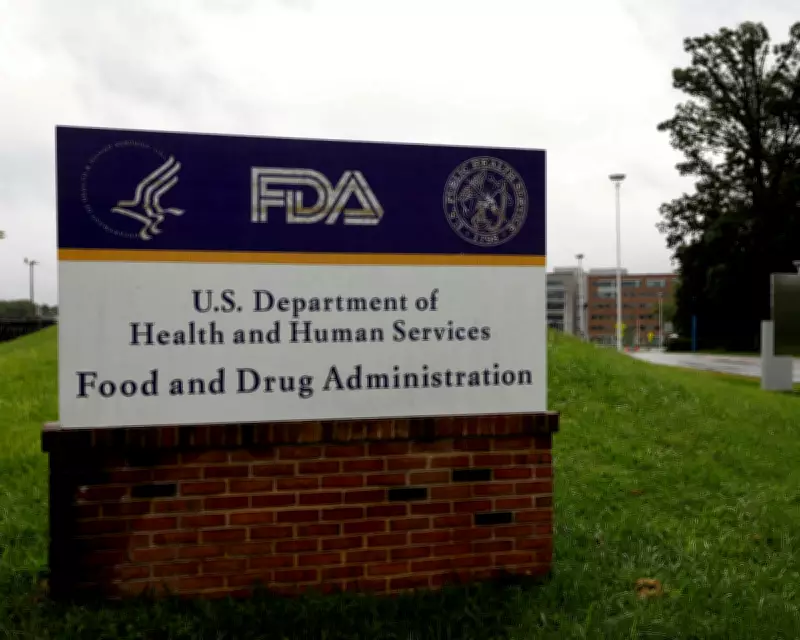
The Food and Drug Administration (FDA) is facing accusations of suppressing government-funded vaccine safety research. According to recent reports in the New York Times and Washington Post, career scientists completed studies on millions of vaccine recipients, which were peer-reviewed and accepted by pharmacovigilance journals. However, political appointees declined to sign off, leading to the withdrawal of the manuscripts.
Withdrawn Studies
In October, FDA scientists were directed to withdraw two Covid-19 vaccine safety studies that had already been accepted by the journals Drug Safety and Vaccine. Additionally, in February, top officials refused to approve the submission of Shingrix safety abstracts to a major drug-safety conference. The Covid studies were extensive: one examined records of 7.5 million Medicare beneficiaries for 14 pre-specified adverse outcomes after 2023–2024 Covid-19 vaccination, using a self-controlled case-series design with follow-up of up to 90 days. Only one signal—anaphylaxis at roughly one per million Pfizer-BioNTech doses—exceeded statistical noise. A second study looked at 4.2 million recipients aged six months to 64 years for more than a dozen outcomes, identifying the rare febrile-seizure and myocarditis signals already on the label. The Shingrix safety analysis confirmed the elevated but low Guillain-Barré risk that has been on the package insert for years.
Selective Transparency
The agency's stated objection—that the authors “drew broad conclusions that were not supported by the underlying data”—describes, in any functioning scientific system, the ordinary work of peer review. Reviewers ask for narrower language; editors ask for revised discussion sections; manuscripts appear with more carefully bounded claims. What does not happen is for political appointees to instruct staff scientists to withdraw an accepted manuscript. The procedural anomaly is the story. The asymmetry compounds it. In late November, a memo from the same FDA center linked the deaths of 10 children to Covid-19 vaccination, a claim the agency has not substantiated. That memo was released and widely covered. Two studies showing serious adverse effects to be very rare across nearly 12 million doses were not. Vaccine-critical claims have moved through the agency at low evidentiary thresholds, while reassuring safety findings have been held to standards no peer-reviewed paper could realistically meet. The selectivity is the grammar of capture, and it does not stop at vaccine safety. It now shapes which surveillance signals reach physicians.

Impact on Public Health Surveillance
This suppression comes at a critical time. On 11 June, the FIFA World Cup opens across North America: 48 teams, 11 United States host cities, more than 6 million attendees over 39 days. The tournament arrives during a regional measles resurgence: more than 9,000 confirmed cases in Mexico since February 2025, Canada’s loss of measles elimination status in November, and United States vaccination coverage below the 95% threshold required for population immunity. In ordinary times, that combination would be a reason for heightened transparency. Instead, the Centers for Disease Control and Prevention (CDC) has lost approximately a quarter of its workforce in the past year, has been editing its weekly journal under directive, and sits inside the same Health and Human Services department that has directed FDA scientists to withdraw vaccine-safety analyses already accepted by independent peer review.
Personal Account from a Physician
Robert B Shpiner, a clinical professor of medicine at UCLA, recounts a conversation with a patient who asked about the safety of the shingles vaccine. He told her what he knew: the trials were clean, her risk of zoster was real, the most common side effect a sore arm. What he could not tell her was that FDA scientists had completed a safety analysis of that vaccine using agency-held records, written it up, and submitted abstracts the agency would not clear. He warns that when the patient returns next month, the World Cup will already have begun. He will tell her what he told her last week, but he will not be able to assure her that the federal public health system is still free to tell clinicians what it sees.

As the World Cup approaches, the integrity of the surveillance system is in question. If a respiratory cluster appears in a Los Angeles emergency room in early July, the channels that would usually alert physicians—local public health, MMWR, and CDC dashboards—have been edited, paused, or captured. The question every ICU attending will be asking is whether the surveillance system is still telling the truth.