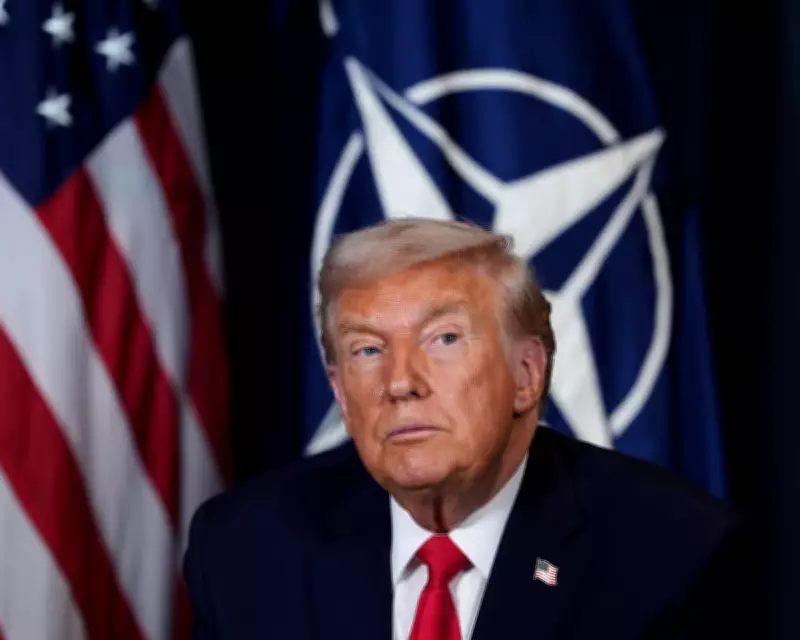
European Union leaders have agreed to draw up a plan for activating the bloc's mutual assistance clause, Article 42.7 of the EU treaty, as Donald Trump intensifies his criticism of NATO. The decision comes amid reports that the US is exploring options to suspend Spain from the alliance due to its opposition to the US-Israeli war on Iran.
EU Leaders Seek Clarity on Mutual Defense
Nikos Christodoulides, the president of Cyprus, confirmed that EU leaders have tasked the European Commission with preparing a blueprint on how the bloc would respond if the mutual assistance clause is triggered. The discussions took place during a summit in Nicosia, where leaders debated the implications of Article 42.7.
Trump, a long-time critic of NATO, has escalated his rhetoric against the alliance, calling it "very disappointing" after European nations refused to join the US-Israeli military campaign against Iran. This month, he stated that he is "absolutely without question" considering a US withdrawal from NATO, plunging the 77-year-old alliance into its worst crisis.
Spain's Prime Minister Defends NATO Loyalty
Pedro Sánchez, Spain's prime minister and a vocal critic of the Iran war, reaffirmed Spain's commitment to NATO while denouncing "the failure of brute force in the Middle East." His comments came after reports that the Pentagon is considering punitive measures against allies deemed insufficiently supportive, including suspending Spain from the alliance.
European Council President António Costa announced that the EU is designing a "handbook" for using the mutual assistance clause, citing a recent test case in Cyprus. During a drone strike on a British base in Cyprus, Greece, France, Italy, Spain, and the Netherlands mobilized military assets to assist in defense. The Royal Navy faced criticism for its limited deployable warships.
Article 42.7: A Flexible but Uncertain Tool
France remains the only country to have triggered Article 42.7, following the 2015 Paris attacks that killed 130 people. Paris called on EU members to reinforce its overseas commitments so it could redeploy troops for domestic security. The lack of detailed procedures was once seen as a strength, but now member states seek clarity.
Christodoulides emphasized the need for an operational plan, asking: "If France triggers Article 42.7, which countries will respond first? What are the specific needs?" The blueprint aims to address these questions and ensure a coordinated response.
Balancing EU and NATO Defense
Cyprus, not a NATO member, wants the EU to take the clause more seriously after a drone strike on RAF Akrotiri. However, some EU members fear steps that could undermine NATO's Article 5 collective defense. An EU official noted that NATO remains the bedrock of collective defense, but the EU offers complementary tools like sanctions, financial assistance, and humanitarian aid.
EU foreign policy chief Kaja Kallas briefed leaders on ongoing work regarding the clause. Meanwhile, Polish Prime Minister Donald Tusk expressed doubts about US commitment to NATO, questioning whether Washington would remain loyal to treaty obligations.
US Threats and Spanish Response
Sánchez downplayed reports of Pentagon plans to suspend Spain, stating that Spain works with official documents and statements, not internal emails. He reiterated Spain's full cooperation with allies within international law but renewed criticism of the "illegal war" in Iran, calling for respect for multilateral order.
NATO officials note that the alliance's founding treaty contains no mechanism for expelling a member. The Pentagon's internal memo, which included options like suspending Spain and reviewing US support for Britain's Falkland Islands claim, reflects frustration over some allies' refusal to grant access, basing, and overflight rights for strikes on Iran.
Tabletop Exercises Planned
EU senior diplomats are expected to conduct tabletop exercises in May to simulate scenarios under Article 42.7. After France activated the clause in 2015, member states increased contributions to EU and UN missions in the Sahel, Mali, Central African Republic, and the Mediterranean, allowing French troop redeployment. The UK, then an EU member, permitted French aircraft to use RAF Akrotiri. EU states also pledged enhanced intelligence sharing and counter-terrorism cooperation.