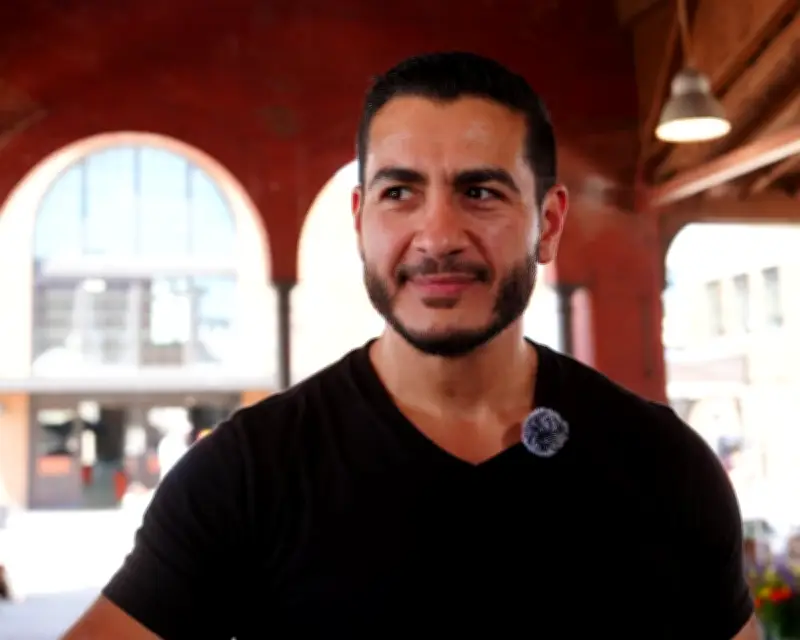
Abdul El-Sayed's victory in Michigan's Democratic Senate primary has given his party a potential roadmap for countering Donald Trump's political strategy. By blending progressive policies with a nationalist appeal and turning his opponent's financial backing into a liability, El-Sayed has demonstrated how Democrats can reclaim both nationalism and populism from Republicans.
El-Sayed's Innovative Approach
El-Sayed's campaign broke from conventional progressive messaging by framing foreign policy through a nationalist lens. While many progressives, like Zohran Mamdani, discuss Israel-Palestine in terms of human rights and international law, El-Sayed consistently ties US military aid to Israel to domestic needs. In a recent interview with David Remnick of the New Yorker, El-Sayed steered the conversation toward American priorities, stating, "It is not my job as an American policymaker to decide what the ultimate peace should be. But it is my job to make sure that our resources are stewarded correctly for the people I'm responsible for: those kids going to those broken schools."
This approach, which El-Sayed describes as a progressive version of America First, resonates with a broad audience. A May poll by the Institute for Middle East Understanding found that Republicans under 45 prefer candidates who support reducing taxpayer-funded weapons sales to Israel by a margin of nearly two-to-one. El-Sayed's message also appeals to younger conservatives, as noted by the late rightwing activist Charlie Kirk, who observed that young conservatives are skeptical of the current US-Israel relationship and want leaders to put America first.

Turning Financial Disadvantage into Strength
El-Sayed's campaign also offers a lesson in campaign finance. In the final five weeks of the primary, outside Super PACs supporting his opponent, Representative Haley Stevens, spent more than 12 times as much on television ads as those backing El-Sayed. Rather than being overwhelmed, El-Sayed used this disparity to his advantage. He repeatedly highlighted Stevens's financial support from Aipac, the pro-Israel lobbying group, and linked her to other unpopular interests, such as DTE Energy, a Michigan utility criticized for high rates and power outages.
This strategy turned Stevens's financial edge into a liability. In a focus group conducted by The Bulwark's Sarah Longwell, voters repeatedly cited Aipac and corporate influence as reasons for disliking Stevens. El-Sayed's ability to reframe the money issue provides a model for Democrats facing well-funded Republican opponents in the general election and beyond.
Implications for Democrats Nationwide
Democrats across the country will likely be outspent by Republicans in upcoming elections. Elon Musk has pledged at least $100m to support Republican candidates, and GOP-aligned committees have raised nearly $600m more than their Democratic counterparts. El-Sayed's approach suggests that Democrats can counter this by making campaign funding a central issue, branding opponents as lackeys of special interests like Aipac, Musk, big oil, or big pharma.
This strategy requires Democrats to reject corporate and special interest money, relying instead on small donors. While not all candidates can deliver such a populist message effectively, the corruption of Trump's presidency and the growing wealth gap present an opportunity. As El-Sayed's model demonstrates, focusing on the sources of campaign funds can resonate with voters and potentially lead to victory.
Peter Beinart, a contributing opinion writer at the New York Times, notes that El-Sayed's success could provide a roadmap for Democrats to reclaim nationalism and populism. "Republicans have owned nationalism and populism," Beinart writes. "If Abdul El-Sayed can win this fall, he'll have handed his party a roadmap for how to reclaim both."