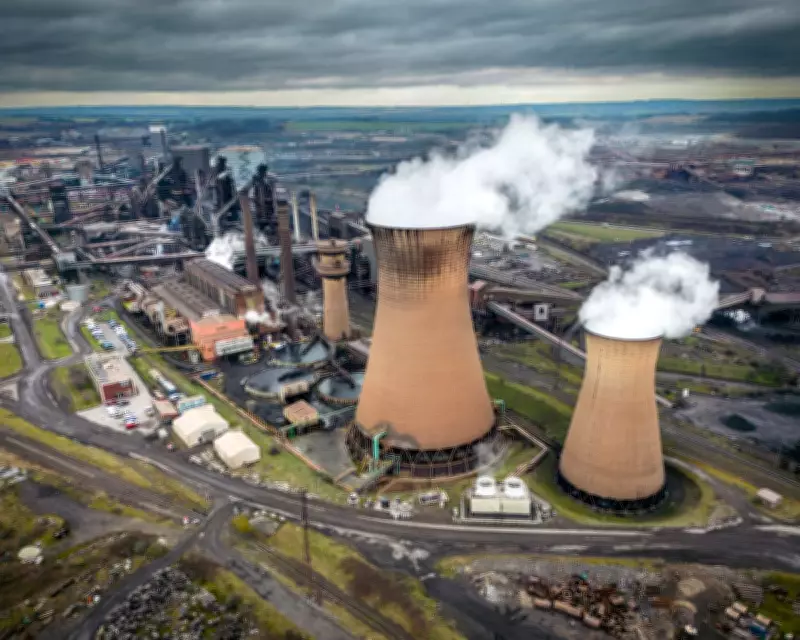
British Steel's Scunthorpe site could eventually convert to using an electric arc furnace, a lower-carbon alternative to blast furnaces. However, the path to that future is fraught with uncertainty. Prime Minister Keir Starmer recently touted the government's emergency takeover of British Steel as a proud achievement, but the reality is more complex. The temporary control prevented Chinese owner Jingye from shutting down blast furnaces but left the government liable for operational losses projected to reach £615m by next month, according to the National Audit Office.
Nationalisation as a Stepping Stone
Full nationalisation, expected to be announced in the King's Speech, would end the limbo state of ownership and provide some reassurance for 4,000 workers. Yet it also forces the government to choose among vaguely described "potential future options." The key questions remain: What is the actual plan? How much will it cost? And how much of the £2.5bn promised for UK steelmaking revitalisation will remain?
Half an answer may emerge later this week if ministers confirm that nationalisation is not an end but a means to enable a sale—or partial sale—to a better owner than Jingye. Credible suitors are few, but Sev.en Global Investments, the Czech group behind a modernised steelworks in Cardiff, is generating interest.

Terms of Sale and Transition Costs
The terms of any post-nationalisation sale will be crucial. The likely strategy involves converting Scunthorpe to electric arc furnace technology, which takes about three years to build. A key question is whether old-style blast furnaces will operate during the transition. Assuming they do, to avoid a gap in the UK's steel strategy and union backlash, the costs could be steep. Any new owner will likely demand subsidies to cover transition losses and construction of the electric arc furnace. The benchmark for such subsidies was set at Port Talbot, where Tata Steel received £500m in support for a £1.25bn investment. Costs have likely risen since then, and additional payments may be needed to persuade Jingye to exit quietly.
Tariffs and Energy Costs
The government's steel strategy, released in March, included tariffs to protect UK producers from cheap Chinese and Vietnamese imports. This could help meet the target of raising UK production to 40-50% of domestic demand, up from 30% in 2024. Greater volumes would improve economics at sites like Scunthorpe. However, tariffs are not a panacea and face criticism from UK steel buyers. The industry's other major complaint—high electricity costs—remains unresolved. Despite subsidy schemes like the "supercharger," energy costs are still higher than in continental Europe, and government plans on this front are vague.
The Road Ahead
The NAO warned in March that if current operating conditions persist, the taxpayer bill at Scunthorpe could exceed £1.5bn by 2028. The government now faces hard decisions and hard numbers. If it can reduce that projection while protecting jobs and steel-making capacity, Starmer might have something substantial to boast about. But the job has barely started.