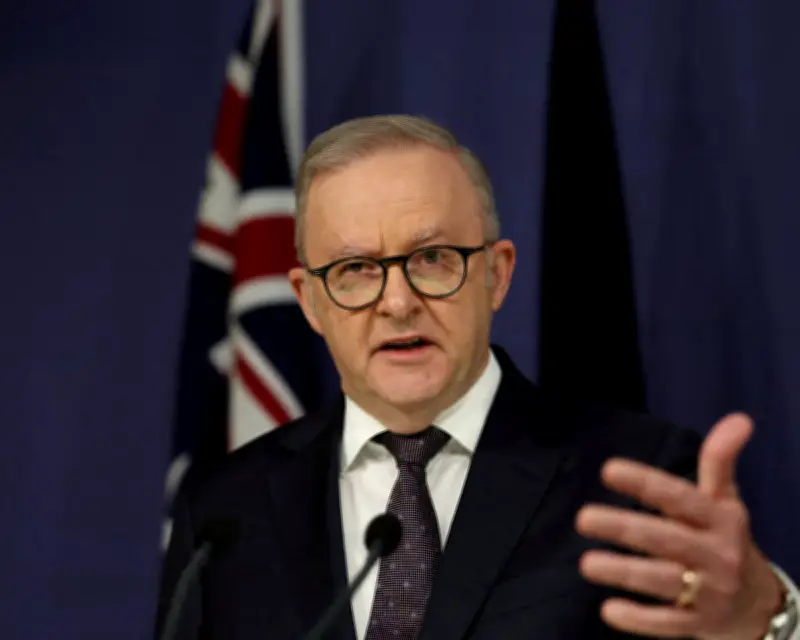
Prime Minister Anthony Albanese has delivered a landmark speech outlining the federal government's vision for artificial intelligence, emphasising safety, copyright protections, and the concept of a social licence for data centres. Speaking at the National Press Club in Canberra on Tuesday, Albanese positioned AI as both an economic opportunity and a regulatory challenge that demands careful management.
Key Principles: Safety and Trust
Albanese declared that the government would introduce mandatory safety standards for high-risk AI applications, building on the voluntary framework established last year. He stressed that public trust is essential for AI adoption, noting that 78% of Australians are concerned about AI misuse, according to a recent CSIRO survey. The Prime Minister stated that Australia must lead in responsible AI development to harness its full potential.
Copyright and Creator Rights
A significant portion of the speech addressed copyright concerns. Albanese announced that the government will legislate to ensure creators and media companies are fairly compensated when their work is used to train AI models. He said, "We cannot allow a handful of tech giants to profit from the labour of Australian artists, writers, and journalists without fair reward." The proposed laws would require AI developers to disclose training data and negotiate licensing agreements with copyright holders.

Data Centre Social Licence
The Prime Minister introduced the concept of a social licence for data centres, arguing that the massive energy and water consumption of these facilities must be justified to local communities. He pledged to update planning laws to require environmental impact assessments and community consultation for new data centre developments. This follows growing opposition to data centre projects in suburbs like Sydney's West and Melbourne's growth corridors.
Economic and National Security Context
Albanese framed AI as central to Australia's economic future, projecting that AI could add $115 billion to the national economy by 2030. He also highlighted national security risks, including foreign interference and disinformation, and announced a new AI Security Unit within the Australian Signals Directorate. The unit will focus on protecting critical infrastructure from AI-enabled cyberattacks.
Industry and Opposition Reactions
The technology sector responded cautiously. The Australian Information Industry Association welcomed the focus on safety but warned against overregulation that could stifle innovation. Opposition Leader Peter Dutton criticised the speech as lacking concrete timelines and funding commitments, arguing that Labor is "all talk and no action" on digital transformation. Meanwhile, the Australian Copyright Agency praised the copyright measures as a "long-overdue step" to protect creators.
Next Steps
The government will release a detailed AI regulation white paper by the end of 2026, with legislation expected to be introduced in 2027. Albanese emphasised that Australia will work closely with international partners, particularly through the OECD and Quad, to ensure global alignment on AI governance.