
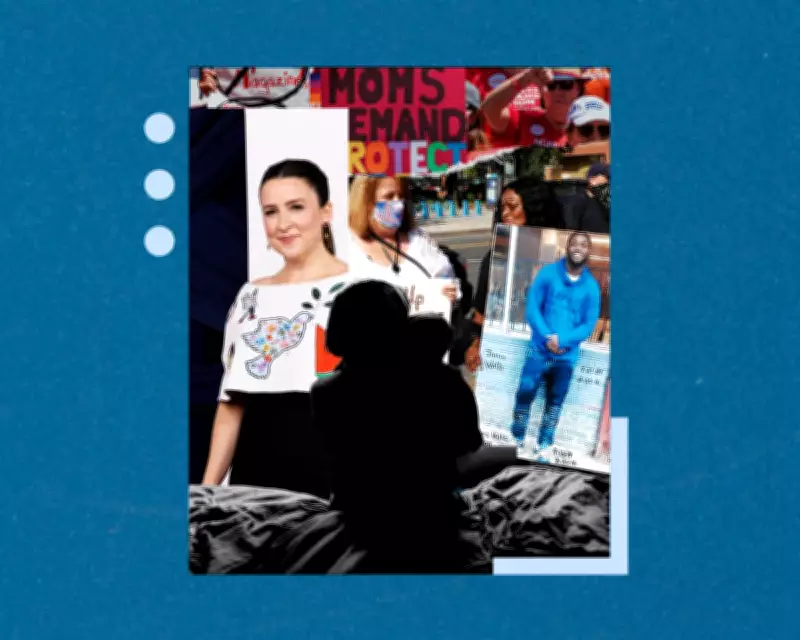
The current moment builds on decades of work by mothers harnessing their organizing power, meeting with each other to keep communities safe, launching campaigns, advocating for policy changes, and getting out the vote. This movement, rooted in caregiving and community, has become a powerful force in American resistance.
Mothers at the Frontlines
Sarah, a mother from St. Paul, spent months following immigration agents to document arrests and constitutional rights violations. On the day Renee Good was killed by a federal agent after dropping her son at school, Sarah had also been surrounded by agents who claimed to be the good guys. Meanwhile, Linsey Rippy showed up daily at a church to assemble and distribute boxes of food, often including baby formula for infants stuck at home during the Trump administration's violent immigration enforcement crackdown.
Mothers built the backbone of resistance in Minnesota, quickly setting up networks to get kids to school, feed people, march, protest, monitor agents, give rides, protect schools, and fundraise for rent. This revolution of caregiving accelerated nationally when a photo of five-year-old Liam Ramos, detained with his father at the Dilley immigration processing center in Texas, went viral.
Rachel Accurso, known as Ms. Rachel, launched a campaign to end immigration detention for children. She described a video call with nine-year-old Deiver, a spelling bee winner held at Dilley, as "devastating and surreal." "I see every child like I see my children," Accurso said. "It breaks me."
Anita Patel, a pediatrician and mother in Washington DC, joined two other doctor-moms to launch a campaign against child detention. Liam's photo redirected attention to other detained children, including a two-month-old baby. Patel translated medical emergencies into understandable terms, emphasizing the danger of a child constipated for ten days. "I would have never done any of this if I hadn't been a fucking angry mother," she said.
Historical Context and Motivation
The current movement builds on decades of work. Mothers push for gun restrictions after their kids are shot or subjected to shooting drills. They fight police brutality because their children face state violence. They lobby for climate action to secure a future on a burning planet. They rally for women's rights, affordability, and abortion access. Now, they advocate from within political parties and public office.
"The same networks of moms we rely on for carpools and group chats are now used to organize, mobilize, and protect communities," said Liuba Grechen Shirley, founder of Vote Mama, a group focused on electing more mothers to office.
Why Mothers?
This year, mothers on the frontlines in Minnesota generated headlines, often dismissive. A Fox commentator called them "organized gangs of wine moms." While Black and brown mothers' advocacy was seen as expected, the shock focused on white suburban mothers. "We should have been listening to Black women all along," Rippy said. "Black women have been doing the work. So it's our turn."
Donald Trump's first election animated women, who marched by the millions in 2017. "The second he got elected, he radicalized a bunch of moms," Patel said. "If I have to run for office to stop these people, I will."
Harvard researchers Erica Chenoweth and Zoe Marks found that women's participation on the frontlines of mass resistance campaigns is "highly correlated" with success, nonviolence, and egalitarian democracy. "Fully free, politically active women are a threat to authoritarian leaders," they wrote in 2022.
Becoming a mother in the US, with no national paid leave, inadequate healthcare, and high childcare costs, drives many to examine flawed systems. "By the time you realize how terrible our policies are, you're usually trying to survive motherhood," Grechen Shirley said.
Sarah said giving birth heightened her strengths and weaknesses, holding up a mirror. Busy moms juggle work and parenting, feeling that if they don't step up, no one else will. "I feel like we're conditioned to do extra," Sarah said. "Is the burnout real? Yes." This leads to less hierarchical, collaborative movement-building.
The advocacy brings pushback. Accurso, who also spoke about Palestinian children in Gaza, faces threats. She focuses on those experiencing injustice. "I continue to speak out because the kids are counting on us," she said.
Shannon Watts, founder of Moms Demand Action, and Katie Paris created Red Wine and Blue, which engages suburban women and elects more women to office. The group has 800 local groups and 650,000 members. Paris got the idea while meeting women in their living rooms. "Most names sound like 'American women for America,'" Paris said. "They don't sound like much fun. Women were having a damn good time."
Resistance Leads to Political Power
Watts and Paris want more women to run for office. Many are intimidated by the electoral system. "When you're up close with mostly male, white lawmakers, you realize many are not rocket scientists," Watts said. Moms Demand Action has helped launch runs, including Virginia governor Abigail Spanberger and pediatrician Annie Andrews.
Moms of children under 18 make up 18% of the population but only 7% of Congress, compared to dads at 23% of Congress and 15% of the population. (Men named John or Jon make up 10% of the Senate.)
Jody Barnwell Smith, a former nurse, was motivated after the Marjory Stoneman Douglas shooting. She joined Moms Demand Action, then co-led her local group, knocked on doors, and became vice-chair of the Williamson county Democratic party. She recruits candidates in deep-red rural Tennessee. "We're the busiest, but also the most effective," she said. "99% of the time, it's another mom."
Smith credits these efforts for a slow shift leftward, even in losses. The pandemic entrenched political views in parent organizations. "The moms in one way or another carry a lot of influence," she said.
Policies, Not Just Politics
When more moms hold office, policies change. Grechen Shirley ran for Congress in 2018 as a "pissed-off mom." She petitioned the FEC to use campaign funds for childcare, which was approved. Vote Mama has since advocated for states to pass similar laws, and half of states now allow campaign funds for childcare. The group also pushes for security funds due to increased threats.
Grechen Shirley faced questions about who would watch her kids. "I wanted to normalize what it looks like to run and serve as a mom," she said.
In Minnesota, state senator Clare Oumou Verbeten had a baby while serving. She brought her seven-month-old son to the senate floor but was kicked out due to a rule banning children. A bipartisan group of moms pushed for a rule change, overturning the 168-year-old ban. Now Oumou Verbeten pushes for doula coverage to address maternal health gaps.
"Kids don't belong in detention. They belong in schools and on playgrounds," Accurso said. "One of our most sacred responsibilities is to care for the children of the world. We should be ashamed that we are failing our babies."




