
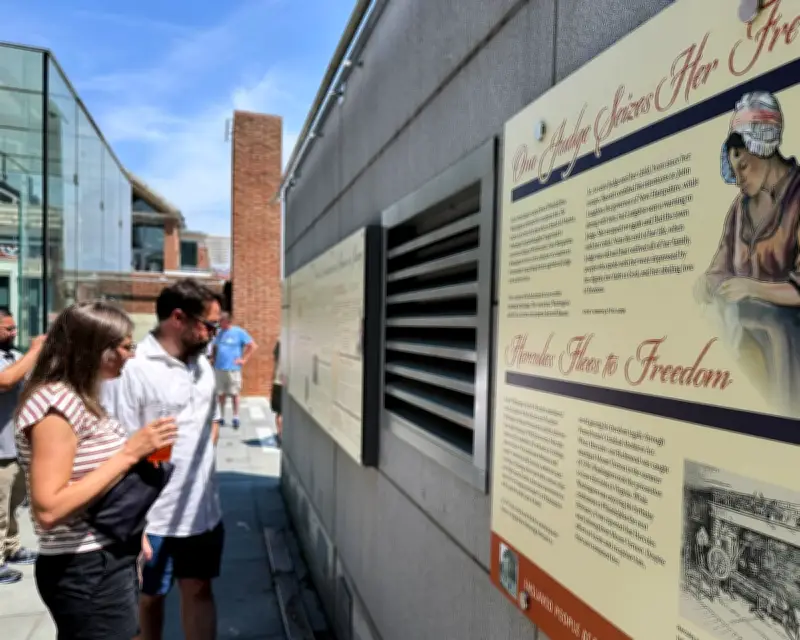
The Trump administration has replaced an exhibit exploring the lives of nine enslaved people who lived at George Washington's Philadelphia home with a version that critics say is overly sympathetic to enslavers and whitewashes the country's origins. The installation of new information panels followed a six-month legal battle between the city of Philadelphia and the federal government over an enslavement memorial at the President's House, which served as the home of both Washington and John Adams.
Timeline of the Controversy
The National Park Service (NPS) removed the original panels on 22 January 2026 to comply with Trump's executive order “Restoring Truth and Sanity to American History,” issued on 27 March 2025. After Philadelphia filed a lawsuit, Judge Cynthia M Rufe ordered the original panels reinstated on 16 February. The NPS reinstalled only half the exhibit, leaving the site in limbo. The federal government appealed to the US Third Circuit, which ruled in mid-June that the exhibit could be replaced. On 3 July, a three-judge panel allowed the Trump administration to install new panels.
New Panels Installed Under Cover of Darkness
By the early morning of 15 July, the NPS had replaced the original panels with new ones that the administration claims provide a fuller picture of the nation's origins. Mayor Cherelle L Parker condemned the action: “Overnight, under the cover of darkness, the federal government removed panels at the President’s House that told a thorough history of Philadelphia. It was allowed to do this by the decision of the federal court, but that it did so at night shows it understands this action is shameful, that it violates community trust.”
Critics Call It a 'First Step to Fascism'
Philadelphia attorney Michael Coard, founder of the Avenging the Ancestors Coalition, compared the administration's actions to George Orwell's 1984. “People should really be afraid. This is always the first step to fascism,” Coard said. “This is bigger than the government removing some panels at a site in Philadelphia. What could theoretically happen if the president doesn’t like the Liberty Bell? … This is a slippery slope.” The coalition pushed for the original memorial, which opened in 2010.
Interior Department Defends New Panels
A Department of Interior spokesperson said the new panels “acknowledge the evils of slavery, including its injustices and hypocrisies, and, by telling the stories of the nine slaves that Washington kept in the President’s House, remind us of their essential humanity.” One panel highlights Washington's unease with slavery, while another claims enslaved people “experienced a greater modicum of autonomy than elsewhere in the South such as to explore the city and sometimes even attend the theater, with Washington buying the tickets.” Coard scoffed at the notion of autonomy during enslavement.
Grassroots Opposition Continues
Matt Hall, a Temple University professor and founder of Old City Remembers, said he was disheartened but vowed to preserve history. Since February, over 100 volunteers have stood at the site with informational packets sharing the original panels' text. “Now is not the time to roll over and let them get away with rewriting the history in the way that they think it should be,” Hall said. Artist and activist Alyssa Bigbee, who volunteers with Avenging the Ancestors, added: “I’m disgusted that the administration is choosing to hide history, but the truth is, you can’t erase it. … History will remember that we had cowards in office that chose to erase history and brave people who continue to fight against them.”
Legal Options Remain
Coard noted the city could seek reconsideration from a 14-member Third Circuit court or appeal to the US Supreme Court. “Simply because he came in like a thief in the night and put up new panels doesn’t mean that a court can’t remove those mythological panels,” he said.




