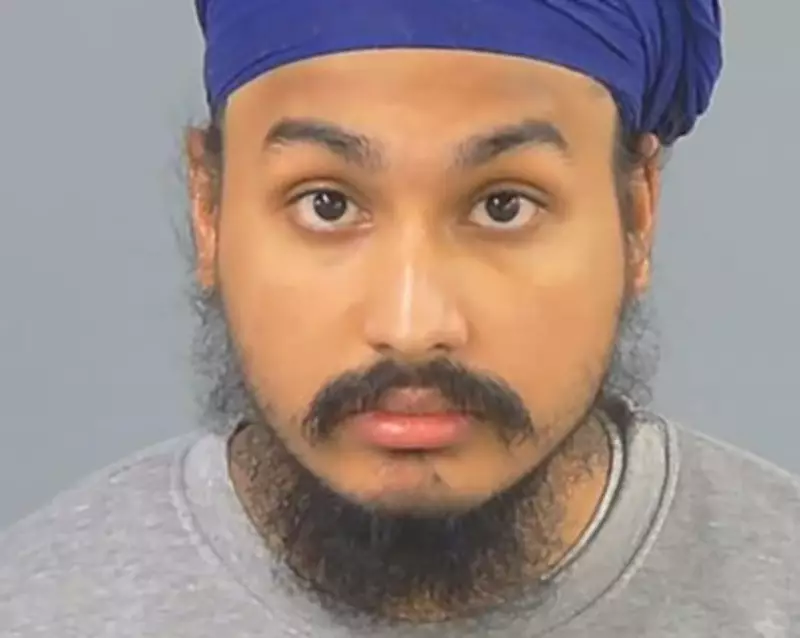
A man has been found guilty of murdering a university student with a 21cm-long knife that he claimed he was carrying for religious reasons. Vickrum Digwa, 23, falsely alleged that his victim, 18-year-old Henry Nowak, had racially abused him and knocked his turban off, prompting police to handcuff the teenager before they discovered his fatal wounds.
Court Proceedings
At Southampton Crown Court, Digwa’s legal team said he had acted in self-defence and only carried the knife because of his Sikh faith. Jeremy Wainwright KC, for Digwa, stated: “He carried that knife in the same way that he does every day in his life: as part of his religion.” However, Nicholas Lobbenberg KC, for the prosecution, dismissed the racism allegation as a “wicked lie”. He told the jury Digwa was wearing a small kirpan under his clothing around his neck – which satisfied his religious obligation – but chose also to carry the much larger blade.
Police Apology and Investigation
After the verdict, Hampshire Police apologised for handcuffing Nowak and said the Independent Office for Police Conduct (IOPC) is investigating. Deputy Chief Constable Robert France said: “This case is an absolute tragedy. I’m sorry that Henry’s life couldn’t be saved that night, and I’m sorry that he was handcuffed and arrested. He was the victim.” When asked if fear of being perceived as racist played a part in officers’ decision to arrest Nowak, France noted that the IOPC investigation will examine all information available to officers.

Responding to criticism by Elon Musk and Reform MP Robert Jenrick, France said: “I think it’s important people can say what they feel they want to say. All I would ask is that people try to understand the full circumstances.” On whether officers’ decisions affected Nowak’s chances of survival, France said the pathologist was clear that the injury was deep and internal, and there was nothing the officer could have done to save him.
Details of the Attack
Nowak, from Essex, who was studying finance at the University of Southampton, was stabbed five times as he walked home after a night out with his football team. In his closing speech, Lobbenberg said Digwa liked weapons and described the knife used in the attack in “loving terms”. He stated: “On 3 December at around 11 o’clock, Vickrum Digwa chose to be on the streets of Southampton with a 21cm knife. He wasn’t at a temple. He had been helping with his brother’s work for Deliveroo. This is a man who chooses to sleep in his bedroom with an arsenal of weapons.”
Lobbenberg said Digwa lied repeatedly: “Racism was his trump card to try to make sure what he had done was lawful. We say that was a wicked lie about a dying man. This is not a case about Sikhism. This is not a case about racism. This is a case about murder.”
Legal Context
The judge, William Mousley KC, told the jury that carrying a knife of that size would require a good reason, such as self-defence or religious reasons. He said: “It is for Vickrum to prove that it is more likely than not that he had a good reason for having it.” Under UK law, it is lawful to possess a kirpan for religious, ceremonial, sporting or historical reasons, but a court decides if a person has a good reason if charged with carrying it illegally. The College of Policing says there is no legally prescribed size for a kirpan.
Shadow home secretary Chris Philp said the actions of officers attending the scene were shameful: “The police seemed more interested in cuffing someone accused of making a racist comment than in saving a dying man.” A statement from the Sikh Federation said: “The wider Sikh community has unacceptably faced considerable abuse and hate during the trial... The law only provides fully practising Sikhs with a defence to wear a kirpan for religious reasons. If a kirpan or a bladed item is used aggressively in an act of violence, the defence does not apply.”
Digwa, from Southampton, will be sentenced on Monday for murder and possession of a bladed article in a public place. His mother, Kiran Kaur, 53, who removed the knife from the scene, was found guilty of assisting an offender.