Government's New Hate Speech Legislation Raises Serious Questions
The recent passage of Australia's new hate speech laws has created significant uncertainty about their implementation and potential consequences. These legislative changes were enacted under conditions of heightened emotion and political pressure, raising concerns about whether proper deliberation occurred before their introduction.
Unclear Targets and Enforcement Concerns
The legislation specifically bans "hate groups" and criminalises leading, recruiting for, or membership in such organisations. However, the government has failed to provide clear guidance about which groups might be targeted under these new provisions. While Hizb ut-Tahrir has been mentioned as a potential candidate, many observers question whether such complex legislation was introduced solely for one organisation.
Organisers of Palestinian solidarity protests across Australia are understandably concerned about whether their legitimate criticism of Israel or Israeli government actions could potentially lead to their designation as prohibited "hate groups." This uncertainty creates a chilling effect on democratic participation and public discourse.

Contradictory Government Statements
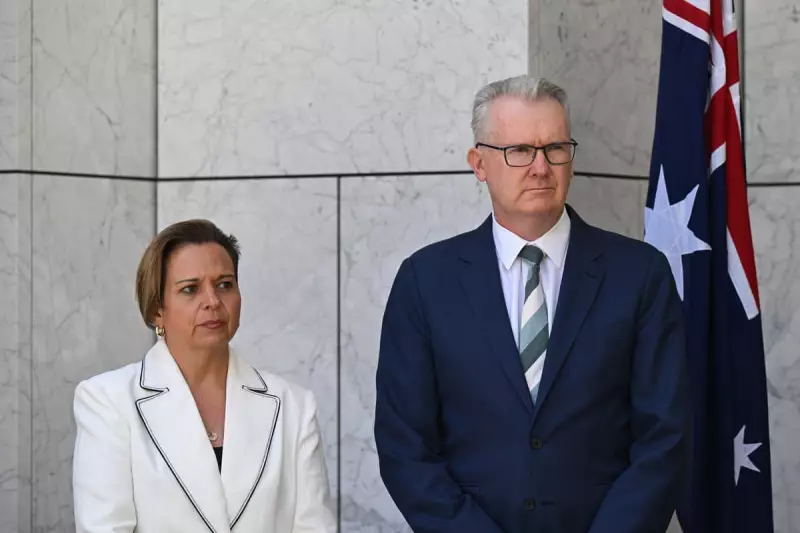
The words coming from senior figures within the Albanese government following the legislation's passage have done little to clarify the situation. Home Affairs Minister Tony Burke stated that he didn't believe protesters expressing criticism of Israeli government actions would "in any way, shape or form" fall foul of the new hate crime laws.
However, Attorney General Michelle Rowland struggled to provide a clear answer when questioned on whether groups accusing Israel of genocide or asserting that Israel should not exist could be declared "hate groups" under the legislation. She eventually conceded that such designation was possible, creating confusion about the law's actual scope and application.
Legislative Slight of Hand
There appears to be some legislative sleight of hand in the final version of the bill that passed parliament. While the government dropped the most controversial element - the creation of a new offence of intentionally inciting racial hatred - the revised legislation still contains problematic elements.
The expanded conception of "hate crime" that underpins the new hate group proscription regime includes not only racist violence offences but also incitement of racial hatred offences that exist in state legislation. This creates a situation where a group could be declared a "hate group" under national law for conduct that the Australian parliament has deemed insufficiently serious to criminalise at the federal level.
Balancing Security and Democratic Rights
The legitimate cause of preventing antisemitism can and should be advanced without jeopardising Australia's long tradition of respecting non-violent public protest as an important form of democratic participation. Protest organisers and participants deserve clear and consistent reassurances from government leaders that Australians can both combat hate speech and maintain robust democratic discourse.
There are serious questions about whether ever-expanding forms of criminalisation can deliver the community safety and social cohesion that Australians rightly expect. We must recognise both the potential harms of hastily widening the criminal law's reach and acknowledge that there are often better ways to encourage public discourse that is both robust and respectful.
The recent Bondi Beach terror attack, which targeted a Hanukah celebration and resulted in multiple fatalities and injuries, understandably prompted calls for stronger measures against hate-motivated violence. However, we still lack clear evidence about what role "hate speech" may have played in motivating this violence, or whether so-called "hate groups" exerted any influence on the perpetrators.
Australia has a sorry history with banning organisations, and many are questioning whether this approach represents the best way forward. As the country grapples with these complex issues, the need for clear communication, consistent application of laws, and protection of fundamental democratic rights remains paramount.