
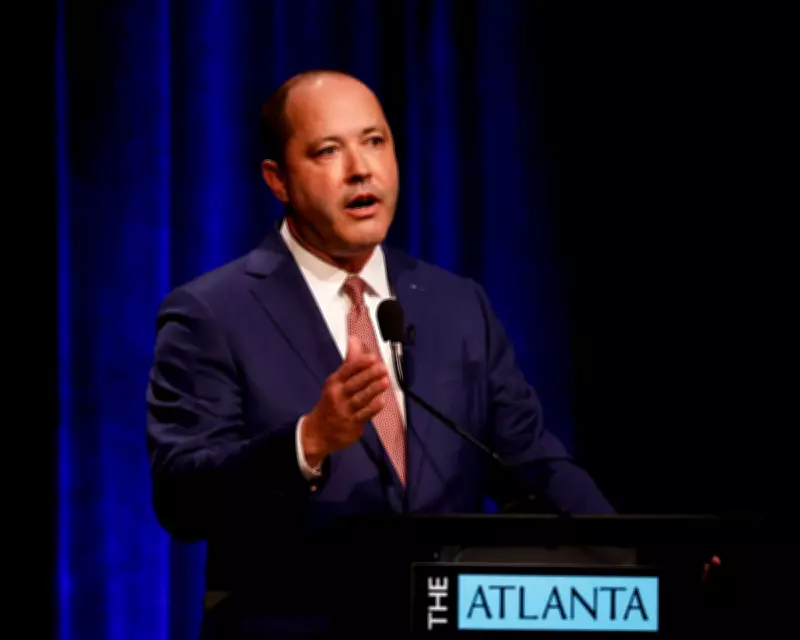
Georgia's top law enforcement official, Attorney General Chris Carr, has been accused of leveraging his office to revive his struggling gubernatorial campaign by filing a new indictment against protesters of the Atlanta police training center known as Cop City. The move, announced late last week, comes as Carr trails in the polls with less than double-digit support ahead of the 19 May primary.
Timing and Motives Questioned
Critics argue that Carr's actions are politically motivated. Paul Glaze, a veteran of Democratic campaigns in Georgia, described Carr's gubernatorial bid as flailing and called the indictment 'the last gasp of a dying man.' The three protesters—Katie Marie Kloth, Tyler John Norman, and Hannah Kass—were charged in Cobb County with criminal damage to property and arson, just weeks before the statute of limitations expired on the alleged actions from four years ago.
Connection to Racketeering Case
The defendants are already among 61 individuals indicted in Carr's 2023 racketeering case in Fulton County, which was dismissed in December on technical grounds. Carr's office has since obtained a signed letter from Governor Brian Kemp authorizing continued prosecution. Matt Scott of the Atlanta Community Press Collective called the new indictment 'an open attempt to bring punishment against Cop City protesters, nicely timed with the primary.'
Legal and Political Implications
Elizabeth Taxel, a clinical professor at the University of Georgia School of Law, noted potential due process concerns, as defendants face charges in two jurisdictions for the same conduct. The Cop City project, a $109 million training center, has faced opposition over police militarization and environmental concerns. Carr has framed the charges as part of a broader fight against antifa, a narrative critics say ignores local opposition.
Xavier de Janon, a defense attorney in the racketeering case, called the prosecution 'political theater,' echoing concerns that Carr is using the charges to appeal to conservative voters in middle and south Georgia. Despite the controversy, Carr has persisted, stating, 'We are not Oregon. We are not New York. We are not California.'




