Epstein Scandal Outrage Persists Despite Trump's Iran War Distraction
As the United States awoke to news of Donald Trump's military strikes against Iran, domestic tensions continued to simmer beneath the surface. Amidst unrelenting outrage over ICE raids, frustration with the rising cost of living, and fears over healthcare prices and household debt, the shadow of Jeffrey Epstein loomed large. During his third presidential campaign, Trump had pledged to release investigative files related to Epstein, whom he once called a "terrific guy," a promise that resonated deeply with his far-right base, many of whom suspect elite involvement in Epstein's trafficking of teenage girls.
Botched Releases and Bipartisan Backlash
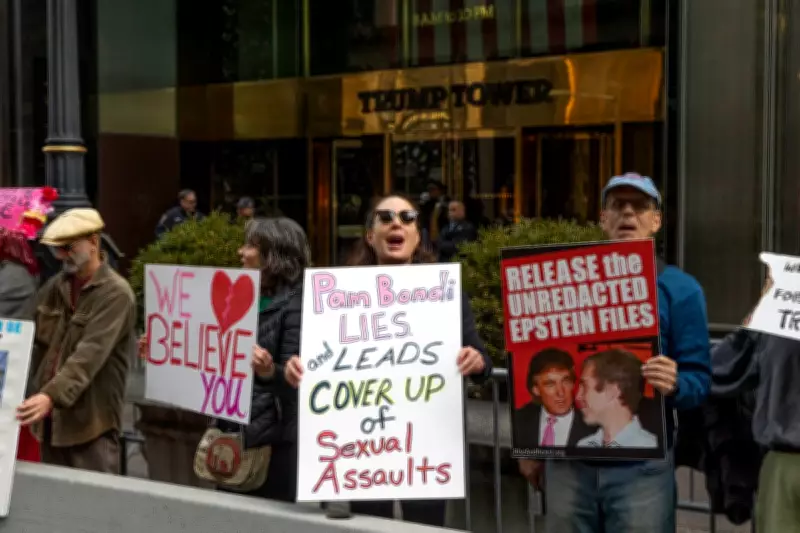
However, Trump's administration mishandled the initial disclosure process. The Justice Department released documents in piecemeal fashion before announcing in July that no more would be forthcoming, sparking backlash from longtime supporters. In a rare show of bipartisanship, Congress took charge, conducting its own investigations and passing the Epstein Files Transparency Act in November. Despite Trump dismissing the Epstein files as a "hoax," he signed the bill into law, requiring the Justice Department to publicly disclose all Epstein files within 30 days, with few exceptions.
The Justice Department failed to meet Congress's deadline, releasing one batch at the 30-day mark and several others later, including a massive 3 million document disclosure on January 30. This delay fueled further anger from opponents and even some diehard supporters who believe more files remain hidden. Now, with US headlines dominated by the US-Israel attack on Iran and its ensuing economic and diplomatic chaos, advocates and observers insist that Epstein-related outrage is unlikely to fade away.
Media Coverage and Public Demand
Gretchen Carlson and Julie Roginsky, founders of the non-profit Lift Our Voices, told the Guardian that while the Iran war can temporarily divert attention, it will not do so indefinitely. Carlson noted that the Trump administration is adept at flooding the news cycle with multiple stories, making it hard for media to give each the time they deserve. "The way the news media works, especially on 24/7 cable news, is that you are covering the biggest story of the moment. Right now that appears to be Iran," she said.
Carlson added that she still sees Epstein stories emerging, such as news that authorities never searched his New Mexico ranch, and predicted that conservative figures' criticism of the war will keep attention on Epstein. Roginsky pointed to the capture of Venezuelan president Nicolás Maduro earlier this year, which briefly dominated headlines but did not erase Epstein from public consciousness. "There are people in the president's own base who demand answers. There are people in the president's own base who are disgusted by the war in Iran, so he will have to contend with that as well," Roginsky emphasized.
Legal Perspectives and Ongoing Investigations
Ann Olivarius, an attorney representing sexual abuse survivors, argued that the war serves as a distraction but will not quell controversy over Epstein. "The public and the media remain interested in Epstein and what Trump did with him, and what Trump is now doing to cover it up," she said. Trump has denied any wrongdoing related to Epstein, maintaining that their relationship ended before Epstein's 2008 plea deal in Florida.
Olivarius highlighted that new information continues to emerge from the files, reigniting interest and suspicion. "Trump campaigned on releasing the files. So did his attorney general and FBI director. Yet we've spent the last year watching the DoJ drag its feet, holding back millions of pages and redacting names that would provide accountability," she stated. This behavior has united left and right in believing a cover-up is ongoing, making the Epstein files a persistent issue.
Bipartisan Push for Accountability
Carl Tobias, a law professor at the University of Richmond, acknowledged that the Iran war might briefly shift public and political focus from Epstein. However, he stressed that a dedicated coalition, including figures like Marjorie Taylor Greene, Gretchen Carlson, abuse survivors, and Congress members such as Ro Khanna and Thomas Massie, will continue to demand answers. Massie, a Kentucky Republican who co-sponsored the Epstein Act with California Democrat Khanna, remains undeterred. In a March 1 social media post, he asserted, "PSA: bombing a country on the other side of the globe won't make the Epstein files go away."
Massie called for additional investigations, including into Epstein's New Mexico ranch and the Justice Department's decisions. Khanna echoed this sentiment, stating, "Trump wants Americans to 'move on' from the Epstein files. But the public will not move on. This is about rebuilding public trust and justice for the survivors." When asked for comment on suggestions that the Iran war was a distraction, a White House spokesperson dismissed the idea as "ridiculous."
As the conflict with Iran unfolds, advocates predict that the floodlight of attention will inevitably swing back to Epstein, driven by ongoing media investigations and bipartisan demands for transparency and accountability.