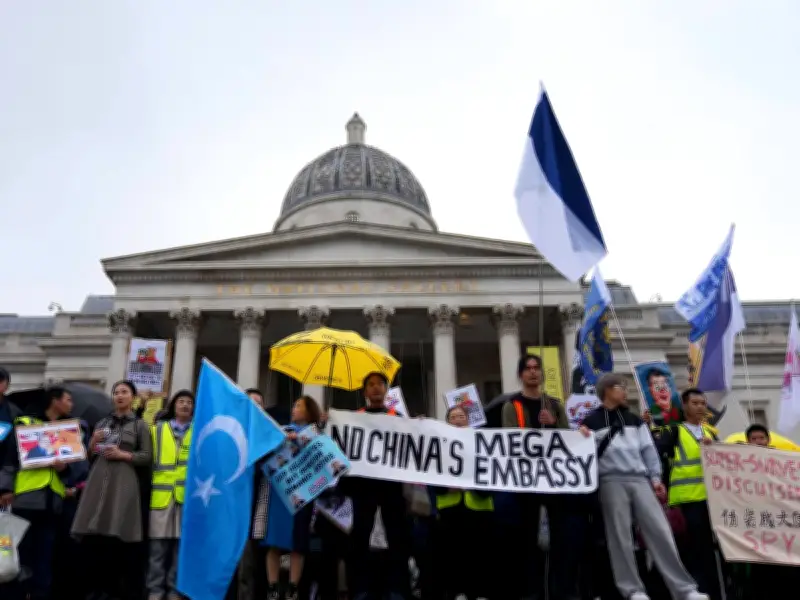
The High Court has heard that China's plans to build a massive 'super embassy' near the Tower of London could breach the human rights of local residents. The Royal Mint Court Residents' Association (RMCRA) is bringing legal action against the Ministry of Housing, Communities and Local Government and the London Borough of Tower Hamlets over the proposed development.
Residents fear reprisals and inability to protest
Local residents say that if construction is allowed, they will “fear reprisals and curtailment of their ability to oppose or protest against the People’s Republic of China”. The group, representing families and businesses in about 100 properties, also argues that the embassy could lead to terrorist attacks or the repression of protests, while being used to enforce “draconian” Chinese laws in the UK and target dissidents.
Concerns over fire safety and diplomatic immunity
The association is also concerned about the Chinese government creating a fire risk by ignoring safety obligations, which it says would not be enforceable because of diplomatic immunity. Aarif Abraham, for the RMCRA, said in written submissions for a hearing on Tuesday that the risks to human rights “are real and not illusory”. He added: “In addition to the known risks to purported rights holders, there is recurrent past unlawful conduct on the part of the People's Republic of China in the UK, specifically, in relation to its use of mission premises, or the related rights to inviolability or immunity afforded to diplomats, for unlawful purposes.”

Legal arguments and government defence
Lord Banner KC, also for the association, said residents were disadvantaged at a planning inquiry because they were not given a “blast assessment”, showing the impact of any explosion on their buildings. He also said the UK Government has given “inviolability” to the embassy, which grants “immunity from search, attachment, requisition or execution”. This means UK authorities would have no power to enforce safety obligations if the Chinese government ignores them and creates a fire risk. He added: “The only option available to the secretary of state in the event of an irreconcilable dispute is declaring non-compliance in diplomatic protest or the nuclear option of withdrawing consent for the property, inevitably causing a major diplomatic incident.”
Richard Moules KC, for the Government, said in written submissions that while the RMCRA did previously raise issues of potential terrorist attacks, protests and privacy, they were not framed as breaches to their human rights. He said: “In substance, however, this ground is a thinly disguised and illegitimate attempt to re-run the arguments advanced by RMCRA as to the planning merits of the proposed development which were considered, assessed and addressed, by both the inspector and secretary of state.” He said the Government “conscientiously and carefully had regard to the considerations raised by the claimant” and “undertook an appropriate balancing exercise, weighing up competing interests; and, where appropriate, took appropriate and reasonable measures to avoid or minimise the impacts”.
Government's stance on safety obligations
Mr Moules also said “there was no requirement” for the Government to obtain assurances from the Chinese government that it would follow safety obligations and it “lawfully did not do so”. Providing the blast document “would have made no difference”, the barrister added. He also said the department led by Steve Reed “expressly recognised the limits on enforcing planning conditions and obligations” but thought it “likely” that the Chinese government would comply given its engagement in the planning process and its commitments to international law. He continued: “His overall judgement was that there was no reason to refuse planning permission based on enforceability issues because of the likelihood that the People's Republic of China would adhere to the conditions and obligations and, in any event, their de facto enforceability via diplomatic remedies.”
The hearing, before Lord Justice Dingemans and Mrs Justice Lieven, is due to conclude on Wednesday.