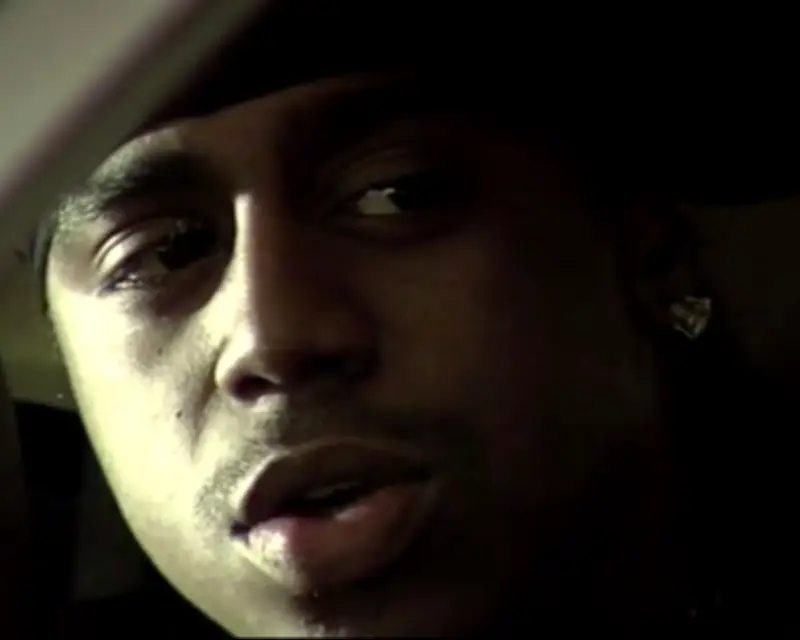
The story of the making of the 2005 British film Breakin' the Cycle is surely more compelling than the film itself. Nobody can say for sure, because a rough cut was confiscated by the Met police and the raw footage was considered lost. But the film's origins and subsequent unravelling is extraordinary. Two of Hackney's most notorious drug dealers try to go straight and become movie producers. It's a strange combination of comedic chaos, an accidental stabbing, drug money and shootouts, big dreams of making a different life through art, and, ultimately, tragedy. The film-makers had to navigate real-life gang warfare, and an elitist, perhaps racist, film industry.
A cast of pop stars and rappers
The cast included the rapper Lethal Bizzle, and Bradley McIntosh from the pop group S Club 7. If McIntosh was desperately trying to escape his clean tween pop image, he wasn't the only one trying to escape something, though the stakes were far higher for others. Colin Browne, the leader of the Hackney gang Love of Money, wrote the film while serving a prison sentence for cocaine smuggling, and directed it; he had plans to take it to the Cannes film festival. Browne would be killed shortly after filming had finished.
The story is told in a new BBC Radio 4 podcast, Shadow World: Breakin' the Cycle, by Lewis Albrow, the film's editor. Over the last 20 years, he stayed in touch with D, Browne's right-hand man who was also involved in the film, and who would go on to serve a prison sentence for drug dealing. “Occasionally, he would contact me and say: ‘One day we'll finish this film, honour Colin's legacy,’” says Albrow. After prison, “he came out a changed man. The time was right to go back and ask him questions – was he really truthful about wanting to get out of it? How does he feel about the damage he did? How did he pursue a new future? I think his answers to all of those questions are deep, truthful and fascinating. He really is the central voice in the podcast.”

A green editor and a chaotic set
Now an established editor and director, back in 2005 Albrow was trying to break into film editing when he answered an online advert. Did it feel chaotic from the start? “Because I was so green, I didn't quite know what to expect either,” says Albrow. “I knew it was low budget, so everything's kind of scrappy. For instance, the sound was all over the place and some of it was unusable, but that got better as they got better.”
Bradley McIntosh had been cast as a drug dealer. At the time, S Club 7 had come to an end and he was working on solo projects, “more R&B, trying to find a way to get out of that pop bubble and be taken a little bit more seriously. I thought [the film role] was a great opportunity for me to cross over.” He had acted in the S Club spin-off TV shows and film, but this was his first serious role (Albrow says “he delivers something amazing”).
Familiarity with the lifestyle
McIntosh was more familiar with Browne's world than his teen pop image suggested. “Growing up around certain people, I was familiar with certain lifestyles. You see drug dealers and people that are gang members and stuff like that.” He didn't know about Browne and D's life at first, and thought the film was based on people who, like him, they had just seen around. “I don't think it actually clicked until maybe halfway through filming that it was based on [their] true story,” he says.
It was a fun set. “We became a family, lots of laughs every day. But there were some incidents that were kind of scary.” Filming on an estate in east London with his castmates J-Rock and Randy – from the south London hip-hop group Big Brovaz – some young men thought they were filming a music video on their patch. “They were like: ‘They can't come round here. You got to move, otherwise we're gonna start petrol bombing the cars.’” McIntosh smiles over Zoom. “I could see that Colin was pretty annoyed, but he did the right thing.” The cast and crew, he says, weren't “affiliated with that lifestyle. I think in Colin's world, he wouldn't have wanted to show any sign of weakness, but he said, ‘Look, we're gonna go, but we are gonna come back,’ and we did. But the next time, they had a bit of an entourage, backup.”

Transferable skills between drug-dealing and film-making
Albrow's job “was to deliver [Browne's] vision. It was his voice, but I had to understand it. When you call a gangster film Breakin' the Cycle, you are setting your stall out – this is a hopeful message. His central philosophy, I suppose, was about understanding that in his world it's about everyone trying to escape. And that's not my world.” He had long conversations with Browne about his life. “He's like: ‘You're a white middle-class man walking around [west London suburb] Hounslow, I'm a Black man who's grown up in Hackney. We've had very different lives, and we see the world in a very different way.’ But he was on a trajectory. It was his first film. He comes out of prison and makes it. He went: ‘I want to do something. I've got to do something right.’”
The transferable skills between drug-dealing and film-making are surely an entrepreneurial spirit and a refusal to be intimidated. “There's an uncompromising thing going on,” says Albrow. “Colin was a businessman. His business was a bad business that hurt people and hurt the community, but [he had] film-making potential as a businessman and as a creative.” Many first-time film-makers plunge in without much fear, says Albrow, but Browne and D were also tough. “They were not scared of much. Their job in their criminal business was to scare others.” They both survived years in and out of prison, points out Albrow. “It's a tough place to be. They're going to go out and make a film, and they're going to gangster the industry – whatever pushback they got from a fairly elitist, slightly closed group of the film and TV drama industry …” For instance, when they tried to hire an expensive camera to shoot on and were refused, they simply went out and bought one.
Running two businesses simultaneously
Neither McIntosh nor Albrow knew that Browne and D continued to deal drugs while making the film. “They did a good job of keeping it from us. I think that's called good professionalism,” says McIntosh. “I guess it's a weird one, right, calling it professionalism?” Albrow says: “I believed they were ex-gangsters and they were out of that life. It's not until now, 20 years later, going back and talking to D, that I understand what was going on. They were running two businesses at the same time, and getting out was not as easy as they thought. They were making a film about getting out of that life, at the same time as actively trying to get out of that life. That's what makes this story so interesting and such a rollercoaster.”
Both say the film doesn't glorify gang violence, or the lifestyle. The original director had come from music videos, but he left a third of the way in and Browne took over. It changed, says Albrow, from being quite posturing to a “heartfelt, tender story about friendship and relationships. It's about the connections between these people, their loyalties, betrayals.”
Tragedy and a lost film
Browne's death at the age of 38 – he was shot and stabbed after intervening in a dispute – was shocking. Albrow and the rest of the crew tried to carry on, but then D was arrested and went to prison and the film fell apart. By then, says McIntosh: “It's not about the film any more – someone's lost their life. It's about someone, a dad, a brother. But, in hindsight, it would have been nice if we had got that movie out.” It might have taken its place among London-set crime dramas, such as Bullet Boy and Rollin' with the Nines, that came out at a similar time.
Albrow remembers D picked up the footage from him before he was sent to prison, and for years he thought a copy of it had died on an old hard drive. Not long ago, a specialist managed to resurrect the drive – “that was a wonderful day” – and now he has access to everything that was shot. For the past six months, Albrow has been editing it and hopes to put it out. The principal message of the film, says Albrow, is about “changing your life, and how to break out. You've got to have a reckoning, and you've got to make amends. I think Colin was ready.” Shadow World: Breakin' the Cycle is on BBC Sounds now.