
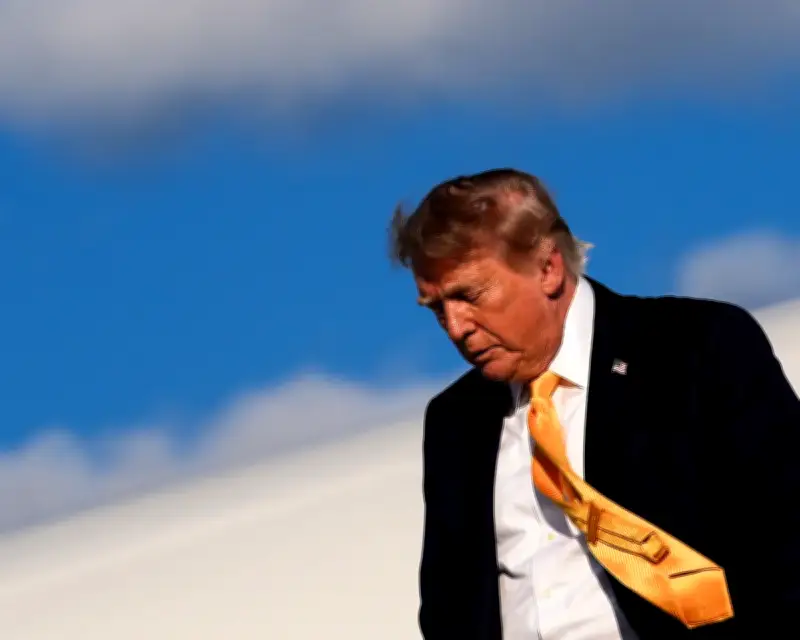
Former President Donald Trump is reportedly planning to use his substantial Super PAC war chest to fund a campaign promoting himself, rather than focusing on supporting Republican candidates in the upcoming midterm elections. This strategy, according to a column by Robert Reich, a former US secretary of labor and current professor of public policy emeritus at the University of California, Berkeley, stems from Trump's well-documented narcissism and his desire to bolster his own image.
Trump's Super PAC Cash Reserves
As of July 31, Trump's political operation, Maga Inc, had more than $400 million on hand, a sum larger than the cash reserves of any of the major party committees. Despite this financial advantage, Trump has barely spent any of this money, raising questions about his intentions for the peak campaign season, which is set to begin in a few weeks. On Friday, Trump stated he would personally weigh where to direct support, including toward Republican candidates he believes can win competitive races.
However, Reich argues that this explanation is doubtful, noting that Trump has already missed opportunities to secure lower advertising rates and define candidates before voter attitudes harden. Alternative theories, such as using the cash to silence Republican critics or to discipline candidates in future primaries, are also dismissed as unlikely, given Trump's status as a lame duck and the long timeline to the 2028 elections.
A Campaign to Promote Himself
Reich contends that Trump's true intention is to use the campaign cash to make himself look good, especially as multiple polls show his approval rating mired in the mid-30 percent range, at or near historic lows for a president facing a midterm election. The non-profit arm of Trump's political operation, Securing American Greatness, has already spent about $1 million on its first midterm ads, which feature video clips of Trump discussing tax breaks and lower prices for eggs and prescription drugs.
According to The Atlantic, Trump told advisers in early August to follow the same strategy as the Democrats: making the election about him. This approach has drawn criticism from Republican strategists like Karl Rove, who served as senior adviser and deputy chief of staff for George W. Bush. Rove notes in the Wall Street Journal that, given Trump's unpopularity, making the election more about him only helps the Democrats.
Republican Concerns and Pushback
Trump also plans to travel extensively, holding rallies in competitive states and districts. Fox News's senior White House correspondent, Peter Doocy, reports hearing “whispers of a ton of Trump travel in October, possibly as much as a Trump rally a day.” Rove warns that Trump's undisciplined nature and unscripted comments will dominate the news, forcing Republican candidates to constantly fend off questions about his latest remarks.
This has led some battleground Republicans to tell Trump's staff that they would prefer he not visit their districts before November, according to four Republican operatives involved in the conversations, as reported by Politico. Republican pollsters have also advised candidates in tight races to limit their references to Trump. One senior Republican, involved in a district where Trump won by double digits in the last election, told Politico, “We’ve told them he cannot come. Candidly, he would not be helpful here … I do not believe they would send him without our OK. And if they did, we probably wouldn’t campaign with him.”
Impact on Midterm Elections
Rove and other Republican functionaries are urging Trump to “act more presidential” by using his Super Pacs' $403 million to support Republican candidates rather than fund a campaign about himself. However, Reich suggests these appeals are futile, as Trump likely believes that backing a losing candidate would make him look worse, so he prefers to spend on self-promotion. This strategy is seen as bad news for Republicans in the midterms and good news for Democrats, as Trump's focus on himself could alienate voters and distract from Republican messaging.




