
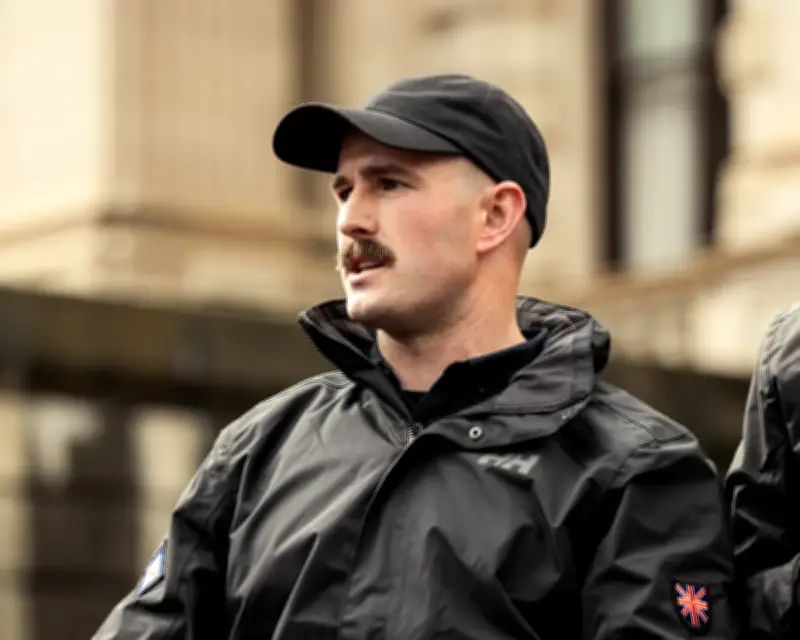
Lawyers for the outlawed neo-Nazi White Australia party have argued that anti-hate laws passed after the Bondi terror attack rely on a politician's opinion and are 'authoritarian in nature'. The party, formerly known as the National Socialist Network (NSN), was designated as an illegal hate group in May after the Australian Security and Intelligence Organisation passed its recommendation to Home Affairs Minister Tony Burke.
The designation means that activities including supporting, funding, training, recruiting and joining the group constitute a criminal offence with a maximum penalty of 15 years in prison. The far-right nationalist party is challenging the ban at the high court over two days this week, with its lawyers arguing the law breaches the implied freedom of political communication and that handing the decision to Burke breaches the separation of powers.
Legal Challenge and Historical Precedent
Lawyers also argued that the commonwealth does not have the power to ban political parties, citing a major cold war-era high court ruling in 1951, which overturned a ban on the Communist party of Australia. On Tuesday, the group's barristers, Peter King and Shahed Sharify, argued that a total ban on the party was akin to using a 'sledgehammer on a nut'.
The arguments centre on proving that part 5.3B of the criminal code – which allows the federal police minister to recommend to the governor-general that a group is listed as a prohibited hate group – is invalid. Sharify argued that the law's breach of implied freedom of political communication was 'authoritarian in nature' and suggested it could be used to ban any political party where its members had threatened or engaged in a hate crime with the assistance of the organisation.
Government's Defence and Court Proceedings
The barrister said the banning of hate groups was determined by a politician, based on an opinion with no judicial fairness to appeal that decision. Sharify said the law's purposes would be better served by handing that decision to a judge rather than a 'busy minister who flicks through a brief and decides in two hours'.
The government is expected to defend the anti-hate laws by arguing that the party is not a political party but an arm of White Australia, itself a rebranded version of NSN. 'Forming a political party was a calculated attempt to secure legal protection for members engaging in openly racist and anti-Semitic speech,' the Commonwealth said in written submissions.
Members of the White Australia party sat in the front of the courtroom's public benches, including its leader, Tom Sewell. The 33-year-old was sentenced in June to a community corrections order – which includes 200 hours of community work – for behaving in an offensive manner in public. A Melbourne magistrate had found that the neo-Nazi leader emulated 'Nazi thugs of 1930s Berlin' when he used 'appalling racial slurs' during a stunt outside a Chinese consulate.




