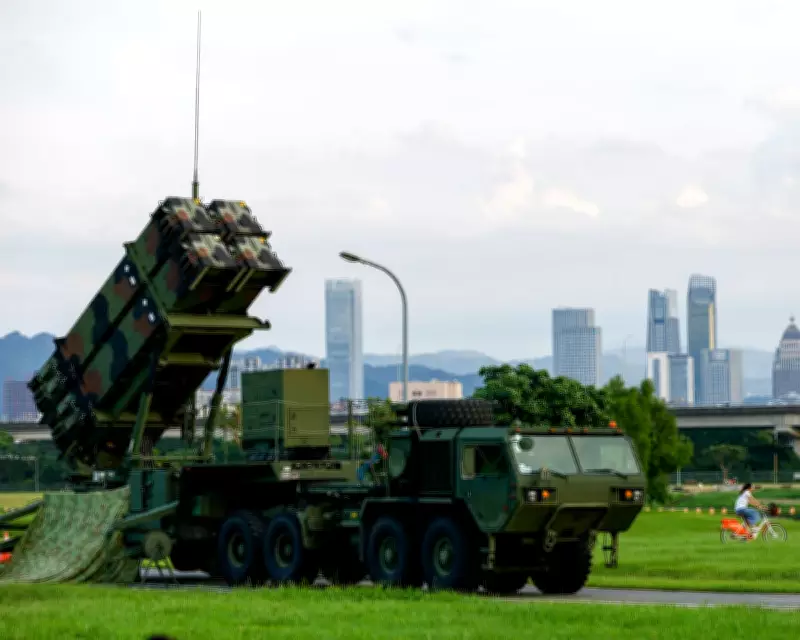
The United States has paused arms sales to Taiwan to ensure its military has sufficient munitions for operations in Iran, acting navy secretary Hung Cao told Congress on Thursday. The announcement is the latest blow to Taipei following a series of comments by President Donald Trump that have cast doubt on Washington's enduring support for the island democracy.
Congressional Hearing Reveals Pause
During a hearing of the Senate Armed Services Committee, Senator Mitch McConnell asked Cao about a $14 billion weapons package awaiting Trump's approval for months. Cao responded: "Right now we're doing a pause in order to make sure we have the munitions we need for Epic Fury [the Iran war] – which we have plenty." He added: "We're just making sure we have everything, then the foreign military sales will continue when the administration deems necessary."
McConnell expressed concern, saying: "Yeah, that's what's really distressing." Cao noted that Secretary of State Marco Rubio and Pentagon chief Pete Hegseth would ultimately decide on the sales.

Concerns Over Missile Stockpiles
The pause comes amid reports that the US has significantly depleted its missile stockpiles since launching its war against Iran on 28 February, which has since settled into a fragile ceasefire. The conflict has strained US military resources, raising questions about the ability to fulfill foreign arms commitments.
Taiwan's Response
Taiwan's presidential office spokesperson, Karen Kuo, said on Friday that Taipei had received "no information indicating that the US intends to make any adjustments to this arms sale." However, the announcement is unwelcome news for the island, coming a week after Trump met Chinese President Xi Jinping in Beijing, where US weapons packages to Taiwan were high on the agenda.
Beijing has repeatedly stated it "resolutely opposes" US arms sales to Taiwan, which it regards as a breakaway province. During Trump's visit, Xi warned that the US and China "will collide or even conflict" if the Taiwan issue "is not handled well."
Trump's Ambiguous Stance
Washington maintains an ambiguous stance on whether it would defend Taiwan in an invasion scenario, but the Taiwan Relations Act requires it to provide Taipei with sufficient military equipment for self-defense. Trump has made several statements casting doubt on US support, calling the weapons packages a "very good negotiating chip" and discussing Taiwan in "great detail" with Xi.
Trump also said he plans to speak with Taiwan's president, Lai Ching-te, a move that would break decades of diplomatic norms. No sitting US president has spoken to Taiwan's leader since 1979, though Trump did so as president-elect in 2016. Taipei has said it is open to the call, but Beijing would likely respond robustly.