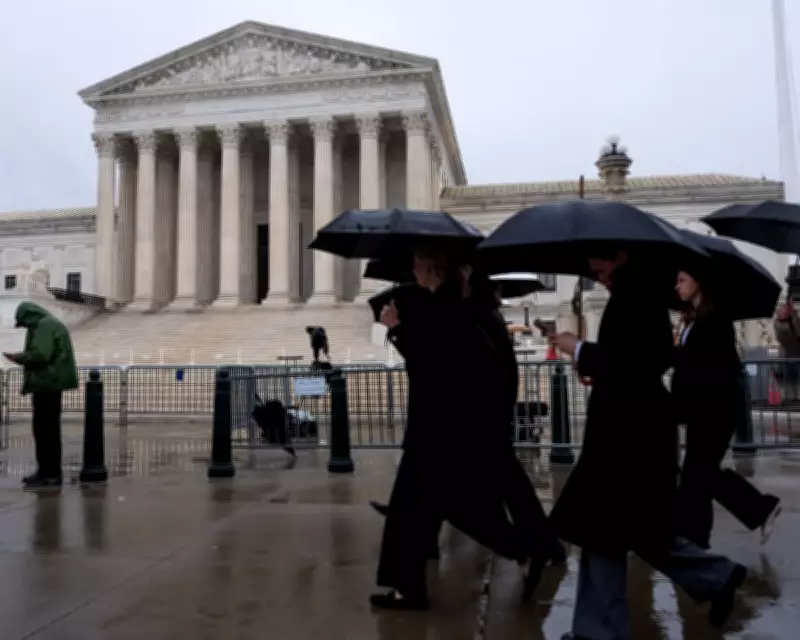
The Supreme Court's recent decision in Callais v. Louisiana represents a profound shift in American voting rights law, effectively dismantling key protections of the Voting Rights Act (VRA). In a 6-3 party-line ruling, the Court erased remaining provisions of Section 2, which had safeguarded minority voters against racial gerrymandering and vote dilution. This decision, driven by politics rather than law, invites Republican state legislatures to redraw congressional maps, potentially creating a solid red South and reducing Black political representation by up to 19 House seats and nearly 200 state legislative seats nationwide.
The Court's Long Game
Chief Justice John Roberts, along with Justices Clarence Thomas and Samuel Alito, has long sought to unravel the VRA. The assault began in 2013 with Shelby County v. Holder, which froze the law's enforcement mechanism. The Court then promised that Section 2 would suffice to catch violations, but Wednesday's decision completes the erosion of that promise. The ruling was met with glee by Trump strategists, who immediately recognized its implications for a permanent Republican House majority.
Political Power, Not Legal Interpretation
This is not a court engaged in legal reasoning but one exercising raw political power. The justices have ignored congressional intent, rewritten precedent, and relied on inaccurate data. In Callais, Alito introduced an "intent test" that Congress explicitly rejected in 1982, a move that Roberts himself championed as a young Justice Department aide. The decision pretends to update the law while effectively gutting it.

Consequences for Democracy
The ruling will devastate minority political power, with immediate calls for redistricting in Tennessee, South Carolina, Louisiana, Florida, and Mississippi. The Court's actions echo the post-Reconstruction era, when the Supreme Court enabled Jim Crow suppression. As Justice Thomas once wrote, "Perhaps an acceptable system is one in which the minority simply cannot elect its preferred candidates; it is, after all, a minority." This vision is now law.
The decision also invites partisan gerrymandering, as the Court had already closed federal courts to such claims in Rucho v. Common Cause. The result is a spiral of competitive map-drawing, with Democrats likely to retaliate in states like New York and California. The Court's conservative supermajority owns this shameful outcome.