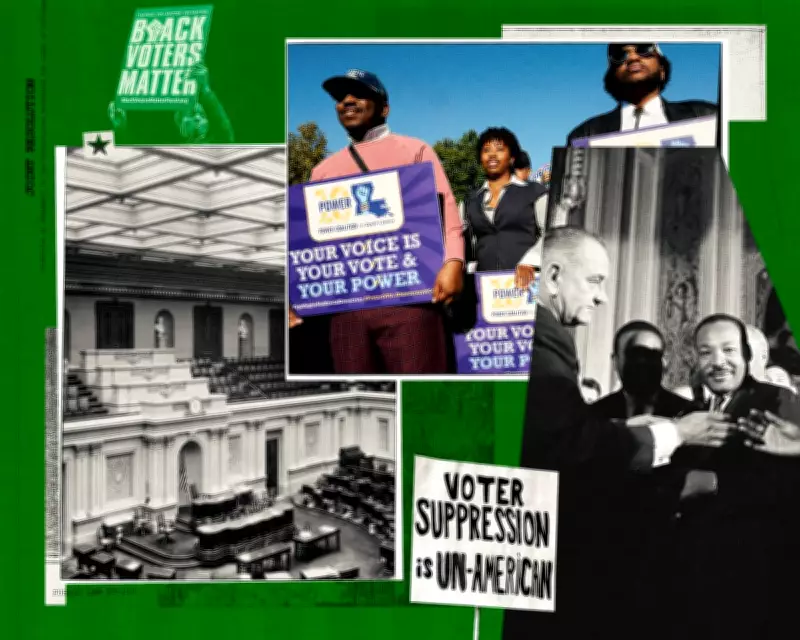
Following the U.S. Supreme Court's decision to essentially strike down a key provision of the Voting Rights Act, advocates and Democratic lawmakers are intensifying efforts to enact state-level versions of the landmark civil rights legislation to safeguard voters.
Supreme Court Ruling and Its Impact
In the case of Louisiana v. Callais, the Supreme Court dismantled Section 2 of the Voting Rights Act, which had been instrumental in ensuring fair treatment for minority voters during redistricting. This ruling weakens the ability of Black voters to elect their preferred representatives and triggers a new wave of redistricting battles in an election year.
Nine blue and purple states have already adopted state voting rights acts, which aim to protect voters in the absence of federal protections. Additionally, 11 other states, including several in the South, have introduced bills to create their own versions. These state statutes typically include prohibitions on voter suppression, vote dilution, and intimidation, along with pre-clearance requirements for voting changes.

Limitations and Legal Challenges
Despite these efforts, the Callais decision represents a major setback for voting rights nationwide. State voting rights acts cannot fully replace the federal law, especially in Southern states dominated by Republicans where such measures are most needed. Some election law experts predict that the ruling will spur legal attacks on state voting rights acts, though proponents believe they are on solid legal ground.
Janai Nelson, president of the NAACP Legal Defense Fund, emphasized the organization's commitment to passing state voting rights acts across the country as a state-based alternative to the now-defunct federal act. "We will use that tool where possible and be as aggressive as we can in trying to get state voting rights acts passed even in the most unlikely of states like Louisiana and Mississippi," Nelson said. However, she acknowledged the loss of a powerful tool: "We were just stripped of one of the most potent and transformative tools that this country has ever known."
Adam Lioz, senior policy counsel at the Legal Defense Fund, noted that state voting rights acts provide an avenue for states to affirm voting rights and build momentum for federal action. Even in challenging environments, these proposals can offer a positive vision countering anti-voter laws pushed by red state legislatures.
State-Level Progress and Hope
California enacted the oldest state voting rights act in 2002, and new acts have been passed every year since 2018, except during the pandemic in 2020. Maryland's act took effect on the day before the Callais decision. Advocates have long pushed for such laws to apply to local elections, with some proposals exploring applications to state and federal elections as well.
Ruth Greenwood, director of the Election Law Clinic at Harvard Law School, has successfully litigated cases under state voting rights acts in Washington and New York, securing protections for historically marginalized communities. "It is not that we are without tools," she said. "It is that we are without the single best tool that we have used for the last 61 years to combat racial vote dilution."
Potential Legal Hurdles
However, the Callais ruling may create legal challenges for state voting rights acts. Conservative Justice Samuel Alito's majority opinion hinted at concerns over race-conscious legislation, though the decision applied only to the federal act. Rick Hasen, a UCLA election law expert, expects new lawsuits citing Callais to challenge state acts. One New York town filed an amicus brief arguing that the state's voting rights act raises constitutional concerns. Hasen described the ruling as "a very, very significant ruling" but not a death knell for state VRAs.
Despite these challenges, state courts have upheld state voting rights acts where challenged. Aseem Mulji of the Campaign Legal Center urged states not to "throw in the towel" but to think creatively about protecting voters through race-neutral means. "States really should not be holding back from using their powers to protect their own voters from discrimination," Mulji said. "Nothing in the decision directly addresses the long-established power of states to prevent racial discrimination."