At the height of the privatisation bonanza of the 1980s, Margaret Thatcher’s government spent vast sums on TV and billboard adverts urging us to “tell Sid” that he could pick up shares in British Gas. It was the era of the Great Flog-off, and “Sid” was promised a stake in a bright, shareholder-led future. Now, in 2026, the sheen has well and truly come off Sid’s investment. Whether it is the state of our railways or our rivers in England and Wales, the argument for private ownership of public essentials is increasingly threadbare.
However, as Dr Simon Griffiths, reader in politics at Goldsmiths, explains, nationalisation isn’t a “magic wand” either. We spoke about the fiscal trauma of the Liz Truss era, the “pragmatic” case for public ownership of the railways, and why Keir Starmer is so terrified of spooking the markets even when the public is on his side.
What Did Keir Starmer Promise on Nationalisation?
During the 2024 general election campaign, Starmer’s Labour pitched a vision of “national renewal” that included significant moves toward public ownership. The pledges were specific: a state-owned Great British Energy, the renationalisation of the railways as private contracts expired, and a “tougher” stance on the water companies. It was a platform designed to look radical to the base but “fiscally responsible” to the City. But, Simon Griffiths points out, “as [Starmer’s] position became more secure he became increasingly cautious.” That was already a step back from his leadership campaign, and nationalisation was slowly replaced by the “pragmatism” of the doorstep.

Optics are another consideration. “Nationalisation implies a left-of-centre government rather than the centrist one Starmer is leading. It also costs an awful lot of money. With the exception of rail – which you can do as the contracts run out, a sort of ‘nationalisation on the cheap’ – nationalising steel or water would be a massive financial commitment when money is very tight.”
What Has Labour Done in Government?
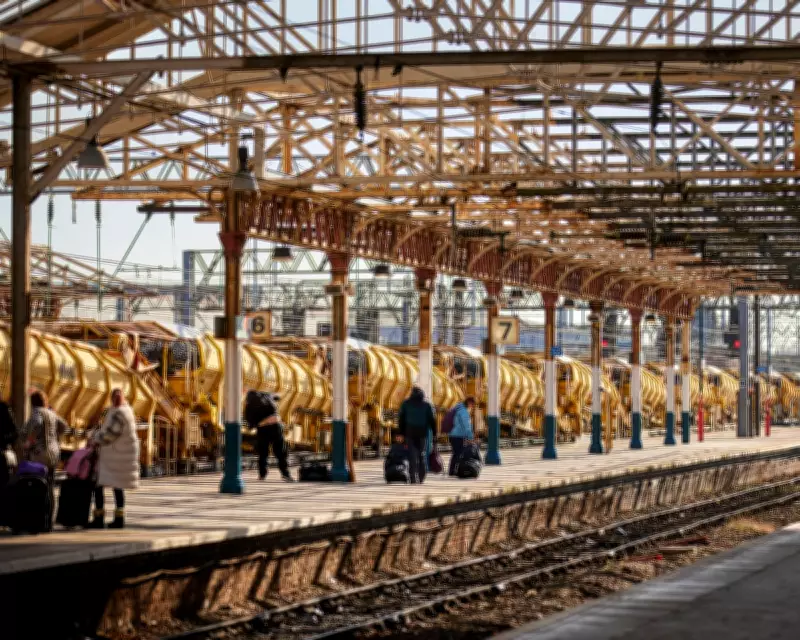
So far, the results are mixed. The railways are the big win for Starmer: as Great Western Railway and others see their contracts lapse, they are being folded back into public hands. Cambridge South station will open shortly, the first station to be badged Great British Railways (GBR), and trains with the new livery have been seen on the network. Derby’s labour market will be the beneficiary of the new GBR headquarters, and Aberdeen is set to benefit from the creation of a Great British Energy HQ there.
Elsewhere, the government has been forced into more “activist” roles. The recent Steel Industry (Nationalisation) Bill – introduced this month as Starmer promised yet another government reset following the disastrous May elections – gives the government the power to bring British Steel into public ownership to prevent a total collapse at Scunthorpe. It’s not an ideological choice; it’s a “break glass in case of emergency” measure.
How Popular Is Nationalisation?
The short answer: very … in certain spheres. “Nationalisation was popular with Labour members in particular, but it isn’t necessarily popular overall,” Griffiths says. Campaign group We Own It argues that “support for public ownership has increased substantially between 2017 and 2024”, gathering together a range of polling stats from YouGov to make their case – for example 66% of people want buses in public ownership, 64% want care homes in public ownership, 64% want energy in public ownership, 55% want to see more services run in-house by councils and 76% want to nationalise the railways.
“The demographic of the electorate who associates inefficiency with nationalisation is a shrinking one,” says Griffiths. To a voter in 2026, the private sector hasn’t delivered the efficiency it promised; it has delivered high bills, sewage and a struggle to find an Avanti West Coast train that runs.
Why Has Labour Been So Cautious?
This is where it gets complicated. Nationalising a company like Thames Water would be an “easy win” with voters. In a rare moment where a Guardian journalist found themselves agreeing with Jacob Rees-Mogg, I found myself nodding along when he argued for allowing Thames Water to simply go bust, letting administrators take over while shareholders lose their equity.

But the government is spooked, and the culprit is Liz Truss. The memory of the 2022 mini-budget – and the market’s violent reaction to it – is baked into the Labour psyche. “It demonstrated that there were limits to what you could do without the market getting involved and pushing up interest rates,” Griffiths says.
Even if, as I suspect, all money is somewhat fictional, the reaction of the bond markets is terrifyingly real. Labour fears that “seizing” assets or ignoring shareholders would trigger a crisis of market confidence. They are governed by a fear of the markets that, as Griffiths says, exists “perhaps for very good reason.”
Would an Alternative Prime Minister Make a Difference?
Andy Burnham is all but certain to join the challenge for the Labour leadership, and therefore Number 10, should he win the Makerfield byelection next month. He has suggested that a programme of mass renationalisation would be at the centre of his policy platform. “We need a different path completely. Put more things back under stronger public control: energy, housing, water, transport,” Burnham said earlier this month. With deindustrialisation, privatisation and deregulation, the policy decisions of the 80s have left services that, he said, “just work for the private shareholders and not for the paying public.”
Whether the supposed “King in the North” trumpeting his achievements in uniting Manchester’s public transport into the Bee Network can actually persuade the bond markets remains the £40bn question. Burnham’s pitch is a direct challenge to the “ultra-caution” that has defined the last two years of Labour in government. Thames Water has already said Burnham even floating the idea of nationalisation is damaging its prospects for recovery.
For decades, the ghost of the 1970s was used to scare us away from public ownership. But as sewage flows and bills rise, it seems more and more voters are deciding that the only thing scarier than the past is more of the same.