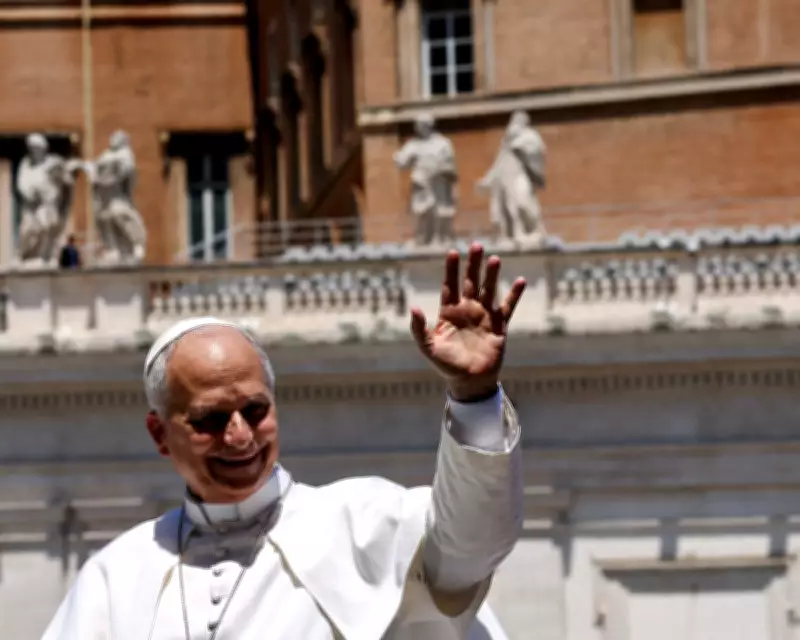
In a recent opinion piece, author Francine Prose expresses gratitude to Pope Leo XIV for his encyclical on artificial intelligence, titled Magnifica Humanitas: On Safeguarding the Human Person in the Time of Artificial Intelligence. Prose argues that the document provides a crucial counterpoint to the tech industry's dismissal of ethical concerns.
The Encyclical's Core Message
The pope's letter, spanning over 40,000 words, addresses the rapid development of AI and its potential misuses. It opens with a biblical reference to the Tower of Babel, framing humanity's choice between building a new tower or a city where God and humanity coexist. The encyclical traces the evolution of Vatican thought on labor, authority, and human dignity, culminating in a third chapter that defines humanity in contrast to AI.
Prose highlights a key passage: "So-called artificial intelligences do not undergo experiences, do not possess a body, do not feel joy or pain, do not mature through relationships and do not know from within what love, work, friendship or responsibility mean." The pope emphasizes that AI lacks moral conscience and concern for the common good.

Economic and Social Threats
The encyclical warns against AI programmed solely for profit, which could lead to suffering for the many and benefit the few. It condemns manipulation of privacy, misuse of information, and algorithmic control over employment, public services, and credit. Compassion, mercy, and forgiveness risk becoming obsolete as "necessary sacrifices" are justified, burdening the most vulnerable.
Prose notes that the pope does not outright condemn AI but rather its potential as a tool for political repression and economic inequality. The letter calls for investment in education, cultivation of relationships, and resistance to technologies that exploit the vulnerable or create new forms of slavery.
Silicon Valley's Rebuttal
Despite the encyclical's thoughtful tone, it has faced criticism from Silicon Valley. Jeremy Nixon, founder of AGI House, told the New York Times that the church hasn't "thought deeply about AI" and lacks understanding. Some tech leaders believe AI could become a new god or a convincing simulacrum. Prose counters that society overlooks the downsides already present, such as a college student being told that advertising jobs will soon be taken by AI.
Prose concludes that the problem is not a robot writing Anna Karenina, but that no one would see the need for such a novel unless it could be monetized. She warns that a future where AI pirates human dignity and jobs, while enriching the few, is already upon us.