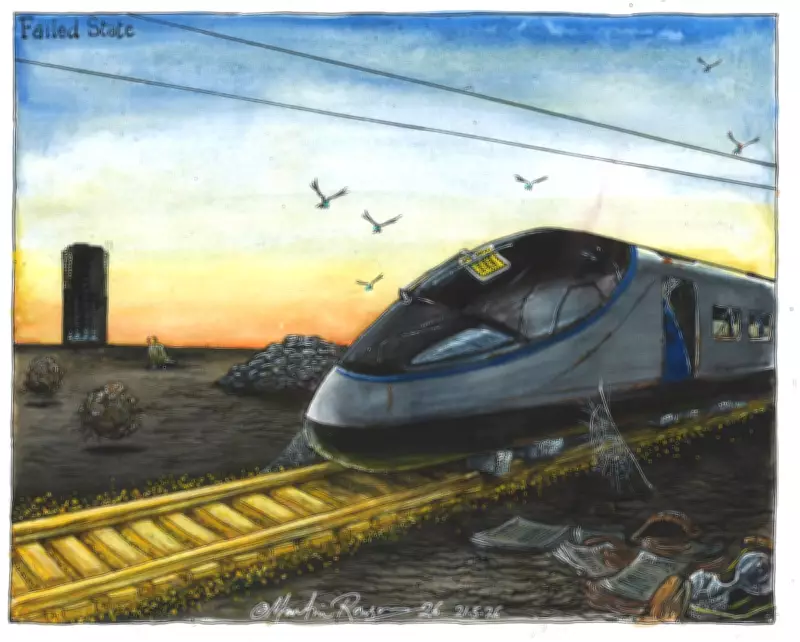
A recent cartoon by Martin Rowson has taken aim at the spiralling costs of the HS2 rail project, depicting the financial farce as a runaway train of government mismanagement. The artwork, published in The Guardian, uses satire to highlight the ever-increasing budget for the high-speed railway, which has been plagued by delays and cost overruns.
The Cartoon's Message
Rowson's cartoon shows a train labeled 'HS2' hurtling out of control, with passengers representing taxpayers clinging on for dear life. The train is engulfed in flames and smoke, symbolizing the billions of pounds wasted. In the background, politicians are seen pointing fingers, avoiding responsibility for the project's failures.
HS2's Troubled History
The HS2 project, intended to connect London with the Midlands and the North, has faced numerous setbacks since its inception. Initially estimated at £32.7 billion, costs have soared to over £100 billion, according to recent reports. Delays and route changes have further fueled criticism, with many questioning the project's value for money.

Public Reaction
The cartoon has resonated with the public, who are increasingly frustrated with the government's handling of large infrastructure projects. Social media users have shared the image widely, with many echoing the sentiment that HS2 has become a symbol of bureaucratic incompetence. Critics argue that the funds could be better spent on local transport improvements or public services.
Government Defense
In response to the criticism, government officials have defended HS2, citing long-term economic benefits and job creation. They maintain that the project is essential for boosting connectivity and reducing travel times. However, opponents remain skeptical, pointing to the lack of transparency and accountability in the project's management.
Looking Ahead
As the costs continue to rise, the future of HS2 remains uncertain. The cartoon serves as a stark reminder of the consequences of poor planning and oversight. Whether the project will ultimately deliver on its promises or become a cautionary tale of government waste remains to be seen.