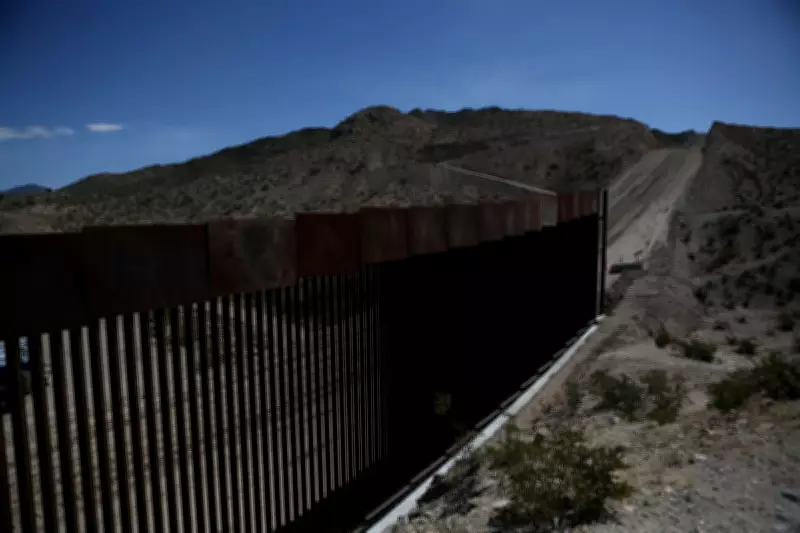
A federal appeals court on Friday blocked President Donald Trump's executive order that suspended asylum access for immigrants at the US-Mexico border, dealing a significant blow to a key pillar of his immigration crackdown. The ruling from a three-judge panel of the US Court of Appeals for the District of Columbia Circuit found that the president cannot circumvent laws that grant individuals the right to apply for asylum when they arrive at the border.
Court's Reasoning
The panel concluded that the Immigration and Nationality Act (INA) does not authorize the president to remove individuals under procedures of his own making, nor does it permit him to suspend the right to apply for asylum or curtail procedures for adjudicating claims related to protection from torture. Judge J. Michelle Childs, nominated by President Joe Biden, wrote for the majority: "The power by proclamation to temporarily suspend the entry of specified foreign individuals into the United States does not contain implicit authority to override the INA's mandatory process to summarily remove foreign individuals."
Background of the Executive Order
The case originated from Trump's executive order issued on his inauguration day in 2025, as he began his second term. In that order, Trump declared the situation at the southern border an "invasion" and suspended the physical entry of immigrants and their ability to request asylum until he deemed the situation resolved. The White House argued that the INA grants presidents authority to suspend entry of any group deemed "detrimental to the interests of the United States."

Lower Court and Dissent
Friday's decision aligns with a lower court ruling from the previous year. Judge Justin Walker, a Trump appointee, filed a partial dissent. He agreed that immigrants cannot be deported to countries where they would face persecution and that mandatory protections against such removal must be upheld. However, he argued that the administration could issue broad denials of asylum applications. Judge Cornelia Pillard, nominated by President Barack Obama, also heard the case.
Reactions
Lee Gelernt, an attorney with the American Civil Liberties Union (ACLU), praised the ruling as "essential for those fleeing danger who have been denied even a hearing to present asylum claims under the Trump administration's unlawful and inhumane executive order." The White House did not immediately respond to a request for comment. However, White House press secretary Karoline Leavitt, speaking at a press gaggle, stated she had not seen the ruling but expressed unsurprise, accusing liberal judges of acting for political purposes. She asserted that Trump was acting within his powers as commander-in-chief and that judges should thank him for stopping what she called a "scam" that allowed "tens of millions of illegal aliens" into the country through fraudulent asylum claims. The Department of Homeland Security also did not respond immediately.
Next Steps
The administration can seek a rehearing by the full appeals court or appeal to the US Supreme Court. The order does not take effect until after any reconsideration requests are addressed. The White House told Fox News it would "quickly" prepare an appeal against Friday's ruling.