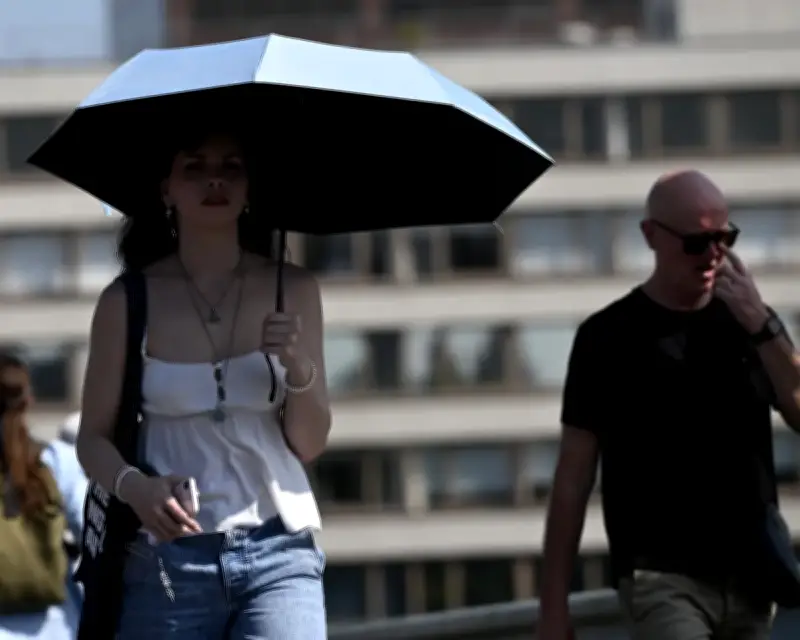
The summer of 2026 was the UK's hottest on record, according to provisional Met Office data, with the season's mean temperature made 130 times more likely as a result of the climate crisis. An average mean temperature of 16.5C puts this summer as provisionally the warmest on record, as well as the warmest season for the UK in a series that goes back to 1884, the Met Office said.
Record-Breaking Heatwaves Across the UK
The summer saw record-breaking and back-to-back heatwaves scorch much of Europe. In England, temperatures peaked at 38.1C (100.1F) at Kew Gardens in London on 13 August, with June already confirmed as the country's hottest since records began in 1884. Scientists have said these heatwaves are only possible because of the climate crisis driven by burning fossil fuels.
England, Wales and Northern Ireland also broke their respective mean temperature records for summer, while Scotland reported its joint-sixth warmest summer on record. A study conducted by Met Office scientists showed this summer's record-breaking heat was made about 130 times more likely because of human-induced climate change.
Climate Change Attribution and Future Projections
The Met Office's climate projections indicate that UK summers will continue to become hotter, a trend already evident in the observations. The Met Office's head of climate attribution, Dr Mark McCarthy, said: “The summer of 2026 has been remarkable and is an example of the extremes we can expect to see more frequently as a consequence of human-induced climate change.”
Schools, hospitals and transport all suffered, with schools closed and hospital appointments cancelled. Across Europe, extreme heat has been linked to at least 35,000 excess deaths over the summer.
Drought and Wildfires Compound the Crisis
The hot weather has been coupled with extreme and persistent drought and severe wildfires. England recorded its driest July on record, with only 6.5mm of rainfall recorded – 10% of its long-term meteorological average for the month, and less than half of the previous record low of 13.4mm set in 1911. A wildfire near the Sizewell nuclear plant in Suffolk caused “total devastation” to a protected landscape, and 19 homes were fully destroyed in Stourbridge after multiple fires spread across the West Midlands.
The Met Office climate scientist Dr James Pope said: “This summer will also be remembered for how dry it has been, particularly in the south in July. Looking at climate projections for rainfall, this summer fits closely to what we would expect an average summer to look like in the UK under 3C of global warming, as we expect summers to become both hotter and drier in the future.”
Records Breaking with Increasing Frequency
Dr Amy Doherty, who leads the Met Office's National Climate Information Centre, said: “The conditions we've seen this summer have broken UK climate records once again. These records are now breaking with increasing frequency, reflecting the influence of human-induced climate change on the temperatures we're experiencing in the UK. Particularly notable is how much we've exceeded the previous summer mean temperature record, set just last year. The figures also knock the infamous summer of 1976 down to seventh for average summer mean temperature, with the top five warmest summers all occurring since 2003.”
The record-breaking summer of 2026 highlights the accelerating impact of climate change on UK weather, with scientists warning that such extremes will become more frequent as global temperatures continue to rise.