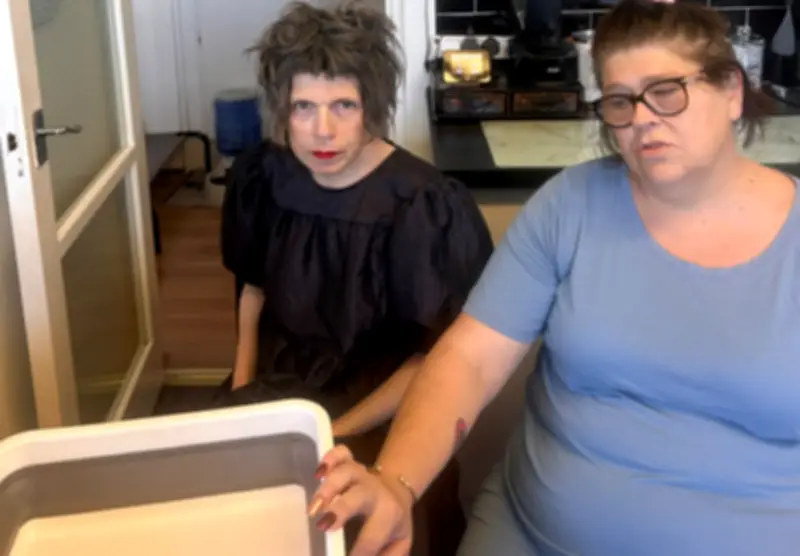
Allison Prodrick, a severely disabled council tenant in Clerkenwell, has been told by Islington Council's housing and occupational therapy (OT) team that she must wash using a small bowl in her kitchen sink, after requesting modifications to her flat. The 10th-floor flat in Michael Cliffe House on the Finsbury Estate is no longer suitable for her because her shower is over a bath that she can no longer climb into due to deteriorating health and recent hospital operations.
Council says 18-month wait for wet room
Ms Prodrick, who suffers from fibromyalgia, emphysema, crumbling ankle and elbow bones, and COPD, asked the council to remove the bath and install a wet room shower. However, in a phone call from the council's OT team, she was told this would not be possible for at least 18 months, and that she could not move to another property. She says she was told her case was “not being a priority”.
This instruction came despite a visit from an occupational therapist who advised that her flat was completely unsuitable for her needs and should be amended as a matter of urgency. Ms Prodrick told the Tribune: “I'm getting very, very angry now. I just want to scream and shout all of the time. I can't go on like this, I don't want to leave my flat. As disabled residents, is this how we have to live? It's just awful, I can't wash properly and I feel so dirty.”
Mental toll and lack of support
Ms Prodrick also suffers from depression and says she has had to increase her medication because of the “mental toll” the situation has taken. “I'm just so mentally down because of this, and I'm not sleeping. I'm being passed from pillar to post by the council despite constant communication. It's unacceptable,” she added.
Sarah Nash, from the Finsbury Estate TRA, has been helping Ms Prodrick by sending emails and approaching local councillors, but says they are being “palmed off” by the council. “This is a basic human right, to be able to wash and be clean, and it is a matter of dignity. It is actually against the law for a landlord not to provide these facilities,” she said. “The council just don't seem to care, they never show any urgency on this and we're just constantly chasing updates and responses from them. It's just so frustrating and disheartening.”
Funding concerns and council response
Ms Nash acknowledged a severe lack of funding within the council's OT and housing teams, but expressed concern about how many other disabled residents across Islington are in equally unsuitable situations. “How many people across the borough are disabled? Loads. We know that they [the council] don't have the funding to build loads of new social homes or move disabled residents to appropriate flats, but in the interim they have got to adapt the flats,” she said.
Ms Prodrick also reported that when she first asked the council for assistance, she received no home visits and was instead sent assistance equipment that arrived broken and unstable. She said: “In an ideal world, I would just say 'stick it up your bum' and pay to have everything amended myself, but I can't do that, because I'm on benefits and all my money goes to the council for rent.”
The Tribune previously reported how residents across the estate met with councillors to highlight constant issues of neglect and disrepair. In response, Councillor Ruth Hayes, the Town Hall's health chief, said: “We recognise how difficult and distressing this situation is for Ms Prodrick, and we understand the importance of being able to wash safely, comfortably, and with dignity in your own home. We've been in direct contact with Ms Prodrick, and we are arranging further, urgent assessments to consider both any immediate assistance that may help in the short-term, as well as longer-term adaptations to her home. As a council, we remain committed to supporting Ms Prodrick, and to working with her to identify suitable solutions to the issues that she faces. We recognise that there are other disabled residents in similarly challenging circumstances, and will take learnings from this case as we continue to improve our work across the council to support them.”