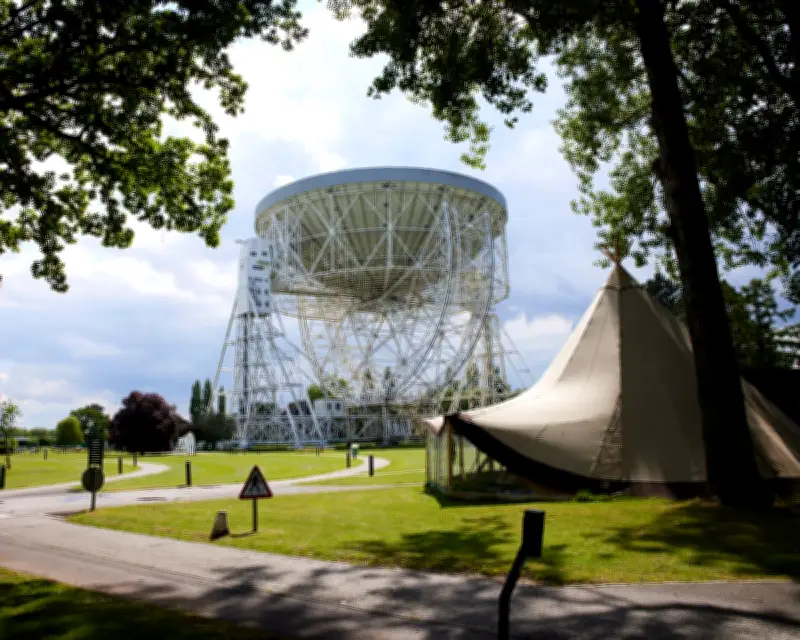
Jodrell Bank Observatory, home to the world-leading e-Merlin network of radio telescopes and the Grade I-listed Lovell telescope, is facing closure after its major funder, UK Research and Innovation (UKRI), announced it would withdraw funding when the current agreement ends in March 2028.
The decision, revealed on Monday, is a significant blow to UK astronomy, with scientists warning that observations at the deep space observatory will end completely unless alternative funding is secured. The facility is crucial for studying galaxies, black holes, star formation, exoplanets, and the cosmic microwave background.
Scientists React with Shock and Devastation
Prof Catherine Heymans, Scotland's astronomer royal, described the cut as "devastating," noting that Jodrell Bank has delivered spectacular discovery science for decades. Prof Brian Cox, TV scientist and professor at the University of Manchester, expressed astonishment that UKRI pressed ahead with cuts without working with the new government to avoid them.
Prof Simon Garrington, associate director of the Jodrell Bank Observatory, said staff were shocked, adding that withdrawing funding from e-Merlin "effectively pulls the rug out from under Jodrell Bank." The move threatens 28 jobs at the observatory and affects nearly 3,000 researchers who rely on the facility.
Broader Cuts Impact UK Science
Jodrell Bank is among dozens of facilities, instruments, and projects hit by cuts, expected to result in about 800 job losses. The UKRI, with an annual budget of nearly £10bn, funds the Science and Technology Facilities Council (STFC), which needs to make substantial savings due to cost overruns from rising electricity and staff costs, as well as high foreign exchange rates for international collaborations like CERN.
Other cuts include a 20% reduction in UK participation in the Rubin Observatory in Chile, which began operations last month, and a 45% cut to the Next-Generation Transit Survey searching for Earth-like solar systems. Funding for future instruments on the Extremely Large Telescope has been completely cut, and the UK will withdraw from the Event Horizon Telescope, which captured the first image of a black hole.
Impact on UK's Scientific Standing
Prof Jim Wild, president of the Royal Astronomical Society, warned that discarding unique, globally significant observatories threatens both the UK's scientific future and the inspiration of future generations of astronomers. Sue Ferns of the Prospect trade union called the closure a tragedy, undermining the UK's ambition to be a science superpower, and urged the new government to reconsider.
Garrington plans to challenge the decision and hopes new uses for the telescope, such as tracking satellites and space debris, might attract alternative funding. An STFC spokesperson defended the cuts, stating they resulted from a rigorous prioritisation process to focus investment on areas delivering the greatest long-term scientific capability, including next-generation radio astronomy facilities.