
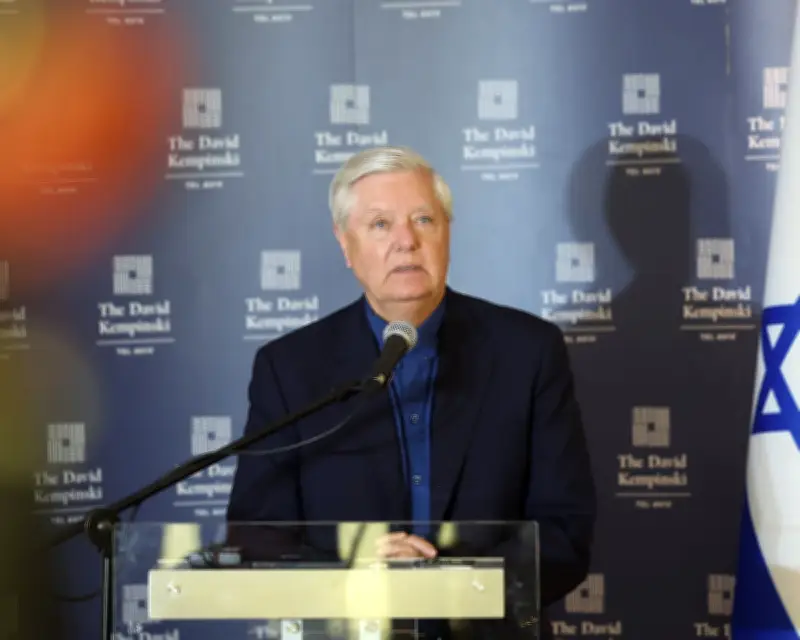
Senator Lindsey Graham, a prominent Republican and key ally of Donald Trump, died on Saturday at the age of 71, prompting tributes from world leaders including Israel's Benjamin Netanyahu and Ukraine's Volodymyr Zelenskyy. His death marks the end of a political career that spanned decades and left a complicated, often bloody legacy.
Global tributes and reach
Itamar Ben-Gvir, Israel's national security minister, was among the first to pay tribute, followed by Prime Minister Benjamin Netanyahu, who called Graham a “great friend of Israel and a cherished friend of mine.” Ukraine's President Zelenskyy described him as “a true defender of freedom.” Eulogies also came from NATO allies and Taiwan, underscoring Graham's outsized global influence for a US senator.
Brett Bruen, a former director of global engagement under President Barack Obama, noted: “There’s no doubt Lindsey Graham was a central figure in Republican foreign policy circles and played a significant role in broader conversations about America’s place in the world.”
From Iraq to Iran: A neoconservative hawk
Graham, a former Air Force lawyer and member of the South Carolina Air National Guard, was a leading neoconservative hawk. In 2003, he vocally supported George W. Bush's invasion of Iraq, calling Saddam Hussein's denial of weapons of mass destruction “a flat-out lie.” Hundreds of thousands of lives were lost, and no WMDs were found—a decision later described by one influential thinktank as the worst foreign policy blunder in US history.
Undeterred, Graham argued that Iran was exploiting the Iraq conflict and for years promoted policies to isolate Iran. He opposed Obama's nuclear deal and called for pre-emptive military action. His hawkish instincts often clashed with Trump's “America First” rhetoric, but after Trump's nomination in 2016, Graham transformed from adversary to close ally and golf partner, becoming a key adviser on Iran, Israel, and Ukraine.
Influence on Trump's wars
Graham applauded Trump's decision to strike Iranian nuclear sites last year and was a persuasive voice encouraging war in February 2026, despite reported reservations from Vice President JD Vance. Speaking to Politico in March, Graham said he had spent months urging Trump to view the overthrow of Iran's leadership as a defining second-term achievement, comparing it to the fall of the Berlin Wall.
Adam Schiff, a Democratic senator for California, told NBC's Meet the Press: “Many of us considered him the Trump whisperer. If we wanted to know what the president’s thinking was or how he might be moved on something, you would go to Lindsey to discuss it.”
Iranian state television announced Graham's death in openly hostile terms: “I congratulate the great nation of Iran on Lindsey Graham, the warmongering and anti-Iranian US senator, having gone to hell.”
Support for Ukraine and NATO
Graham also staunchly supported Ukraine in its war against Russia. He visited Ukraine for the 10th time just before his death and announced an agreement on Friday with the Trump administration to move forward on a package of sanctions against Russia. Finnish President Alexander Stubb called him “a personal friend. A supporter of NATO and Ukraine.” German Chancellor Friedrich Merz said he was “a true friend and partner of Germany in the transatlantic alliance.”
Complicated legacy and impact
Despite his global influence, Graham remained sycophantically loyal to Trump, who has praised Putin as a “strong leader.” His sudden death could remove a check on Trump's impulses and cut off access for foreign leaders who depended on him as an interlocutor. Bruen warned: “It does make you wonder whether or not his departure will remove some of the guardrails in some of the last-minute interventions that seemed to prevent us from doing bad deals with the Kremlin.”
Graham's unyielding support for Israel also drew anger. In May 2024, he urged then-Defense Secretary Lloyd Austin to “give Israel what they need to fight the war,” likening the threat to “Hiroshima and Nagasaki on steroids.” He posted on X that “the Palestinians in Gaza are the most radicalized population on the planet.”




