
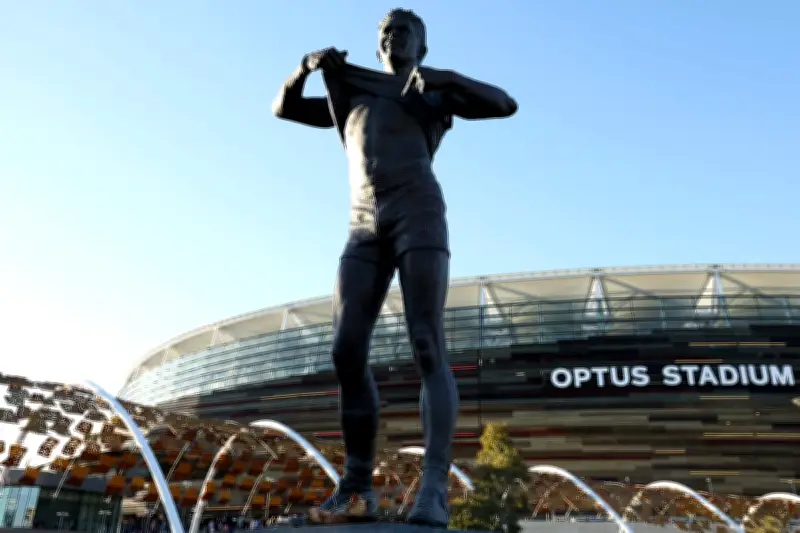
The Western Australian government's swift and unilateral removal of a statue honouring former AFL player Nicky Winmar's stand against racism, following his domestic violence conviction, has sparked divided opinions and highlighted the potentially fraught nature of memorialising living individuals. The statue at Perth Stadium depicted Winmar, a Noongar man, famously lifting his jersey and pointing at his skin in response to racial abuse from Collingwood spectators in 1993.
Questions of Memorialisation
The case raises complex moral and practical questions: should a memorial be amended to document a living person's transgression, or removed entirely? The official responses from governments and institutions often appear arbitrary. Critics of the removal argue that it should not erase the courageous stand Winmar took against racism, while others point to a double standard given that public spaces are filled with statues honouring colonisers who killed and dispossessed Aboriginal people.
Historical Context in Perth
Perth serves as a prime example, as historian Chris Owen has noted. A statue of former WA governor James Stirling, who led the 1834 Pinjarra massacre, stood in Foundation Park until recently when it was moved into storage amid renewed debate about his legacy. Similarly, statues of the Forrest brothers—John, WA's first premier, and Alexander, a pastoralist and MP—still stand proudly in the city. Alexander's statue features a slung rifle, a nod to the state's brutal pastoral history. John Forrest had personal experience shooting Aboriginal people during his expeditions.
Other Examples of Removal
Other states have shown it is possible to reflect progressive attitudes through statue removal. In Melbourne, a colonial-era statue of Burke and Wills, commemorating their failed 1860 expedition, remains in storage and may be replaced by an Indigenous-themed monument. However, some statues remain despite well-documented crimes, such as the statue of Lachlan Macquarie in Sydney, who orchestrated the Appin Massacre of 1816 and abducted Aboriginal children. Erected in 2013 with an epithet calling him a 'perfect gentleman', it still stands.




