
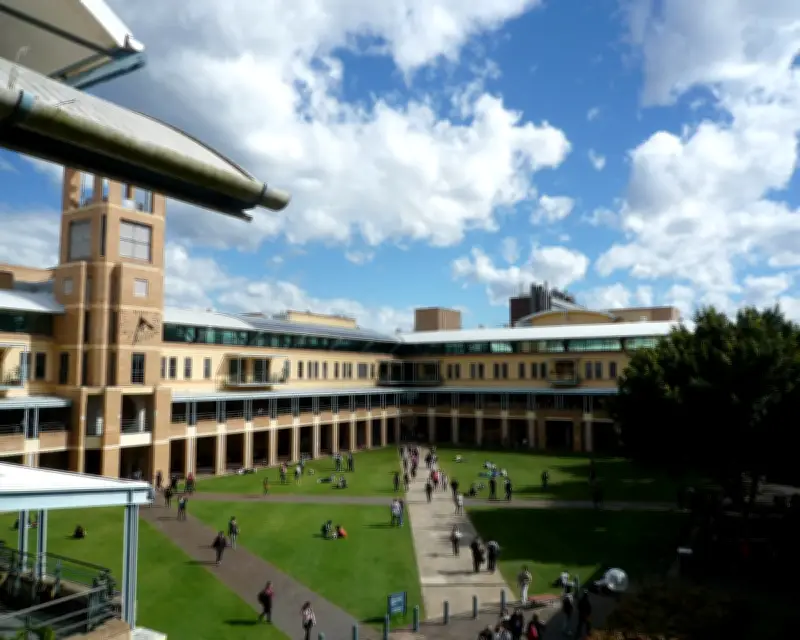
A University of New South Wales (UNSW) academic has testified before the royal commission into antisemitism and social cohesion that he was subjected to Nazi salutes by students in his business class. The incident occurred in 2024 during a class for international students, according to the witness, who used the pseudonym ACJ.
Academic recounts Nazi salute incident
The tutor and PhD candidate at UNSW said four students performed Nazi salutes towards him. “My grandparents had survived the Holocaust, the Nazis … murdered a huge proportion of my family … And so when someone does a Nazi salute at me it feels like they want to kill me,” he told the commission. He was uncertain whether the students knew he was Jewish but believed their behaviour was clearly directed at him. He reported the incident to his supervisors, noting it was a crime, and intended to go to the police. The students initially received a formal warning and were later suspended after NSW police investigated.
Jewish students describe post-October 7 backlash
Another witness, using the pseudonym Liat, moved to Canberra in 2022 to study at the Australian National University (ANU). She described herself as proudly Zionist, with both parents born in Israel. After the 7 October 2023 terrorist attack, she said she lost most of her non-Jewish friends. At a university event, she was told, “We’re not friends any more, you’re a Zionist.” “The majority of the people who were my friends at the time just stopped talking to me entirely,” she said. She reported an escalation of antisemitism on campus after 2023, including being called a “baby killer” and “genocide supporter” by students involved in ANU’s pro-Palestine encampment. Liat said it was possible to criticise Israel without being antisemitic but she had not seen examples that accused Israel of wrongdoing without using antisemitic tropes.
University responsiveness and ongoing concerns
Michael Gencher, executive director of StandWithUs Australia, said he witnessed Jewish students at a university cafe in mid-2024 being called “baby killers”. He noted a significant increase in university responsiveness to antisemitism allegations since the Bondi massacre at a Jewish celebration in December. However, he added that some Jewish students “have stopped attending campuses” because they felt unsafe. “It is tragic,” he said.
A postgraduate Jewish and Israeli student at a Melbourne university, using the pseudonym ACL, told the commission she never felt the need to hide her identity until after the 7 October attacks. She decided for the first time not to wear her Magen David – a “shield” or “protector” in Hebrew – on campus. “I just felt like I couldn’t be Jewish on campus,” she said between tears. “Every time I went to class, I would quite literally strip myself of my Jewish identity.” In one instance, a lecturer told a small cohort of students, including her, that a scholar was a “good Jew” because they “weren’t a Zionist”.
Diverse views and free speech debate
Counsel assisting the royal commission, Zelie Heger SC, said a “recurring theme” was Jewish staff and students being assumed to take a particular position on the Middle East, despite “diverse views” among the community. “No one doubts the importance of being able to debate the conflict in the Middle East,” she said. “But I anticipate the evidence will show that there have been instances where protest on these issues has crossed the line.”
Yasmine Johnson, a co-convener for Students for Palestine who is Jewish, said the state of Israel was a “political project” rather than inherently tied to Jewish people, and Zionism was an “ideology which supports the existence of the state of Israel, and that is a racist project”. She rejected testimony that pro-Palestinian chants like “globalise the intifada” made Jewish community members feel unsafe. “The primary concern in a democracy when we’re talking about free speech cannot be simply whether somebody’s feelings will be hurt by something or not,” she said. “We are the ones calling for an end to violence. We are the ones calling for an anti-racist movement.”
Systemic racism and new university standards
The president of the Australian Human Rights Commission (AHRC), Hugh de Kretser, said there had been a “surge in racism” since 7 October 2023 towards Jewish, Palestinian and Islamic communities. The AHRC’s Respect at Uni report, released this year, found racism was “systemic” on campuses. He said there was dispute over what constituted antisemitism, but “in terms of most of the forms of racism here documented in our report, it’s very clear cut”. “If you’re denying people opportunities, if you’re racially harassing them, if you’re abusing them, if you’re threatening them, that is racism,” he said. He added that Prime Minister Netanyahu’s statement that anti-Israel criticism is antisemitism was “patently wrong and unhelpful for the cause to address antisemitism internationally”.
From next year, Australian universities will be required to adopt definitions on antisemitism, Islamophobia and racism towards Aboriginal and Torres Strait Islander people under a legally enforceable standard designed to stamp out discrimination on campuses.




