
Historic Supreme Court Hearing Questions Foundation of American Identity
In an unprecedented moment for the nation's highest judicial body, the US Supreme Court conducted extensive oral arguments on Wednesday regarding President Donald Trump's executive order challenging the long-standing principle of birthright citizenship. The president's personal attendance marked the first time a sitting president has observed oral arguments at the court, underscoring the monumental significance of this case that could fundamentally reshape American citizenship.
Constitutional Foundations Under Scrutiny
The egalitarian principle that anyone born on US soil automatically becomes an American citizen has been enshrined in the 14th amendment of the US constitution since 1868, with Supreme Court affirmation dating back 128 years. Legal experts warn that a ruling favoring the Trump administration would cataclysmically redefine what it means to be American, potentially stripping citizenship from approximately 250,000 babies born annually in the United States and leaving some stateless.
During more than two hours of intense questioning, a majority of justices appeared skeptical of the administration's arguments. Chief Justice John Roberts characterized the government's evidence regarding the 14th amendment's limited application as "very quirky," while Justice Elena Kagan challenged Solicitor General John Sauer for seeking "some more technical, esoteric meaning" in the citizenship clause.
Personal Histories and Legal Complexities
The arguments revealed how deeply personal this issue has become, with justices' own family histories intersecting with the very principle under examination. Justice Samuel Alito, the only first-generation American on the court who was born in Italy and naturalized at age ten, raised questions about language in the Civil Rights Act of 1866 regarding individuals "not subject to any foreign power."
Cecillia Wang, the American Civil Liberties Union lawyer challenging Trump's order, countered that such interpretations would have excluded children of Irish and Italian immigrants from citizenship. Wang, born in Oregon to Taiwanese immigrant parents, emphasized the broad historical interpretation of the 14th amendment's guarantees, telling reporters afterward: "I come out of the court today with the thought of my parents and so many of our parents and ancestors."
Conservative Arguments and Broader Implications
Sauer presented a fringe conservative argument asserting that the 14th amendment was intended exclusively for "newly freed slaves and their children, not on the children of aliens who are temporarily present in the United States or of illegal aliens." Meanwhile, conservative justices also rigorously questioned Wang, suggesting the final decision could involve legally complicated details with far-reaching consequences regardless of the overall outcome.
The case arrives as Trump has launched a mass deportation campaign and moved to restrict paths to legal citizenship, raising alarming questions about who should be considered American. Most Americans support birthright citizenship according to polls, and the principle has shaped countless family trajectories, including those of Supreme Court justices themselves.
Demonstrations and Decision Timeline
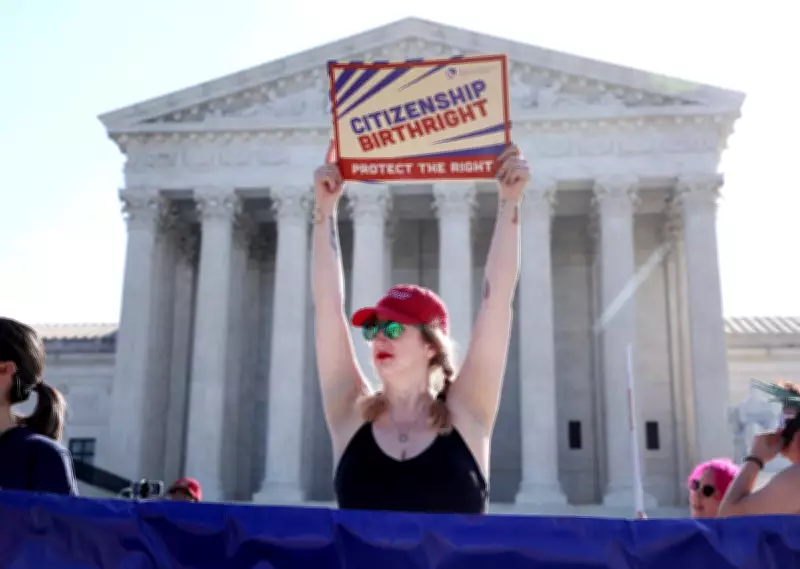
Outside the courthouse, demonstrators rallied in support of birthright citizenship as the historic arguments unfolded inside. The court's final decision, expected in June, could potentially pave the way for stripping citizenship from millions who already possess it, creating what legal scholars describe as a constitutional crisis of unprecedented proportions in modern American history.
Justice Clarence Thomas's great-grandfather gained citizenship through the 14th amendment's ratification, which conferred citizenship to formerly enslaved Black people and their descendants. Chief Justice Roberts's grandfather was born in the US to Slovakian parents who weren't naturalized at the time, according to New York Times research, highlighting how this constitutional principle has woven through generations of American families.




