
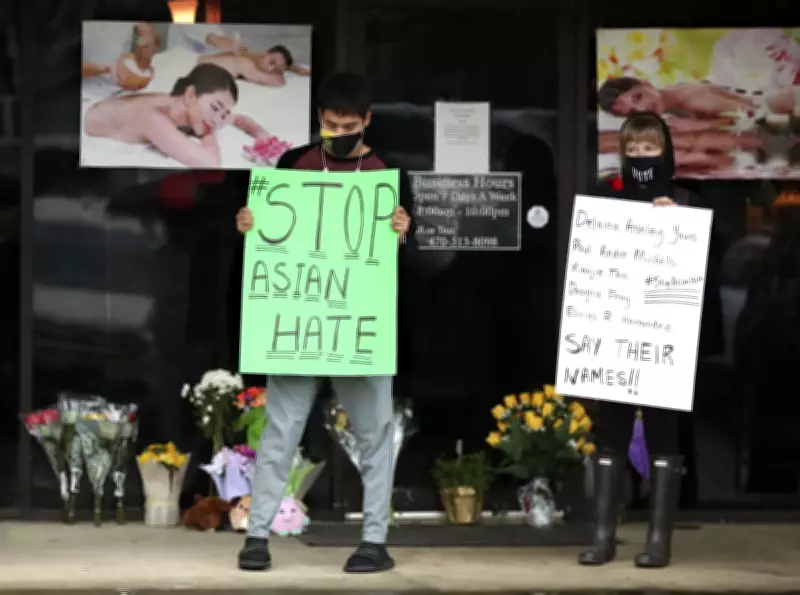
Stop Asian Hate Movement Faces Critical Juncture Five Years After Atlanta Tragedy
Five years have passed since a gunman unleashed terror at three Atlanta-area spas on March 16, 2021, killing eight individuals including six Asian women. This horrific event occurred during a period when Asian communities across the United States were already experiencing a disturbing surge in violence and discrimination throughout the COVID-19 pandemic.
The Atlanta spa shootings ignited immediate protests, widespread mutual aid organizing, and significant policy changes across multiple states. For a brief moment, the Stop Asian Hate movement appeared positioned to become the defining social justice movement of the 2020s, capturing national attention and mobilizing communities nationwide.
Initial Momentum and Policy Achievements
Hostility toward Asian Americans escalated dramatically in early 2020 as pandemic lockdowns began and political rhetoric intensified. The Stop Asian Hate campaign emerged from a coalition of California organizations including AAPI Equity Alliance, Chinese for Affirmative Action, and San Francisco State University. What began as a reporting center documenting discrimination quickly transformed into a powerful national movement.
Between 2020 and 2024, Stop AAPI Hate recorded nearly 13,000 reports of anti-Asian hate incidents while attracting over 2.4 million unique visitors to its website. The campaign achieved substantial policy victories including California's historic $156 million investment in victim support, mental health resources, and educational programs to combat anti-Asian hate. Illinois and New Jersey passed legislation requiring Asian American history to be taught in public schools.
"The campaign galvanized political power to push through legislation that bolstered mutual aid, public safety and education efforts across the United States," said Manjusha Kulkarni, executive director of AAPI Equity Alliance and co-founder of Stop AAPI Hate. "When we see overall what's been achieved, it's been quite tremendous."
Internal Divisions and Strategic Challenges
Despite these accomplishments, the movement encountered significant internal divisions from its inception. Younger, reform-minded activists advocated for non-carceral, community-based interventions while older business and political leaders supported traditional tough-on-crime approaches. These ideological differences created tensions within the diverse Asian activist community.
Progressive organizers criticized certain aspects of the movement, including its occasional complicity in perpetuating anti-Black narratives. News reports and social media frequently highlighted people of color as perpetrators of anti-Asian violence, despite research indicating that most attackers are white. This framing created complex dynamics within broader racial justice movements.
Phi Nguyen, former executive director at Asian Americans Advancing Justice – Atlanta, noted that "the movement's framing of racial violence as individualized, rather than systemic and structural, was shortsighted." Instead of increasing police presence in communities of color, Nguyen suggested that governments could have invested more resources into mutual aid, legal funds for immigrants, language access for mental health services, and anti-poverty programs.
Current Challenges and Future Directions
Today, the Stop Asian Hate movement stands at a critical crossroads. The momentum that characterized its early years has diminished as media attention shifted elsewhere. The movement now operates within a different political landscape, facing new challenges and opportunities.
Connie Wun, executive director of AAPI Women Lead, emphasized that while the movement brought crucial attention to the experiences of Asians in America, particularly women and migrants, "the everyday realities for Asian women and girls, immigrants and refugees, have grown exponentially worse than before." Recent data shows ICE arrests of Asians have increased significantly, and half of Asian adults report being impacted by anti-immigrant policies.
The movement continues through organizations like Stop AAPI Hate, which now prioritizes community-based advocacy and political efforts in Congress. Last May, the coalition joined four other organizations in filing a class-action lawsuit against the justice department over what they claim is an unlawful termination of more than $810 million in public safety grants.
Looking forward, activists envision a more sustainable movement that involves intergenerational conversations about root causes of racial violence, addresses inequities between different Asian ethnic groups, and develops justice frameworks that don't rely exclusively on law enforcement. As Nguyen noted, "It should be an interracial and intersectional movement that's connected to history."
Despite the challenges, hopeful developments include the establishment of rapid response networks and emergency funds for victims. When ICE agents raided a Hyundai plant in Georgia last year, arresting nearly 500 Korean and Latino workers, organizers were able to quickly deliver resources to detainees using systems developed during the movement's peak.
Five years after the Atlanta spa shootings that sparked nationwide outrage, the Stop Asian Hate movement continues to evolve, seeking new strategies to address both interpersonal violence and systemic discrimination affecting Asian communities across America.




