Migrant Camps Face Demolition in Mexico City as US Policies Shift
For asylum seekers from Venezuela and Honduras, the journey to the United States has taken a dramatic turn. Many now find themselves stranded in Mexico City, living in makeshift camps that are now being demolished by Mexican authorities. These families, fearful of returning to their home countries and unable to continue north, face an uncertain future as their temporary shelters disappear.
A Journey Interrupted
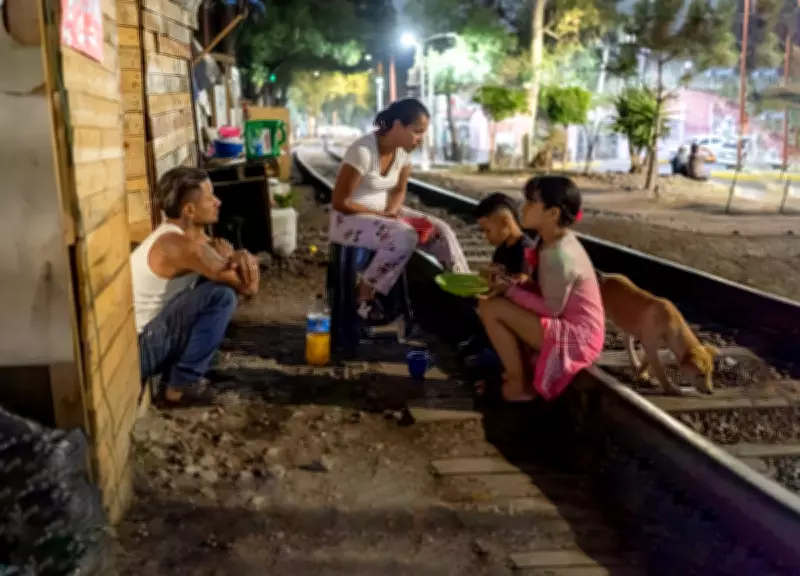
Ronel Salazar and his wife, Genesis, along with their two children, Matias and Sophia, represent one of many families caught in this crisis. They traveled from Venezuela through Peru, crossed the treacherous Darien Gap, and reached Mexico City after a harrowing journey that included being held hostage in Veracruz. Now, they live in the Vallejo migrant camp, where Ronel works as a barber and Genesis sells candy on the streets to survive.
Edicson Parra, his wife Andrea, and their four children share a similar story. They left Venezuela in August 2024 hoping to reach the US, but now reside in the same camp. Parra works on a construction site earning $20 a day while his wife cares for their children. "I wanted to go to the US," says Parra, "but the American dream no longer exists for anyone; it's a lie. Right now, they're persecuting migrants."
Policy Changes Create Crisis
The situation has been exacerbated by recent US policy shifts. Under President Donald Trump's administration, a series of executive orders and legislative changes have transformed migration patterns across the Americas. The "big, beautiful bill" passed in July allocates nearly $50 billion to border wall construction and additional billions to anti-migration policies.
Previously, asylum seekers could reach the US from Mexico and present their case before a judge. Now, many are stuck in Mexican cities with no clear path forward. The termination of the Customs and Border Protection app in January 2023 eliminated the appointment system for asylum seekers, leaving them without a mechanism to pursue their claims.
Life in the Camps
The Vallejo camp is one of the last remaining migrant settlements in Mexico City, housing over 200 people, mostly families. Residents live in shelters made of pallets and plastic along a railway track where a garbage train passes three times weekly. Conditions are dire:
- No running water or sanitation facilities
- Families share small, cramped spaces
- Limited access to basic resources
Angela Ortegana Garboza, a 24-year-old single mother from Venezuela, arrived at the camp in May after being sexually assaulted twice while crossing the Darién Gap. She hopes to reach the US to send money back to her two other children in Venezuela. Andrés Castro, who lost his leg falling from "the Beast" train ten years ago while attempting to reach America, now sells candy at traffic stops to earn money.
Historical Context and Current Reality
In 2022, thousands of Venezuelans were deported to Mexico after the Biden administration expanded Title 42, a public health law initially used during Trump's first term to deport migrants during COVID-19. With Mexican government cooperation, migrants were bused to cities throughout Mexico, including various districts in Mexico City, where infrastructure was inadequate to support them.
This influx led to the creation of six makeshift camps housing approximately 3,000 people, according to the Central Border Monitoring Group. Most have since been dismantled, leaving Vallejo as one of the final holdouts.
Uncertain Futures
Residents live in constant fear of eviction as demolition crews approach. Each family has endured difficult journeys and overcome painful obstacles in their quest for a better life. Now they face limited options:
- Waiting to see if the US border opens
- Returning to their home countries
- Building new lives in Mexico
Luis Guevara, his wife Rosely, and their four children represent another dimension of this crisis. They self-deported from the US after realizing Trump would be the next president, returning to their Venezuelan roots but finding themselves in the same camp as other migrants.
As the demolition of these camps proceeds, the humanitarian crisis deepens. Families who have already suffered immensely now face the loss of their temporary homes with nowhere to go. The road to the "nation of immigrants" has become increasingly impassable, leaving thousands in limbo between hope and despair.