
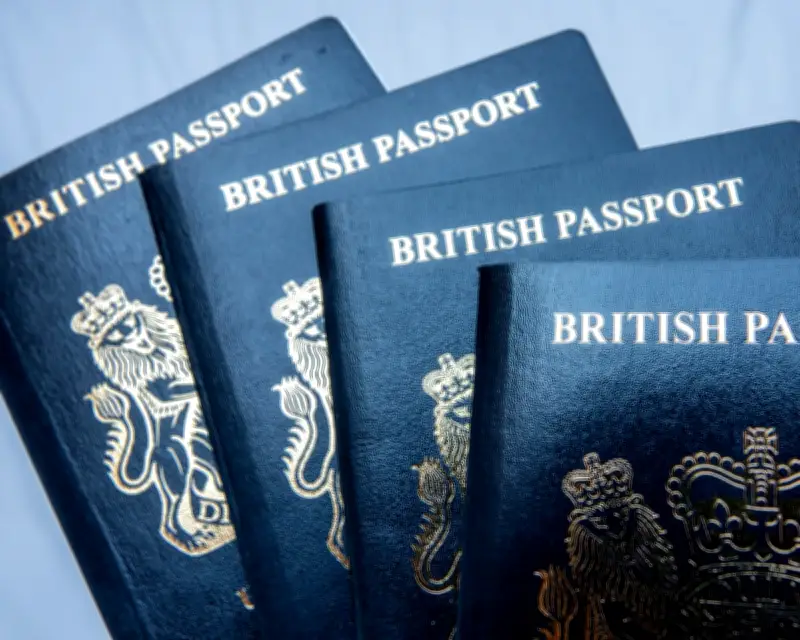
A 15-year-old British girl was unable to return to her school in the UK for six weeks after a trip to see her grandmother in Italy, due to the Home Office's new rule requiring dual British nationals to have a British passport to re-enter the country. Stranded in Rome in April, she is the latest of several children and young adults affected by the Labour government rule that came into force in February.
New rule impacts dual nationals
Under the new rules, dual nationals risk being denied boarding on flights, trains, or ferries if they do not present a British passport—current or expired—or a “certificate of entitlement,” which costs £589 and is attached to the passport of their second nationality. The policy has caused significant disruption for families, with other cases including a young British woman trying to return from Spain and children coming home from Denmark.
Father criticises government response
Rowan Somerville, the girl's father and an author, sharply criticised the Home Office and Foreign Office for failing to help his daughter. “The embassy, the Home Office and the Foreign Office bounced us from one to another,” he said. “They are playing with people’s lives, a child’s education. It is loathsome.” The Home Office could not issue a temporary passport because the girl did not have a British passport in the first place, according to Somerville.
Her school implored government departments to intervene, writing that they were “increasingly concerned about her prolonged absence from education.” Somerville’s local MP, Joe Powell, also made representations to the Home Office, and eventually the Foreign, Commonwealth & Development Office (FCDO) issued an emergency travel document.
MP raises concerns about communication
Powell said he would write to Immigration Minister Mike Tapp to ensure no other schoolchildren are left stranded. “Despite having a British parent, two valid passports, and having been at school in the UK since nursery, changes to Home Office rules resulted in her being stuck in Rome and missing six weeks of school,” he said. “Thankfully, we were able to help and she’s now at home and back in school, but unfortunately this was not an isolated case, and it raises serious concerns about how government departments communicate policy changes once they’ve been introduced – and support those who have slipped through the net.”
Bureaucratic nightmare for family
Somerville described the process as a bureaucratic nightmare, compounded by a three-month wait for his daughter’s British passport—something the government website says takes three weeks. He praised the “remarkable kindness” of frontline customer service staff at the Passport Office but said he hit a wall of “stupidity” afterward. At one point, a senior official called to say they could no longer speak to him because his daughter had turned 16. “I told them I had spoken to 14 different people in their office and, instead of resolving the complaint, they were phoning me to tell me they couldn’t speak to me. It beggars belief,” he said.
Home Office defends policy
Previously, the Home Office dismissed as “absurd” the idea that it did not communicate the rule change, stating it had done so on the gov.uk website. A Home Office spokesperson said Somerville’s daughter “was granted an emergency travel document in May, enabling them to return to the UK,” but did not comment on the issue of a minor being refused return and missing six weeks of school. They added that since February, “all dual British citizens have needed to present either a valid British passport or certificate of entitlement when travelling to the UK. Without one, carriers cannot verify British citizenship, which may lead to delays or refused boarding.” The FCDO has been approached for comment.




