
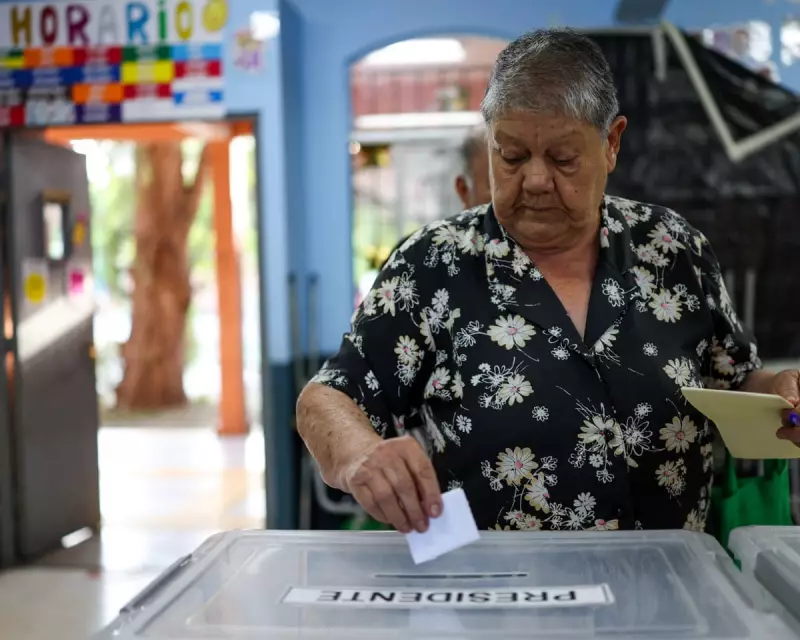
Chileans headed to the polls on Sunday in a crucial presidential election that has become dominated by concerns over organised crime and immigration, with voters facing a stark choice between communist and right-wing frontrunners.
Election Day Procedures and Timing
Polling stations across Chile opened their doors at 8am local time and were scheduled to close at 6pm, with election officials indicating that results would begin flowing in throughout the night. This marks the first round of what many anticipate will be a two-stage electoral process, as no candidate appears likely to secure the 50% threshold required to avoid a runoff scheduled for 14 December.
The Leading Contenders and Their Platforms
The election presents Chilean voters with dramatically different visions for their country's future. On the left stands Jeannette Jara, a 51-year-old communist and former labour minister in the leftwing government. Facing her from the right is José Antonio Kast, a 59-year-old ultraconservative lawyer and former lawmaker who opposes abortion and advocates for reducing the size of the state.
Despite their ideological differences, both leading candidates have converged on the issue of public security, responding to voter anxieties about rising gang-driven crime that many attribute to increased illegal immigration from crisis-stricken Venezuela.
Crime and Immigration: The Central Issues
The campaign has witnessed remarkable political positioning, with the communist candidate advocating fiscal restraint while the Catholic father of nine has largely avoided discussions of traditional family values. Both frontrunners have identified combating foreign gangs, particularly Venezuela's Tren de Aragua, as a top priority.
This criminal organisation's recent expansion into Chile has been linked to a surge in kidnappings, extortion and sex trafficking, shattering the nation's self-perception as far safer and more stable than its regional neighbours.
Political scientist Rodolfo Disi from Adolfo Ibáñez University in Santiago observed: "They're talking about things that all voters care about, they're vying for the centre."
The Wider Field and Electoral Dynamics
Trailing Jara and Kast in the eight-candidate field are Johannes Kaiser, a 49-year-old radical libertarian congressman and YouTuber, and Evelyn Matthei, a 72-year-old veteran centre-right politician.
Most political experts anticipate that the charismatic Jara will emerge victorious in Sunday's first round, benefiting from a united centre-left coalition behind their former minister while the rightwing vote remains divided. Current President Gabriel Boric is constitutionally prohibited from seeking consecutive terms.
However, an initial victory for Jara could still result in ultimate defeat during the December runoff against a rightwing opponent promising tougher security measures. Disi cautioned: "If Jara moves toward being tougher on crime, the right can always be tougher. It's a losing game."
Mandatory Voting and New Electorate
This election marks a historic first for Chile, as all eligible citizens are required to vote for the next president. The country recently reinstated mandatory voting after ending the practice in 2012. Voter registration is now automatic, meaning millions of people who never registered previously will be casting their first presidential ballots.
Those who fail to vote face potential fines of up to $100, creating uncertainty about how this expanded electorate might influence the outcome.
Robert Funk, an associate professor of political science at the University of Chile, highlighted the uncertainty: "It's a huge question. We have 4 million new voters. Who are they? Are they young people who like Jara? Are they people from marginal neighbourhoods attracted to Kast's hardline stance on crime?"
Immigration Policies Take Centre Stage
Chile's foreign population has doubled since 2017, with 1.6 million immigrants recorded last year in the nation of 18 million people. An estimated 330,000 are undocumented, making immigration policy a central campaign issue.
All leading candidates have adopted tough stances on illegal immigration. Kast has proposed building a massive wall along Chile's northern border and deporting tens of thousands who entered illegally. Kaiser advocates detaining undocumented people in camps and preventing their children from attending school. Matthei wants to deploy drones and additional armed forces to secure borders.
Even Jara has sought to bolster her crime-fighting credentials by promising to construct new prisons and expel foreigners convicted of drug trafficking.
Alongside the presidential contest, Chile will also renew the entire lower house of congress and part of the senate on Sunday. The country has 15.7 million eligible voters, including more than 800,000 immigrants with residency of five years or more who are exempt from mandatory voting requirements.




