
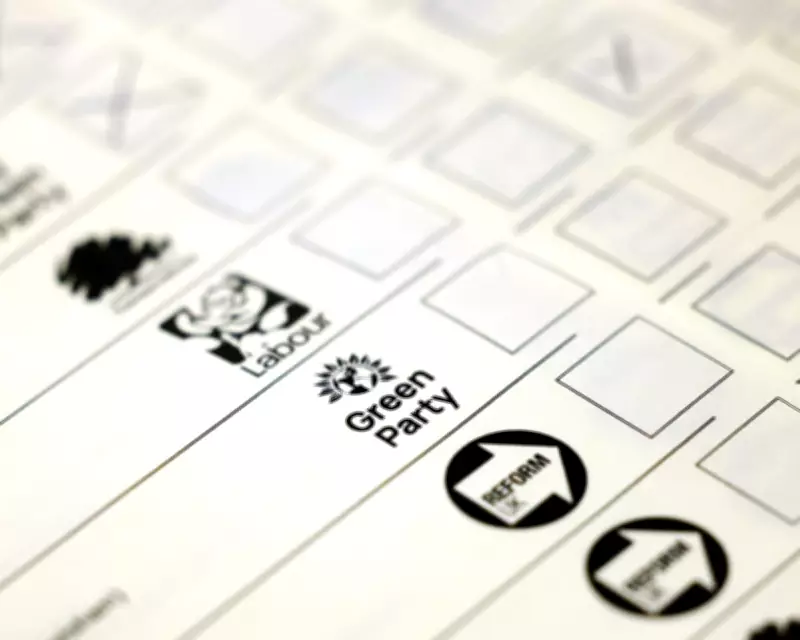
A Guardian analysis of last week's local elections in England has uncovered a striking alphabet effect: candidates whose surnames appear earlier in the alphabet are significantly more likely to top their party's vote. In wards where a party fielded three candidates, those listed first on the ballot finished ahead of their party colleagues in 65% of cases, while those listed last did so only 11% of the time.
Reform UK Shows Strongest Alphabet Bias
Among major parties, Reform UK exhibited the most pronounced surname effect. Approximately 74% of Reform candidates with alphabetically advantaged surnames topped their party's vote, compared with fewer than 8% of those at the bottom. The Green party showed the second-strongest effect, followed by Labour.
Juliet Zhong, a Reform UK candidate in Kensington and Chelsea, noted that despite joint campaign materials, her vote share was 15-18% lower than her colleagues. She argued for grouping candidates by party on ballots rather than alphabetically, saying, "It would surely be more logical for voters to see candidates classified by their party."
Mixed Reactions from Candidates
Some candidates downplayed the effect. Nick Abear, a Green party candidate elected in East Surrey, said, "I think most people know who they are going to vote for in advance." Others, like Liberal Democrat Andy Adams, acknowledged the phenomenon. Adams, who won a council seat in Winchester after 11 previous attempts, joked that his husband would be wise to become an Adams-Wiggins if he entered politics.
The analysis compared average vote shares across all wards, confirming that candidates with surnames starting with A to D slightly outperformed party averages, while those with W, Y, and Z underperformed. The findings suggest that ballot order may influence voter decisions, particularly in close races.




