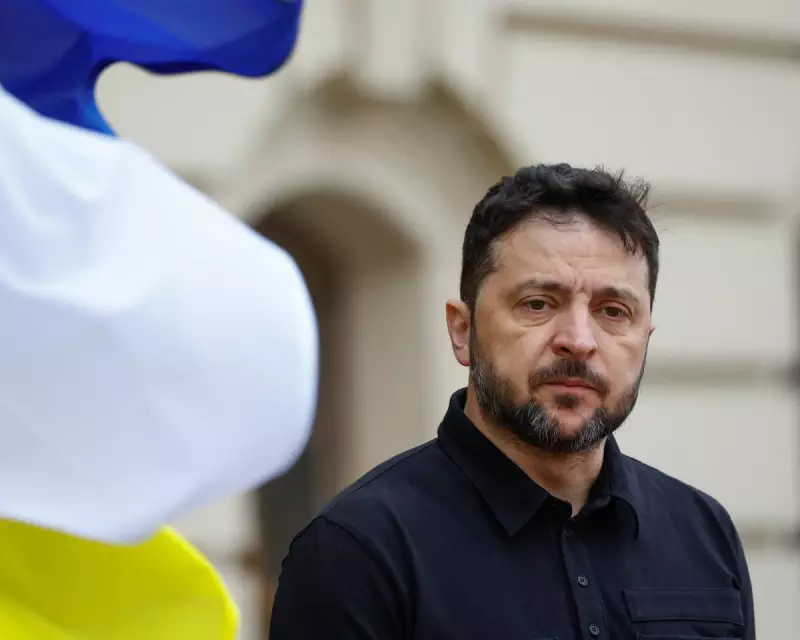
Ukrainian President Volodymyr Zelenskyy has characterised recent peace discussions mediated by the United States as "constructive but not easy". The talks, which took place on Sunday, 7 December 2025, represent a significant diplomatic effort to find a path towards ending the ongoing conflict with Russia.
A Delicate Diplomatic Process
In his nightly video address, President Zelenskyy provided a cautious assessment of the negotiations. He confirmed that the discussions, which involved US officials, were substantive and moved forward, but he emphasised the inherent complexity and difficulty of the process. "The talks were constructive, but they were not easy," he stated, underscoring the challenging nature of reconciling Ukraine's fundamental positions with the realities of the war.
The president's remarks did not delve into specific details of the proposals exchanged, maintaining a level of diplomatic discretion. However, he framed the dialogue as part of a broader, ongoing effort to achieve a "just peace" for Ukraine, a term Kyiv consistently uses to denote a settlement that restores its territorial integrity and holds Russia accountable.
Context and International Stance
This round of US-mediated talks occurs against a backdrop of sustained military pressure. The briefing note from which Zelenskyy's comments emerged also highlighted other critical developments. Notably, it reported that Russian forces had conducted a large missile attack on energy infrastructure in Ukraine's Dnipropetrovsk region earlier on the same Sunday, causing significant damage and power outages.
Furthermore, the international dimension of the war remains pivotal. The briefing referenced a meeting between Chinese President Xi Jinping and Russian President Vladimir Putin on the sidelines of a Shanghai Cooperation Organisation summit. While the official readout focused on bilateral ties, the encounter was closely watched by Western allies for any signals regarding China's stance on the conflict.
In a related development, the Ukrainian military's General Staff reported continued offensive actions. They claimed successes in the Svatove sector, an area in the north-eastern Luhansk region that has seen heavy fighting, suggesting that diplomatic manoeuvres are unfolding alongside active combat operations.
The Path Ahead for Ukraine
President Zelenskyy's nuanced description—acknowledging progress while stressing difficulty—reflects the precarious balance Ukraine must strike. On one hand, there is intense pressure from some international partners to explore diplomatic solutions. On the other, there is a firm domestic commitment to not compromise on core national interests, such as sovereignty over all occupied territories, including Crimea.
The involvement of the United States as a mediator adds considerable weight to the process, but it also introduces its own geopolitical complexities. The outcome of these "constructive but not easy" talks will likely influence future Western support and the strategic calculus of all parties involved in the war.
Analysts suggest that while such dialogues are a necessary step, a breakthrough remains distant. The fundamental disagreements on borders, security guarantees, and post-war justice are profound. Zelenskyy's public messaging appears designed to manage expectations, showing his populace and the world that Ukraine is engaged in serious diplomacy without conceding its vital goals under pressure.
As the war continues into another winter, the combination of military events on the ground in sectors like Svatove and delicate diplomatic discussions behind closed doors will continue to define the conflict's trajectory. The world watches to see if these difficult conversations can eventually forge a path from destruction to a sustainable peace.