The dramatic capture of Venezuelan President Nicolás Maduro by US forces has created an immediate and complex foreign policy challenge for China, with analysts warning the repercussions will extend far beyond Latin America to the tense strait separating China and Taiwan.
An Operation That Embarrassed Beijing
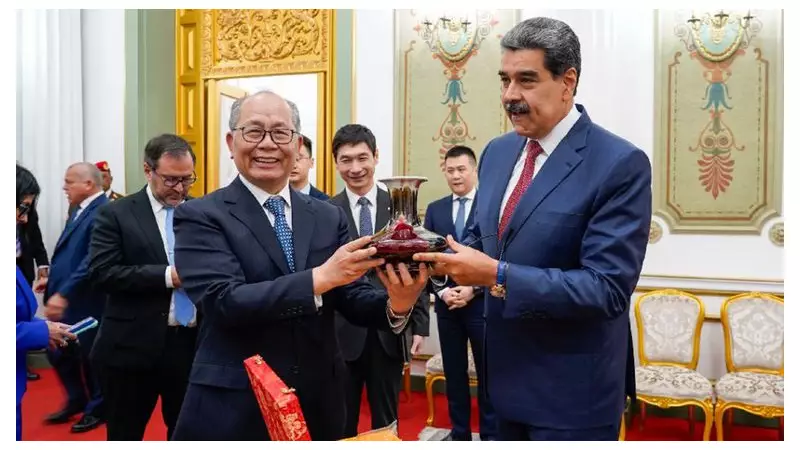
The operation, which took place on Sunday 4 January 2026, was described as "shocking" and a "clear violation of international law" by China's foreign ministry. The timing proved particularly awkward for Beijing. Just hours before his capture, Maduro was hosting a Chinese delegation in Caracas led by Special Representative on Latin American Affairs, Qiu Xiaoqi.
Footage of the two smiling together, seemingly unaware of the imminent American action, has been seen as a significant loss of face for a Chinese leadership that prizes diplomatic protocol and non-interference. Publicly, China has expressed outrage, a stance it is expected to maintain given Venezuela's status as a major partner in the region.
Financial Fallout and Strategic Calculations
Financially, China is moving swiftly to protect its interests. While it is the largest buyer of Venezuelan oil, this supply constitutes only around 4% of China's total oil imports. Analysts suggest the impact may be mitigated by large volumes of pre-purchased oil already en route and existing stockpiles, a buffer against anticipated sanctions.
This underscores a critical point: Maduro needed China's economic support far more than China relied on him. The more profound consequences are not economic, but geopolitical, reshaping the landscape of US-China competition.
The Taiwan Precedent: A Dangerous New Dial
The most immediate reaction within China has focused on Taiwan. Chinese social media has been alight with users drawing direct parallels, questioning if the US action sets a precedent for China to move against what it views as a renegade province.
While the event is unlikely to trigger an immediate invasion of Taiwan, it arguably "moves the dial" within Beijing's ongoing campaign of coercion and pressure aimed at forcing reunification. It provides China with fresh ammunition to challenge US critiques of its own actions near the line of international law and to argue for a similar 'great power exemption' that Washington appears to have taken for itself.
Former US President Donald Trump stated the operation would "not be a problem" for Sino-US relations, suggesting China would benefit from increased oil access. The reality is far more nuanced. China has learned that strength and standing its ground is essential in navigating Trump's world order. The capture of Maduro has handed Beijing a potent new narrative in its push to present itself as a more reliable source of global leadership, one that ostensibly respects sovereignty, in contrast to US unilateralism. This episode is set to deepen distrust and recalibrate strategic calculations in both capitals for years to come.