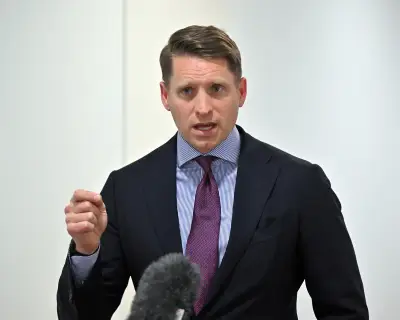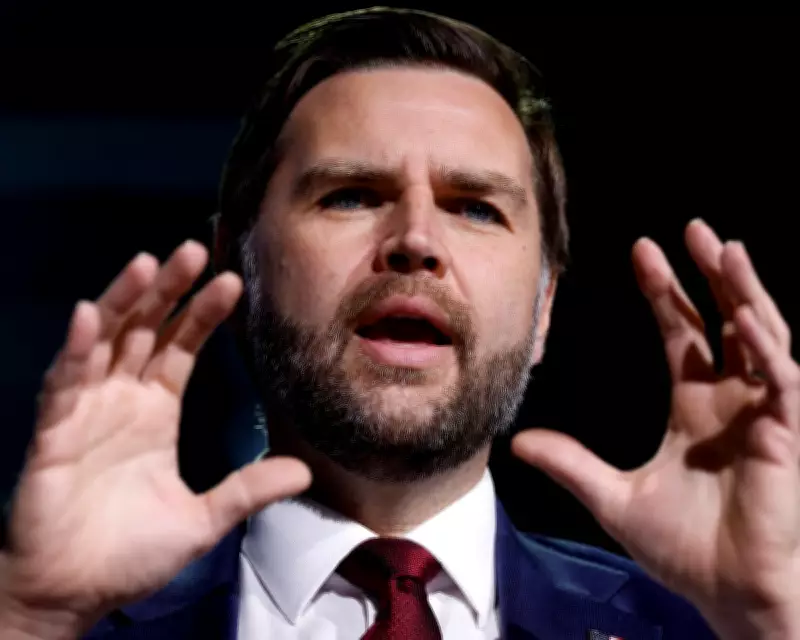
US Vice President JD Vance Poised to Lead High-Stakes Pakistan Talks if Iran Consents
In a critical diplomatic maneuver, US Vice President JD Vance is anticipated to spearhead a high-level American delegation to Islamabad on Tuesday, contingent upon Iran's agreement to participate in further discussions. This potential meeting unfolds as the deadline for the current ceasefire between the United States and Iran rapidly approaches, injecting urgency into the already tense Middle East landscape.
Delegation Composition and Iranian Skepticism
The US delegation, should the talks proceed, will include Vice President Vance, accompanied by Steve Witkoff, the special envoy appointed by former President Donald Trump, and Jared Kushner, Trump's son-in-law. However, the path to dialogue remains fraught with historical distrust. Iranian President Masoud Pezeshkian has voiced significant concerns, characterizing recent communications from American officials as "unconstructive and contradictory." He asserted that these signals appear designed to coerce Iran's surrender, a stance Tehran vehemently rejects. "Iranians do not submit to force," President Pezeshkian declared, underscoring the deep-seated mistrust complicating negotiations.
Iran's Conditional Participation and Demands
Despite the skepticism, a senior Iranian official indicated to Reuters that Tehran is "positively reviewing" its potential involvement. Reports suggest that if Vance attends, Iran's delegation would likely again be led by parliamentary speaker Mohammad Bagher Ghalibaf. However, Ghalibaf himself has set a firm precondition, stating Iran will not negotiate while under threat. In a social media post, he warned, "we have prepared to reveal new cards on the battlefield," and accused Trump of attempting to transform the negotiating table "into a table of surrender."

Tehran's core demands include an immediate end to the US blockade of the strategic Strait of Hormuz. In contrast, Trump has reiterated the non-negotiable stance that Iran must never develop a nuclear weapon, even expressing a personal willingness to meet with Iranian leaders directly.
Confusion and Extended Ceasefire
The lead-up to the potential talks has been marked by confusion. Trump initially told the New York Post that Vance and his team were "heading over now," expecting their arrival in Islamabad that evening. US officials swiftly corrected this, clarifying that while a Monday departure was discussed, the vice president is scheduled to leave on Tuesday morning, but only if the talks are confirmed.
Amid this disarray, Trump announced an extension of the two-week ceasefire, pushing the deadline to "Wednesday evening Washington time." This 24-hour extension is explicitly to facilitate the critical Islamabad meeting. However, Trump warned Bloomberg it was "highly unlikely" he would extend the ceasefire further, hinting that military action could resume shortly after. Paradoxically, he also insisted, "I'm not going to be rushed into making a bad deal. We've got all the time in the world."
Background of Failed Talks and Regional Tensions
This diplomatic push follows 21 hours of failed discussions earlier in the month, led by Vice President Vance, which collapsed over US demands for Iran to cease nuclear enrichment and surrender its stockpile of 440kg of highly enriched uranium. Iran cited a fundamental deficit of trust, seeking guarantees against future attacks despite the intensive five-week US-Israel bombing campaign it endured.
Pakistan has been preparing intensively for the possible negotiations since Sunday, implementing a stringent security lockdown in Islamabad, suspending public transport, and promising to halt the city's frequent power cuts during the talks. These power outages, lasting six to seven hours daily across Pakistani cities, stem from severe oil and gas shortages exacerbated by the dual US and Iranian blockades of the Strait of Hormuz.
Maritime Standoff and Economic Impact
The strait remains a flashpoint. The US imposed its blockade in response to Iran imposing tolls on merchant shipping. Tensions escalated on Sunday when the US military seized the Iranian-flagged container ship Touska after its crew ignored six hours of warnings. US Central Command reported the vessel's engines were disabled by fire from a US destroyer before marines captured it.

Although Iran briefly lifted its blockade on Friday, it reimposed it on Saturday due to the US's refusal to reciprocate. The resulting maritime danger has brought commercial shipping to a near standstill, with only three tankers crossing on Monday compared to eighteen on Saturday. This instability has driven the price of Brent crude oil up by $5 to over $95 per barrel.
Broader Regional Diplomacy
Parallel to these high-stakes talks, Israel and Lebanon are scheduled to hold a second round of ambassador-level discussions in Washington on Thursday. These talks mark the first diplomatic engagement between the two nations since a 10-day ceasefire was announced in that theater last week. Meanwhile, Israel has issued warnings to residents of southern Lebanon to avoid a designated zone near the border as it consolidates military control during the ongoing ceasefire.