US Deportees Vanish in El Salvador's 'Black Hole Prison' System
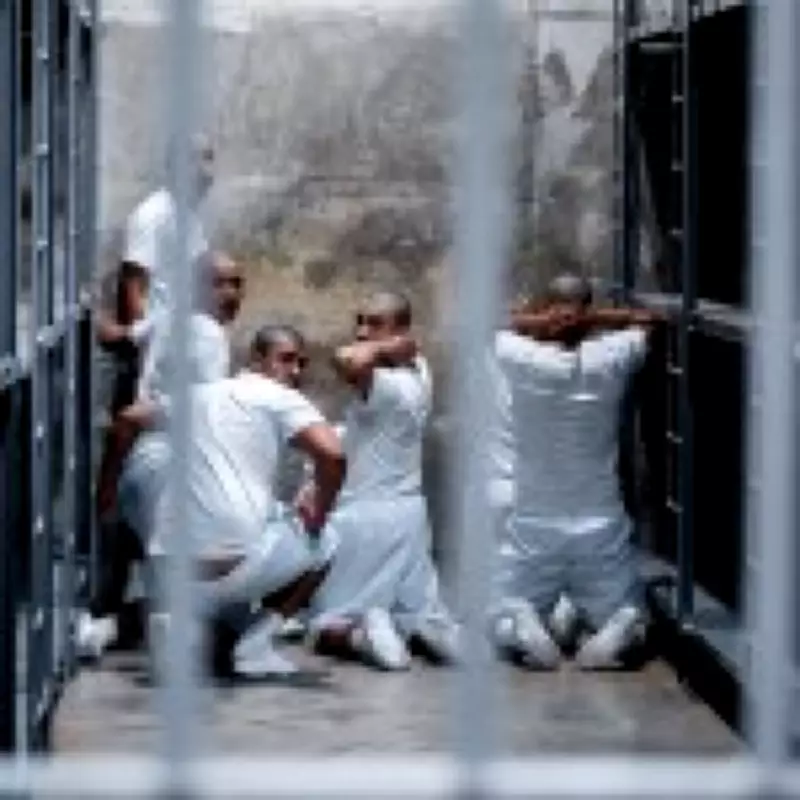
Human Rights Watch has uncovered alarming evidence that El Salvador is forcibly disappearing and detaining Salvadoran deportees from the United States, raising serious concerns about human rights violations and international complicity. The situation centers on President Nayib Bukele's Terrorism Confinement Centre, known as CECOT, which has been accused of torture, sexual abuse, and systematic rights abuses.
Deportation Deal Under Scrutiny
The controversy stems from an agreement initiated under former US President Donald Trump last year, which began funneling Salvadoran deportees to El Salvador. Since January 2025, at least 9,000 Salvadorans have been deported to their home country, but shockingly, only 10.5% had convictions in the United States for violent or potentially violent crimes. This suggests the majority were not serious offenders, yet they face extreme consequences upon return.
A detailed report involving relatives and lawyers of 11 deportees taken to El Salvador last year found that these men have been completely cut off from communication with family and legal representatives. Human Rights Watch describes this information blackout as tantamount to forced disappearance, a grave violation under international law.
Families Left in Despair
Families attempting to locate their loved ones have been met with bureaucratic stonewalling by Salvadoran authorities. Officials have claimed they 'lack the legal mandate' to find the detainees or have asserted that no records of the men exist. This has created a climate of fear and uncertainty, with relatives left without answers about the fate or whereabouts of those deported.
Juanita Goebertus, Americas director at Human Rights Watch, expressed profound concern: 'The desperation of families to find disappeared loved ones evokes the darkest days of dictatorships in Latin America. The United States should stop casting people into the black hole of El Salvador's prison system.'
State of Emergency Exploited
The Salvadoran government has leveraged the state of emergency declared in 2022 to bypass fundamental legal protections. This has allowed authorities to avoid informing detainees of their rights, deny them legal representation, and circumvent the right to a fair trial. International law defines forced disappearance as a state-sanctioned arrest followed by a refusal to disclose the person's fate or location, a definition that appears to fit these cases closely.
Forced disappearances are not a new phenomenon in El Salvador. Between January 2020 and June 2022, prior to Bukele's state of emergency, more than 4,000 people were reported as forcibly disappeared. The current situation suggests a troubling escalation under the guise of security measures.
Bukele's Defense and Broader Implications
President Nayib Bukele has vigorously defended his administration's actions, stating: 'While some lawmakers from another country want us to return to the past of death and destruction that El Salvador lived through…we continue to demonstrate that, without them, we are much better off.' However, critics argue that his approach undermines the rule of law and sets a dangerous precedent.
Santiago Canton, General Secretary of the International Commission of Jurists, warned: 'The Bukele model is sustained by the dismantling of the rule of law to systematically violate human rights without institutional restraints. In the very short term, it may appear to improve security, but it inevitably weakens the very security it claims to protect. The danger is that this approach is increasingly being promoted across Latin America by authoritarian and unscrupulous political leaders as a solution to crime.'
Allegations extend beyond government actions to include involvement by local gangs, complicating the accountability landscape. The combination of state power and criminal elements creates a perilous environment for deportees and citizens alike.
This developing scandal highlights critical issues at the intersection of immigration policy, human rights, and international relations. As evidence mounts, pressure is building on both the United States and El Salvador to address these grave concerns and ensure transparency and justice for those affected.