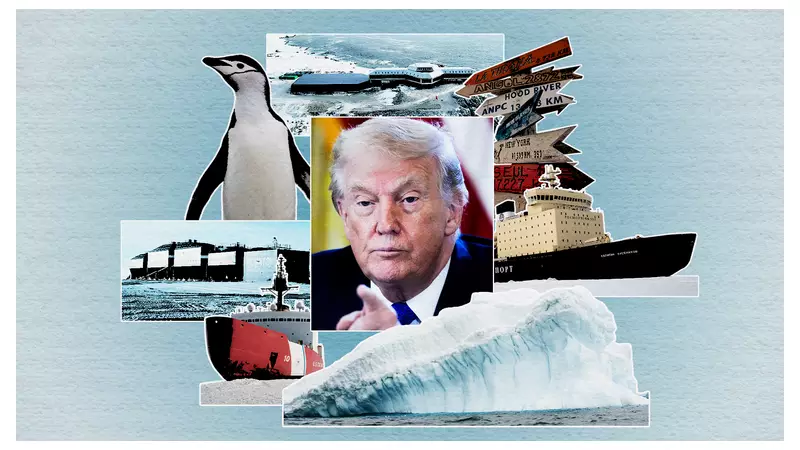
While the Trump administration pursues a deliberate strategy for control in the Arctic, a parallel and seemingly accidental withdrawal of American influence is unfolding at the opposite pole, potentially opening the door for strategic rivals. Experts warn that proposed cuts to climate science funding are having catastrophic consequences for the United States' long-standing dominance in Antarctica.
The Science of Influence on a Frozen Continent
Under the 1959 Antarctic Treaty, which prohibits military and commercial exploitation, scientific research is the primary currency of power. Nations maintain their presence and assert their interests through scientists, research stations, and the supporting infrastructure like icebreakers and aircraft. The United States has been a dominant player on the continent, which is one and a half times larger than the contiguous US, largely through its well-funded operations, most notably the strategically vital South Pole Station.
However, this position is now under threat. Proposed cuts to climate-related research – a vast portion of Antarctic work – described as "catastrophic" by Professor Ted Scambos, a leading US glaciologist, coupled with a decision not to renew the lease for its only dedicated Antarctic icebreaker, has left America in a weakened state. This year, the US has been forced to lease an icebreaker from Ukraine to maintain its operations, a significant downgrade in capability.
A Shifting Balance of Power
This retrenchment has not gone unnoticed. Professor Dame Jane Francis, Director of the British Antarctic Survey (BAS), observes a clear "change in the leadership and the balance of power." The UK, with bases like Rothera and Halley VI and the new £200m RRS Sir David Attenborough icebreaker, continues to uphold its presence, seeing its scientific work as fulfilling the dual purpose of advancing knowledge and maintaining geopolitical influence.
Other nations, however, are moving faster to fill any void. China, through its polar research agency CHINARE, has been rapidly expanding its footprint. It now operates five bases, opened a new year-round facility in 2025, and has announced plans for another. Crucially, it has commissioned new icebreaking ships, with both its predecessor and new vessel active around Antarctica this year.
Treaty Integrity and Future Ambitions
While all signatories, including China and Russia, officially conduct research under the treaty, there are signs of broader ambitions. China has resisted efforts to bolster fisheries protection in the Southern Ocean. In 2020, Russia announced the discovery of a massive offshore oil reserve near Antarctica, insisting its survey was purely scientific while clearly eyeing future potential.
"Countries that have signed the Antarctic Treaty, are there to do scientific research," notes Prof Scambos, "But they have an eye on…any sort of future for Antarctica. Be it to maintain the treaty or to rethink the treaty in terms of exploitation." No country has yet moved to formally alter the treaty, but the changing dynamics raise questions. The continent's remoteness and harsh climate have long protected it, but as ice melts and the Trump administration shows a willingness to challenge territorial norms elsewhere, the future of Antarctica as a preserved zone for peace and science appears increasingly uncertain.