The United States has formally announced the commencement of the second phase of the ceasefire in Gaza, a move that includes establishing a committee of Palestinian technocrats intended to assume daily administrative control of the territory during a transitional period.
Announcement Lacks Crucial Details
The declaration was made via social media by Steve Witkoff, the special envoy for former President Donald Trump. However, the announcement provided no specific names or detailed composition for the proposed "national committee for the administration of Gaza." Witkoff stated this phase would initiate the "full demilitarisation and reconstruction of Gaza," focusing on disarming all unauthorised factions.
The committee's work is not expected to begin until it receives a mandate from a Trump-chaired "peace board," which itself has not yet been formed. This lack of concrete detail has cast uncertainty over the immediate next steps.
Ongoing Violence and Hostage Concerns
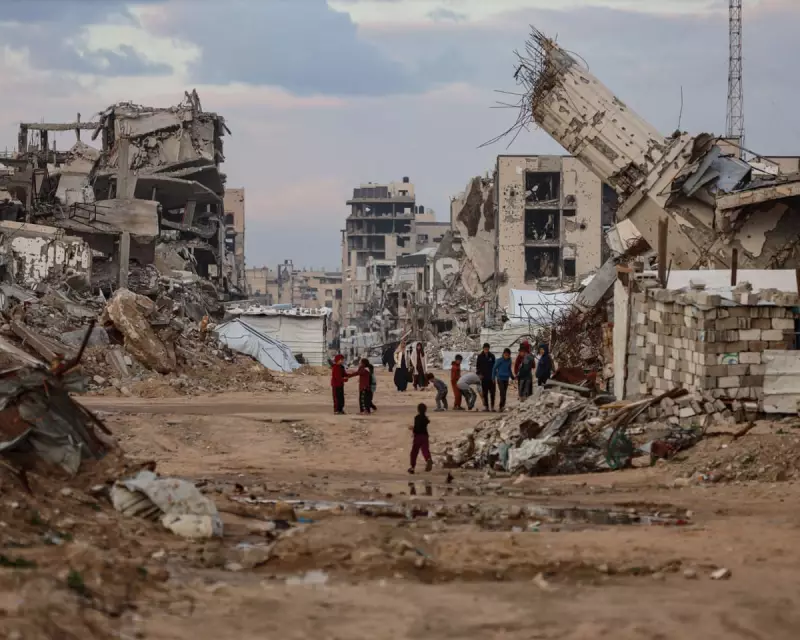
Despite the ongoing truce process, violence has not fully ceased. Israeli bombardment has diminished but not stopped, with approximately 450 Palestinian fatalities reported since the ceasefire began on 10 October. Furthermore, no agreement has been reached on the critical issue of disarming Hamas.
The move to phase two faced appeals for delay from Israeli groups representing former hostages and their families. They urged the US to wait until Hamas returned the remains of the final hostage, Ran Gvili. Hamas claims it has been unable to locate his body. Witkoff issued a stern warning, saying, "The US expects Hamas to comply fully with its obligations, including the immediate return of the final deceased hostage. Failure to do so will bring serious consequences."
The Proposed Administrative Committee
In contrast to the US's vague announcement, Egyptian Foreign Minister Badr Abdelatty stated hours earlier that an agreement had been secured on all 15 members of the interim committee. He confirmed the body would be "deployed to the Gaza Strip to manage daily life and essential services."
The members are anticipated to be technocrats rather than politicians, though some are believed to have affiliations with the Fatah party, which leads the Palestinian Authority. Two figures mentioned as potential heads are Ali Shaath, a former deputy minister of planning, and Majed Abu Ramadan, the current PA health minister.
Diplomatic sources indicate the committee's work will be overseen by Nickolay Mladenov, a respected Bulgarian diplomat and former UN Middle East envoy. Mladenov would subsequently report to the prospective Trump peace board, expected to consist of various world leaders.
Parallel discussions in Cairo are also focusing on key practical measures, including:
- A further withdrawal of Israeli forces from Gaza.
- The reopening of the vital Rafah crossing with Egypt.
- Facilitating the entry of aid stockpiled at the border.
- A general increase in the flow of goods and humanitarian assistance into the strip.
The first phase of the ceasefire, which began on 10 October, involved a hostage and detainee exchange and saw Israeli forces pull back to a designated truce line, leaving them in control of most of Gaza. The transition to this second, administratively complex phase marks a critical but fragile juncture in the ongoing conflict.