Britain's Diplomatic Expertise Under Threat as Foreign Office Faces Severe Staff Reductions
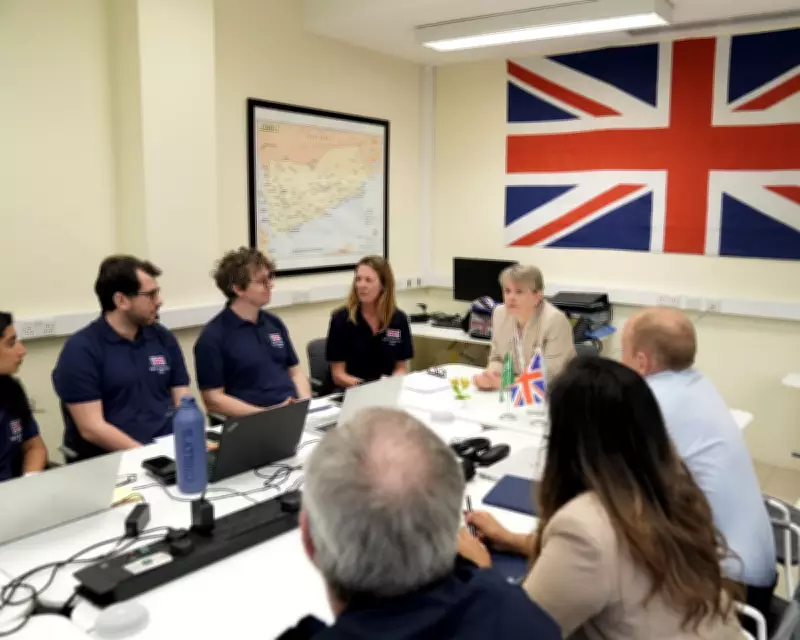
In a world increasingly defined by geopolitical uncertainty and shifting alliances, Britain's diplomatic corps faces unprecedented challenges. Foreign Secretary Yvette Cooper, photographed with British embassy staff during her March 2026 visit to Riyadh, Saudi Arabia, inherits a department undergoing dramatic transformation. The Foreign, Commonwealth and Development Office is preparing to eliminate up to a quarter of its 8,000 UK-based positions, starting at director general level and moving through the ranks, with the remaining 9,000 overseas staff potentially facing similar reductions.
The Perfect Storm: Brexit, Trump, and Strategic Drift
The timing of these cuts could not be more concerning. Britain's diplomatic service operates in an environment fundamentally altered by two seismic events: the country's departure from the European Union and the unpredictable foreign policy approach of Donald Trump's administration. Brexit has severed institutional links that once facilitated effortless information exchange and policy coordination across Europe. Diplomats now find themselves knocking on doors that previously stood open, requiring additional effort and resources to maintain relationships that were once routine.
Meanwhile, the traditional transatlantic partnership has undergone dramatic transformation. The "special relationship" that successive British governments cherished has become increasingly transactional under Trump, who has demonstrated willingness to leverage diplomatic niceties for personal political advantage. This reality has forced British diplomats to develop sophisticated insurance policies through bilateral and multilateral relationships that require language skills, regional expertise, and sustained investment—precisely the resources now being withdrawn.
The Human Cost of Institutional Restructuring
The proposed cuts threaten to decimate the Foreign Office's analytical capabilities at a moment when nuanced understanding of global developments has never been more critical. Many of the positions at risk belong to policy analysts who provide the intellectual foundation for Britain's international engagement. Their work informs responses to everything from climate change and migration patterns to health crises and demographic shifts—issues that directly impact British citizens' daily lives.
Already, the uncertainty surrounding the department's future has driven talented diplomats toward academia, think tanks, and the private sector. Those who remain often find themselves competing against colleagues for dwindling positions or spending valuable time on job searches rather than diplomatic work. This internal distraction occurs precisely as Britain faces multiple simultaneous crises: ongoing conflicts in the Middle East and Ukraine, trade tensions, and the complex dynamics of Trump's second presidency.
Contradictory Priorities in a Changing World
Foreign Secretary Cooper has identified Sudan as a major foreign policy priority, yet the Africa departments and broader Global South divisions face some of the most stringent cuts. This disconnect between stated objectives and resource allocation highlights the fundamental tension within Britain's current approach to international affairs. The official justification—that the department needs to become "more agile and focused"—rings hollow to many experienced diplomats who question how reducing expertise enhances capability.
As one seasoned diplomat remarked with characteristic understatement: "I'm not sure we will be best served if we type 'Angola' into ChatGPT and see what comes out." The comment underscores concerns that technological solutions cannot replace human judgment, cultural understanding, and relationship-building—the core competencies of effective diplomacy.
Parliamentary Opposition and International Context
The proposed cuts have drawn criticism from across the political spectrum. Emily Thornberry, chair of the foreign affairs select committee, described the restructuring as "restructuring in order to restructure, while not looking first and foremost at what the Foreign Office is about." Conservative MP John Whittingdale connected the Foreign Office reductions to earlier cuts affecting the British Council and BBC World Service, suggesting a pattern of diminishing Britain's soft power infrastructure.
Britain is not alone in reassessing its diplomatic resources. Germany and other European partners are similarly reallocating resources toward defense spending. However, these nations generally maintain robust diplomatic networks alongside military investments, recognizing that early warning systems for emerging threats often come through diplomatic channels rather than military intelligence.
The Strategic Imperative for Diplomatic Investment
With institutional links to Europe weakened and the transatlantic partnership increasingly unreliable, Britain finds itself more vulnerable and isolated than at any point in recent memory. This moment demands greater diplomatic investment, not less. Sharp diplomatic antennae provide early warnings about everything from public health emergencies to economic disruptions, demographic changes to environmental threats.
The fundamental question remains: Can Britain effectively navigate a dangerous world with diminished diplomatic capacity? The proposed cuts suggest a government willing to gamble that it can, despite overwhelming evidence that complex global challenges require sophisticated, well-resourced diplomatic engagement. As Britain seeks to redefine its place in a post-Brexit, post-Atlantic-certainty world, reducing the very expertise needed for that redefinition represents a profound act of strategic self-harm.
Diplomacy has evolved far beyond the Ferrero Rocher stereotypes of the 1990s. Today's diplomats work in difficult environments, analyze complex information, and build relationships that serve British interests across multiple domains. At this critical juncture, with multiple crises unfolding simultaneously, Britain needs its diplomatic corps more than ever. Cutting it back represents not just bureaucratic restructuring, but a fundamental misunderstanding of how nations protect their interests in an interconnected, volatile world.