The traditional corridors of US foreign policy power have been upended, replaced by a chaotic and deeply personal network of influence surrounding President Donald Trump. In a departure from established diplomatic norms, the President's worldview is being shaped not by a cohesive ideology, but by a sprawling cast of characters including administration officials, family members, and even guests at his Mar-a-Lago resort.
The Unconventional Inner Circle
Critics argue that Trump's first year has transformed the United States into a rogue superpower, one that bullies allies like Ukraine and poses a significant threat to NATO. This blitzkrieg approach has left global diplomats scrambling to understand the motivations behind his actions. Unlike his predecessors, Trump maintains an unusually accessible and wide-ranging outer circle.
"Trump is more accessible to a broader range of voices than any president in recent history," noted Ian Bremmer of the Eurasia Group. "He's on his phone constantly... When he's in Mar-a-Lago, he's available, he's holding court, everyone comes up to him." This freewheeling style allows figures from right-wing media personalities to members of Congress to directly pitch ideas, resulting in a foreign policy that appears, to many observers, "all over the map."
Key Players and Personal Agendas
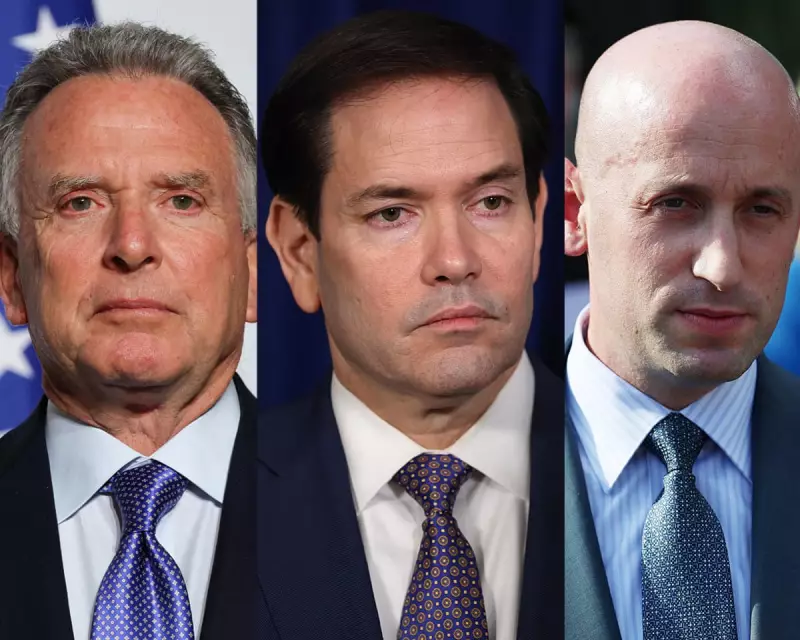
In recent weeks, Secretary of State and National Security Adviser Marco Rubio has emerged as a dominant force. The former senator, raised in Miami's anti-communist Cuban exile community, played a pivotal role in orchestrating the dramatic removal of Venezuela's president, Nicolás Maduro. His expertise in Latin America aligns with Trump's ambitions for hemispheric dominance and control over Venezuelan oil reserves.
However, Rubio's influence may be geographically limited. A former Biden administration official suggested, "Marco Rubio seems to be a secretary of state who doesn't want the entire world." This has created space for other, more personal influences to operate. Special envoy Steve Witkoff, a property developer and longtime friend of Trump, has been a key figure on thornier issues like Ukraine and the Middle East, often accompanied by the President's son-in-law, Jared Kushner.
This dynamic fuels concerns that Trump's foreign policy is effectively a family business. Observers point to the roles of Trump's sons, Don Jr. and Eric, who are believed to be working to ensure the President's international relationships remain favourable to the Trump Organization's future business interests. "Don Jr and Eric Trump are probably among the most internationally consequential counsellors to the president," said Brett Bruen, a former Obama official.
The Ideological Cacophony
Beyond family and friends, the President is pulled between traditional hawks and "America First" isolationists. Vice President JD Vance and Senator Lindsey Graham represent differing poles, while the rhetoric of Stephen Miller, the deputy chief of staff, signals a foreign policy defined by brute strength. Miller recently stated, "We live in a world... that is governed by strength, that is governed by force, that is governed by power."
This approach dovetails with Trump's apparent willingness to consider military action for US gain, including the potential annexation of Greenland, and his embrace of a 19th-century-style Monroe Doctrine, which he has jokingly rebranded the "Don-roe doctrine." The result is a fundamental shift from neoconservatism towards what some fear is a new era of neocolonialism.
Ultimately, former officials like John Bolton argue there is no grand strategy. "Trump has no philosophy, no national security grand strategy," Bolton said. "It's all transactional, it's all about Donald Trump... He listens to all these other people, but at the end of the day, it's what's in it for Donald Trump." The former Biden official concurred, noting a complete lack of ideological coherence, where the most persuasive personal pitch to the President wins the day, leading to wild and unpredictable swings in US global posture.