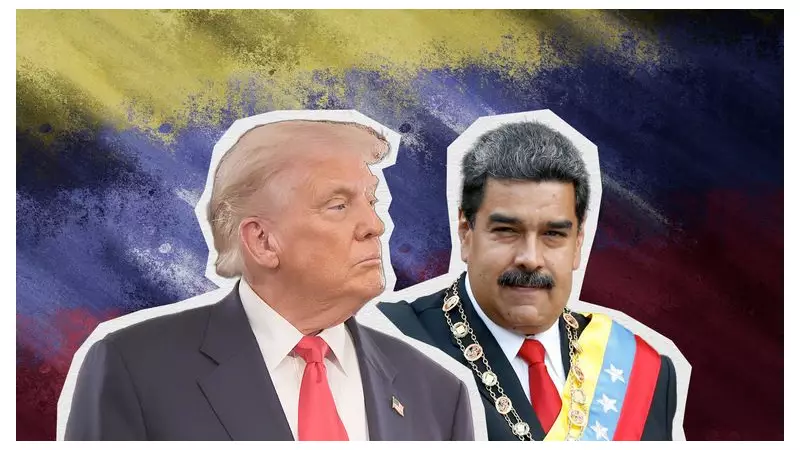
The geopolitical landscape has been jolted by a dramatic and unprecedented action from the United States. President Donald Trump has ordered the capture of Venezuelan leader Nicolás Maduro, justifying the seizure of a sovereign nation's head of state by reviving and rebranding a centuries-old US foreign policy principle.
The Return of the Monroe Doctrine with a Trumpian Twist
To comprehend the rationale behind this bold move, one must understand the newly christened 'Donroe Doctrine'. This policy finds its roots in the 1830s, when President James Monroe declared the Americas to be a US sphere of influence, warning European powers against colonial ventures. For two hundred years, this remained a historical footnote.
However, in late 2025, the White House's national security strategy resurrected the Monroe Doctrine, appending a significant 'Trump Corollary'. This addition stated the US would not tolerate 'hostile or criminal neighbours' engaged in 'chronic wrongdoing' within its hemisphere. On Sunday, 4 January 2026, President Trump explicitly framed the operation against Maduro under this doctrine, boasting that American dominance would 'never be questioned again'.
Venezuela: The First Target in a New Era
The operation in Venezuela marks the first concrete application of this assertive policy. President Trump has declared that the US will be running Venezuela for the foreseeable future, a move that analysts warn propels global politics into uncharted, potentially more dangerous territory. The justification, pulling from 19th-century ideology, sets a controversial precedent for unilateral intervention.
Who Could Be Next in America's 'Backyard'?
The critical question now is where the so-called Donroe Doctrine—with 'Don' referencing Mr Trump—will be applied next. The administration's rhetoric suggests several neighbouring states and entities could be considered 'fair game'.
Potential future targets identified by analysts include:
- The powerful and violent drug cartels operating within Mexico.
- The long-standing communist regime in Cuba, labelled as corrupt and failing.
- The cocaine production laboratories scattered across Colombia.
This new doctrine signals a stark shift towards a more interventionist and confrontational US stance in Latin America, moving beyond diplomacy and sanctions to direct action. The seizure of Maduro may not be an isolated incident but rather the opening salvo in a broader campaign, making the geopolitical future of the region appear significantly less predictable and more volatile.